

Donald Trump’s attack on Iran triggered the closure of the Strait of Hormuz. Then the destruction of a major Saudi Arabian pipeline. Then a resurgent Houthi rebellion that has ended most shipping on the Red Sea. Now, even at ports a world away from the fighting, shipping is becoming so expensive that it’s impractical.
As oilprice.com reports:
The Iran war has made oil tanker voyages so inefficient that vessel availability has crumbled and freight costs have soared to record-highs, all but erasing the incentive for shipping crude oil from the U.S. Gulf Coast to Asia.
The cost of shipping crude oil from the U.S. Gulf Coast to China soared to as high as $80 million earlier this month. That’s ten times the average tanker rates that had held for years before the Iran war.
Those high shipping costs have drastically lowered demand for U.S. oil overseas. Orders from Asia are down 50%, with predictions that sales will fall to their lowest rate in seven years.
A glance at the Strait of Hormuz Live Ship Tracker on Sunday continues to show a large number of tankers milling around outside the strait in the Gulf of Oman, but few willing to brave the narrow passage.
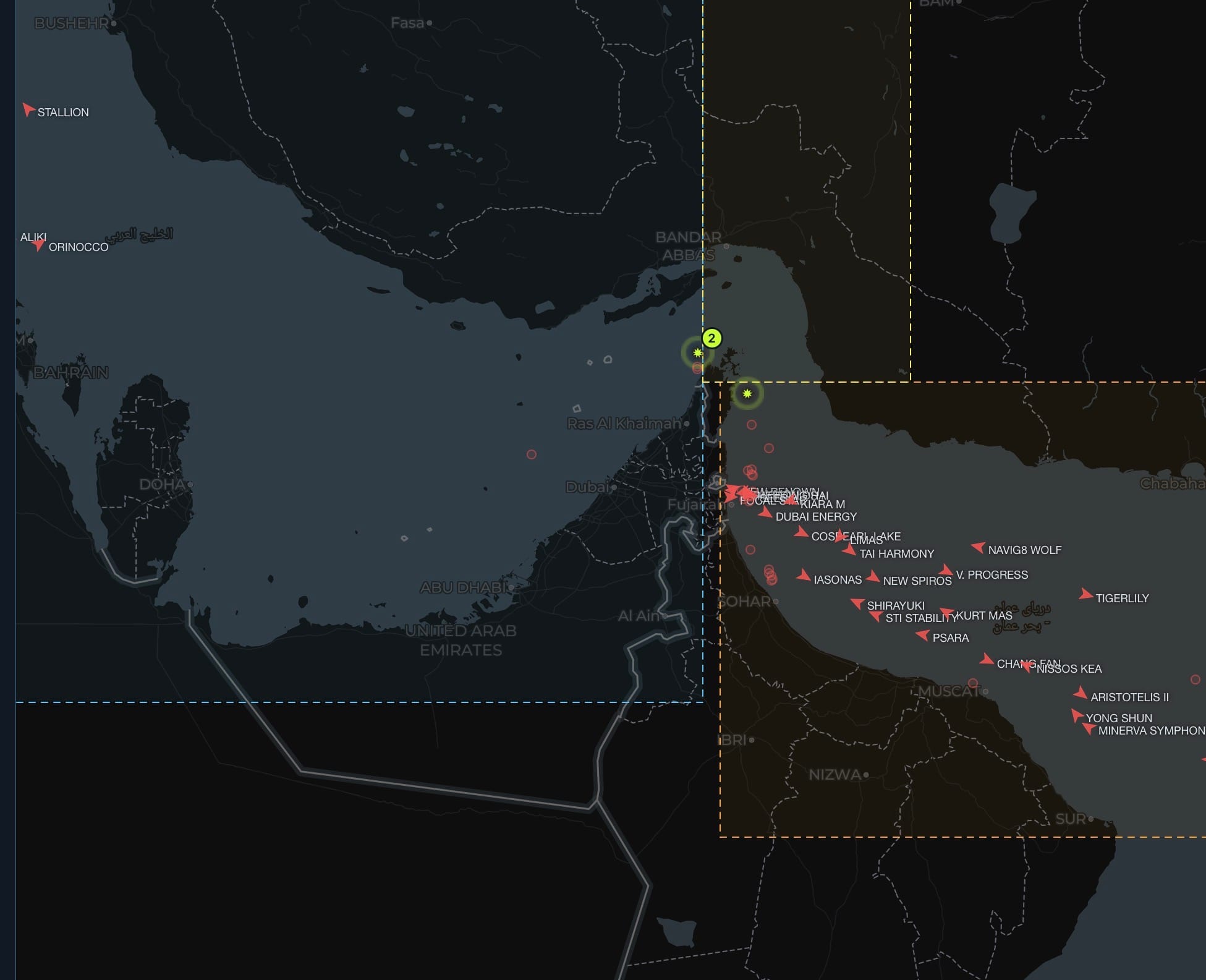
It’s little wonder shipping lines and insurance companies are unwilling to risk expensive vessels and even more expensive cargo when ships are still being regularly attacked. But the rising cost of shipping and insurance isn‘t stay restricted to the Middle East, and much of that has to do with all those orange triangles swarming in the Gulf of Oman.
Many of these ships are supertankers. they are waiting in the gulf for smaller vessels willing to run the gamut to visit them and transfer oil. They’ll stay there for days or weeks until enough smaller tankers have made repeated runs to fill their capacious holds. A major fraction of the world’s oil tankers are now tied up in this slow, dangerous dance
This is just one of the factors leading to longer shipping routes, more ships setting idle, and greatly increased shipping costs.
Rising shipping costs aren’t limited to oil. First, other container angle cargo ships run on oil. With Brent crude topping $117 again this week, that cost has doubled. Worse, cargo ships primarily burn VLSFO—very low sulfur fuel oil—a significant percentage of which comes through the Strait of Hormuz. Some ships are being refitted to allow use of other fuels, but the VLSHO prices keep going up, and availability keeps going down, as the war goes on.
All shipping is paying more for fuel, with many ships forced to take circuitous routes and others docking at unfamiliar ports. Oil tankers have become so costly to operate that many are simply sitting. Attacks on cargo vessels have insurance rates spiking.
In the long run, the current crisis may be another factor in ending the international dominance of fossil fuels. In the short term, it represents higher costs, potential shortages, and more fragile supply lines.
And if Trump follows through on his threats to renew bombing at an even higher level, it will only get worse. Following a meeting between war lovers Pete Hegseth and Benjamin Netanyahu, the U.S. is removing persons from embassies across the region. That is a sign of bad things to come.













Comments
We want Uncharted Blue to be a welcoming and progressive space.
Before commenting, make sure you've read our Community Guidelines.