


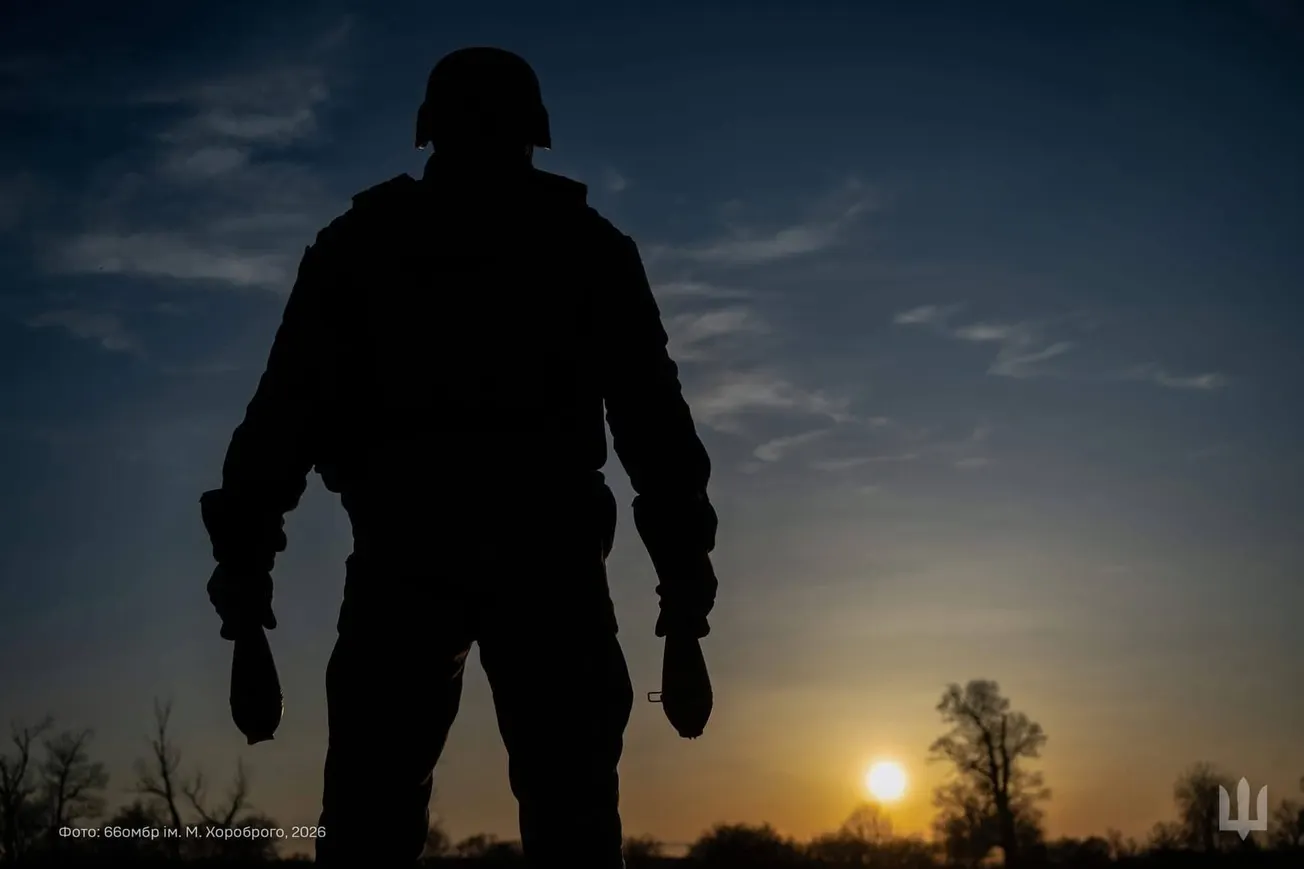
March set a new record for Russian losses in the illegal, unprovoked invasion of Ukraine with 35,50o estimated casualties. By best estimates, over 300,000 Russians have now lost their lives on Ukrainian soil, and over 1 million more have suffered a serious, often debilitating, injury.
April's casualty count may exceed that of March when the final tallies are in, but the month of spring showers has already produced another astonishing number: This is the first month since 2024 in which Russian forces suffered a net loss of controlled territory.
That's largely due to Ukrainian advances in Zaporizhzhia oblast that began in early March and continued through the following month. Those advances have liberated what remains of at least a dozen towns and villages, including some—Malynivka, Zatyshshia, Zelenyi Hai, and Vesele—that were on the edge of Ukraine's failed attempts to move south in the spring of 2023.
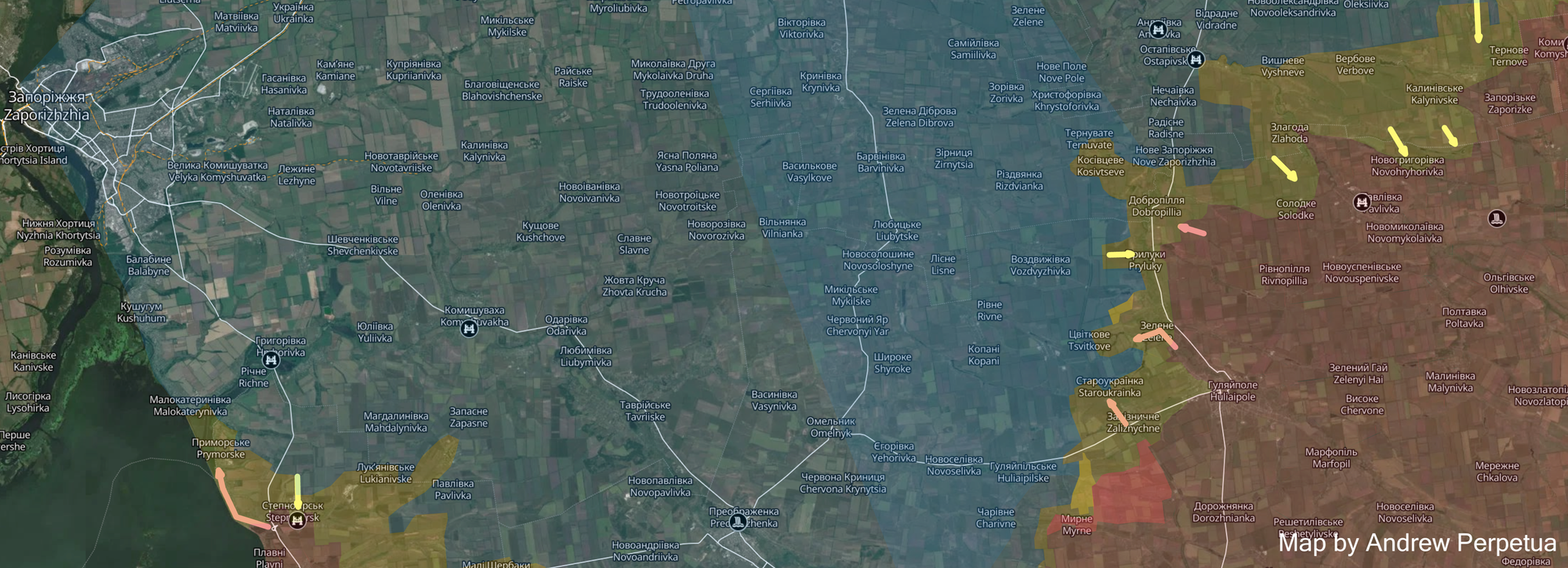
Ukraine has reportedly been downplaying these advances, as well as its success in attacking Russian oil facilities, out of fear that another enemy will press harder. That enemy isn't Vladimir Putin; it's Donald Trump. Ukrainian leaders are concerned that Trump may try to squeeze them or attempt to block support from NATO countries if he's too aware of how Ukraine is preventing Putin from capitalizing on high oil prices. Trump is already holding up $400 million that Congress authorized for Ukraine without bothering to provide a reason.
As Ukraine takes back land to the south, Russia continues to focus its efforts on pressing toward the "fortress cities" of Kramatorsk and Sloviansk. Russian generals hope to follow up on gains made last fall and hand Putin the prize of a more-or-less complete Donetsk. However, Russia's advances in the area over the last six months remain small. In part, this is because those spring showers have extended the "mud season" this year, adding another obstacle to Russia's spring offensive and forcing Russian commanders into a new tactic.
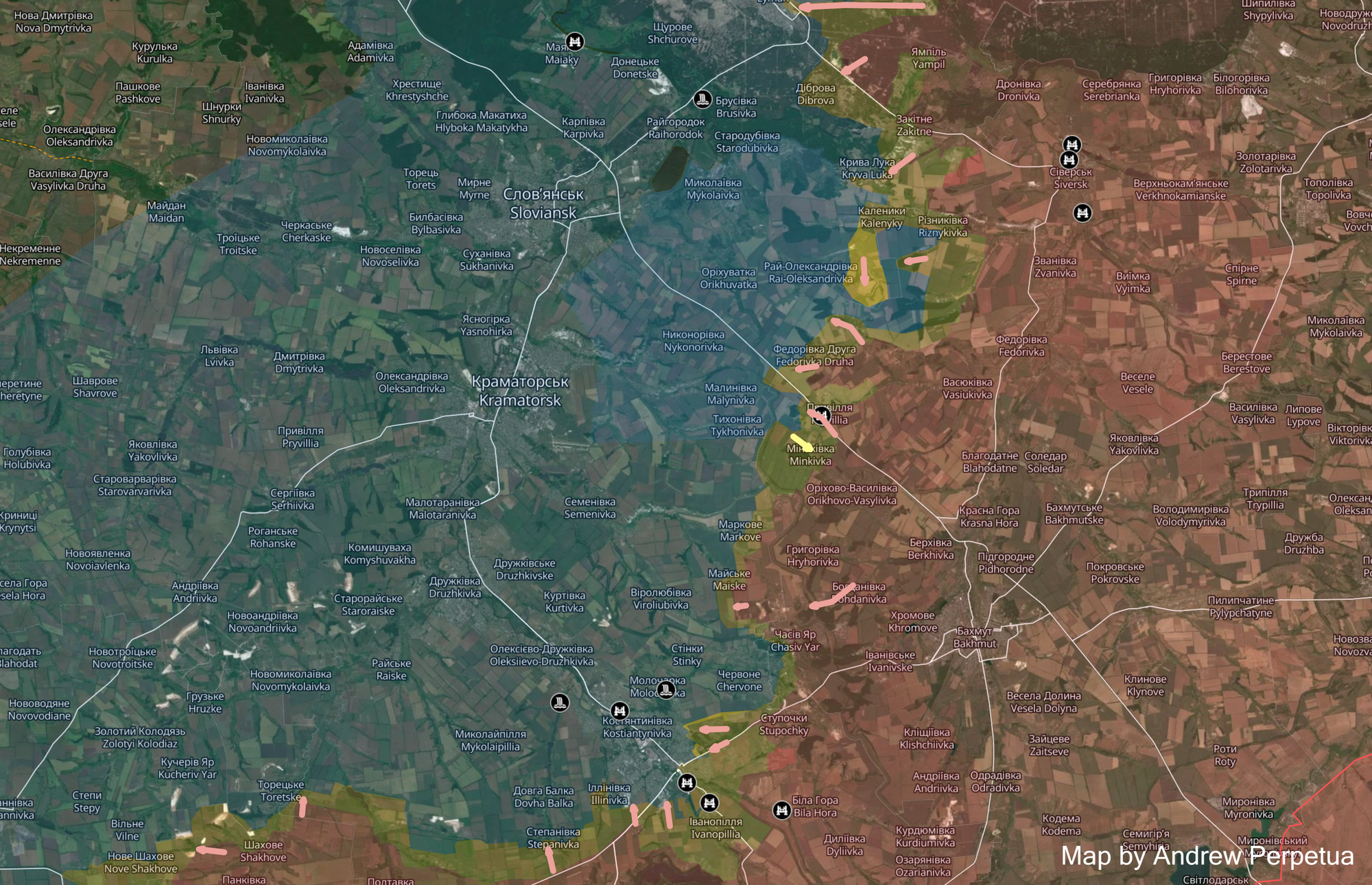
Rather than trying to assemble large armored attacks or the kind of human waves that it has used so often in the past, Russia is now sending forward squad-sized groups of 5-10 infantry troops, hoping to sneak them past Ukrainian lines. Those troops often split into even smaller groups, hoping to find an abandoned building, foxhole, or trench where they can wait for another handful to join them.
The low rate of success can be measured by the crawling speed of Russia's advance in Donetsk. In February and March, they added 1/100th of the territory that they captured during the same months in 2025.
At the moment, these infiltration units are suffering a near 100% casualty rate. But in a few places, they have succeeded in getting among Ukrainian forces where they can attack the war's most valuable asset: Drone pilots.
Being part of an infiltration unit is a death sentence for the Russians involved. As spring moves toward summer and the surviving trees near the front continue to leaf out, these small forces may be more successful in reaching Ukrainian lines. But those involved will almost certainly join the ever-growing list of Russian casualties.
In an effort to compensate for its losses of men, Russia is rapidly expanding recruitment efforts outside of Russia. However, according to the UK Ministry of Defence, Russia's battlefield losses now exceed the rate of new enlistment even with its outside recruitment efforts.
A Russian soldier films a large detachment of African mercenaries recruited to wage war against Ukraine. Behind their backs, he comments in Russian that they are essentially disposable cannon fodder: "Look how many disposables are here." January 2026 pic.twitter.com/FiqE7N7tpt
— 𝚂𝙽𝙸𝙿𝙴𝙳™ (@The_Banned_Vids) May 2, 2026
Rapid turnover at the front and an unrelenting push to advance mean that Russian soldiers are getting even less training than they were at the outset of the war. Green recruits are being dropped in front-line trenches or fed into the infiltration meatgrinder to maintain troop density on the front line.
If losses continue at the rate experienced in March and April, it's possible that Russia will soon have to call a halt to its attempts to move toward Sloviansk to avoid leaving significant gaps in its lines.
Meanwhile, one person notably absent from Ukraine this year is Putin. Not only is the Russian dictator not showing up to cheer on the troops at military bases, but he is reportedly staying away from many of his known homes because they are viewed as insecure.
Putin has made only two public appearances all year. However, we're days away from the annual May 9th celebration, and if Putin doesn't climb out of his hole to inspect the troops, it will be an Olympic-sized signal of weakness. Make that another signal. Because Putin is already waving a big yellow flag.
The internet in Moscow has been all but shut down for the duration. Airports are being closed, and even cell phone towers have been turned off.
The parade – Russia’s foremost national celebration – has already been scaled back and will proceed without heavy military hardware for the first time in nearly two decades, amid fears of long-range Ukrainian drone strikes.
That fear seems well justified. Ukrainian drones have been increasingly successful in striking targets across Russia, and those targets go beyond oil fields and refineries. That includes a strike on an upscale apartment building near the Kremlin that's thought to host many Russian military leaders.
With a flagging economy, much of his inner circle driven away, and oligarchs upset about the damage Ukrainian drones are doing to their property, there are once again rumors that Putin may be close to losing the only kind of election that seems to count in Russia; the kind with windows.
After all, whenever one of those Ukrainian drones sets fire to an oil facility, that's not just affecting Russia's ability to fund the war. Somebody owns that stuff.
These are guys who want to be relaxing on megayachts, ordering their new gigayachts. Instead, their money is increasingly tied up by sanctions, and their assets are under attack — all because of an unnecessary war started by Putin. They could have had hot and cold running gold, just by sitting back and collecting the profits from businesses they got for nothing. But Vladimir Vladimirovich just had to start an unending war with a smart and determined neighbor.
Everything points to this being a critical moment. And it's not as if Russia doesn't have a history of leaders who suddenly came down with something in the middle of a losing war. An extensive history.
On Wednesday, The Economist confirmed that Putin is losing his grip on Russia.
It arrived not as an event but as a sensation, felt everywhere at once: Vladimir Putin has led Russia into a dead-end and nobody has a map for what comes next. The first manifestation is a shift in the language used by senior officials, regional governors and businessmen: they have stopped using the first-person plural when talking about the actions of authorities in the country.
Other Russian politicians have stopped talking about the Ukraine invasion as "our" war. It's his war. And everyone knows it's a loser.
Adding to Russia's woes is a new cadre of medium-range Ukrainian drones. These include both fiber-optic-controlled drones that can reach 15-20km into Russian-held territory, and new semi-autonomous drones that penetrate to 40km or more. Supply depots, bunkhouses, and muster points that were in areas considered safe are now under constant threat.
It's very hard to mount a successful attack if you have to gather all your forces over an hour away from the battlefield and then proceed to the frontline in full view of hovering surveillance drones.
However, this isn't just Russia's problem. In fact, Russia was first to the front with those fiber-optic drones. Now both sides are using them, leaving the battlefield draped in criss-crossing lines of silver that shine on sunny days. There are even reports that Russia and Ukraine are buying reels of fiber from the same Chinese suppliers.
With radio-controlled FPV, fiber-optic FPV, higher altitude surveillance, and larger drones armed with both explosives and guns, the result is an ever-widening zone that neither side can cross in force. It's genuinely hard to say who controls what, or which force is advancing, when there are thousands of square kilometers that neither side can enter.
There's a distinct difference between how Russia and Ukraine are handling their infantry. Russia continues to move untrained troops across the kill zone, seeking to advance through infiltration. Ukraine is keeping its forces largely away from the firing line, using infantry to support entrenched drone troops and using other drones to supply forces that are often isolated for weeks or months at a time.
As a result of this difference, Russia is facing much higher casualty rates. But Ukraine is seeing troops get simply burned out after months of hunkering down in the death zone, waiting for air-dropped food and supplies.
If Putin falls, the war could be over at a stroke. However, so long as he holds onto power, Ukraine also faces extreme difficulty if it attempts to liberate a large area. Even with Russia's tumbling economy, even with falling recruitment, even with Ukraine's increasing skill, this war could continue for many more horrific months.
But that's also not a sure thing.
Ukraine and Russia have both altered their technology drastically since the beginning of this war, and both are continuing to move steadily away from the kind of Cold War practices that existed in 2022. But tactics always lag technology. The reason that the United States suffered such horrendous losses during the Civil War can be largely attributed to using tactics designed for the Napoleonic battlefield—volley fire and bayonet charges—at a time when most soldiers were armed with rifled weapons increasingly capable of hitting a target at 400 yards.
No matter how things look, you can bet that Russia and Ukraine are both in that state now. They have new tools, but they don't yet know the best way to use them. Either side could develop new tactics that reenable strategic advance. Or ... that may not be possible until some other breakthrough negates the current round.
However, that tactic may already exist. Maybe Russia's infiltration tactics will work better when the mud dries and the forest canopy is fully present. Maybe Ukraine's growing collection of ground-based drones will enable more victories without putting Ukraine's infantry at risk.
In the meantime, Ukrainian forces will keep holding on, and Russian forces will keep needlessly dying.
“Moscow's parade lasted just 45 minutes and showed videos of equipment instead of the real thing.“








Comments
We want Uncharted Blue to be a welcoming and progressive space.
Before commenting, make sure you've read our Community Guidelines.