

Almost everyone has heard of the Cambrian Explosion. That's the period when, around 530 million years ago, seemingly every phylum of animal that exists today—and possibly a few that don't—appears in the fossil record over a period of just 10 million years.
If the history of life since then were a one-hour drama, every type of creature we know gets its start in less time than it takes to push the latest flavor of Cheetos.
But even before the intro music plays on the Cambrian, there were animals around. It's just that it took some time to find and recognize their fossils. So long that the period in which they lived, the Ediacaran, only got a formal name in 1990.
I've been thinking a lot about the animals of the Ediacaran. And the reason for that is mostly what's happening in Ukraine.
Currently, the Ediacaran Period extends from 635–539 million years ago (these dates may change as new evidence helps to refine the age of various formations). Deposits containing their fossils have been found in Nevada, Mexico, and their namesake location in the Ediacaran Hills of Australia. They're not uncommon. They're just odd.
The creatures that lived during this period are generally tossed into a box labeled "Edicaran biota" rather than given a more specific grouping. Even calling them animals seems somewhat presumptuous. That's because, in many cases, we don't know what they were. They may be ancestors of some more familiar group, but most Ediacarans seem to have have quictly departed the fossil record just as everything we know was coming in.

Many of these creatures appear to have been kind of ... puffy. Inflated. Like an entire ecosystem of pool floats. They seem to completely lack teeth, or claws, or any of the hard parts that made those Cambrian come-latelies so easily fossilized.
Among them are a few specimens that represent early forms of things still around, such as jellyfish, but most just elicit a big shrug — and a lot of arguments. Reinterpreting and reclassifying already known fossils is probably 90% of what paleontologists do.
Anyway, the Ediacaran biota dominated the world. Until it didn't. And when I think about those soft, squishy organisms, what I think about mostly is ... tanks. Tanks and fighter jets. Tanks, fighter jets, and warships.
Here's why I make those connections.
 Jon Cooper
 NOELREPORTS
 🦋Special Kherson Cat🐈🇺🇦
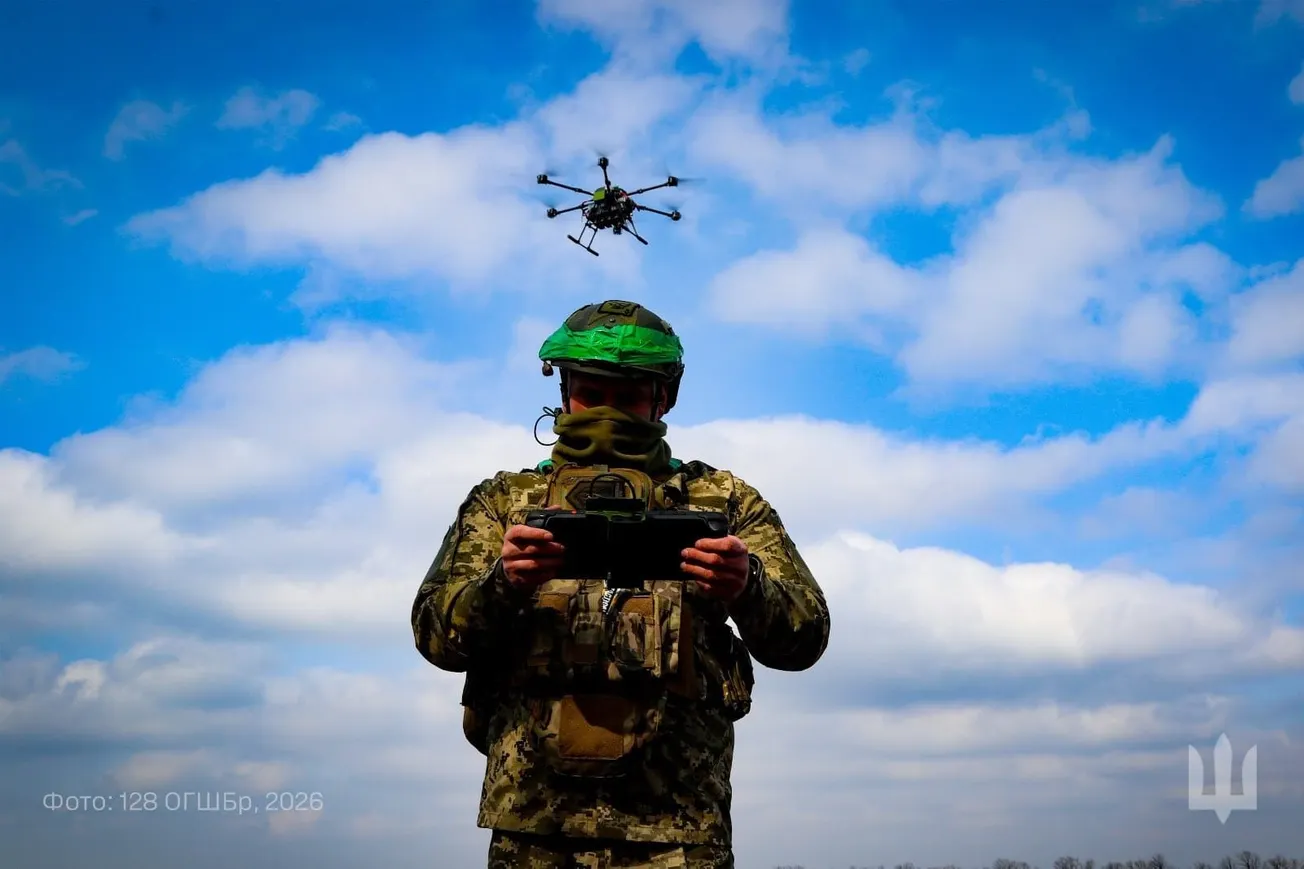
That's a tiny fraction of the Russian assets Ukraine has taken out with drones over the last few days. Of all Russian casualties now taking place along the front lines in Ukraine, 75% are thought to be due to drones. Russian oil facilities thousands of kilometers from the border are being regularly assaulted by long-range strategic drones. Ground drones are taking the surrender of Russian troops. Water drones are destroying ships and damaging bridges.
Looking at the latest stats from the Ukrainian General Staff only confirms what's been happening for months.
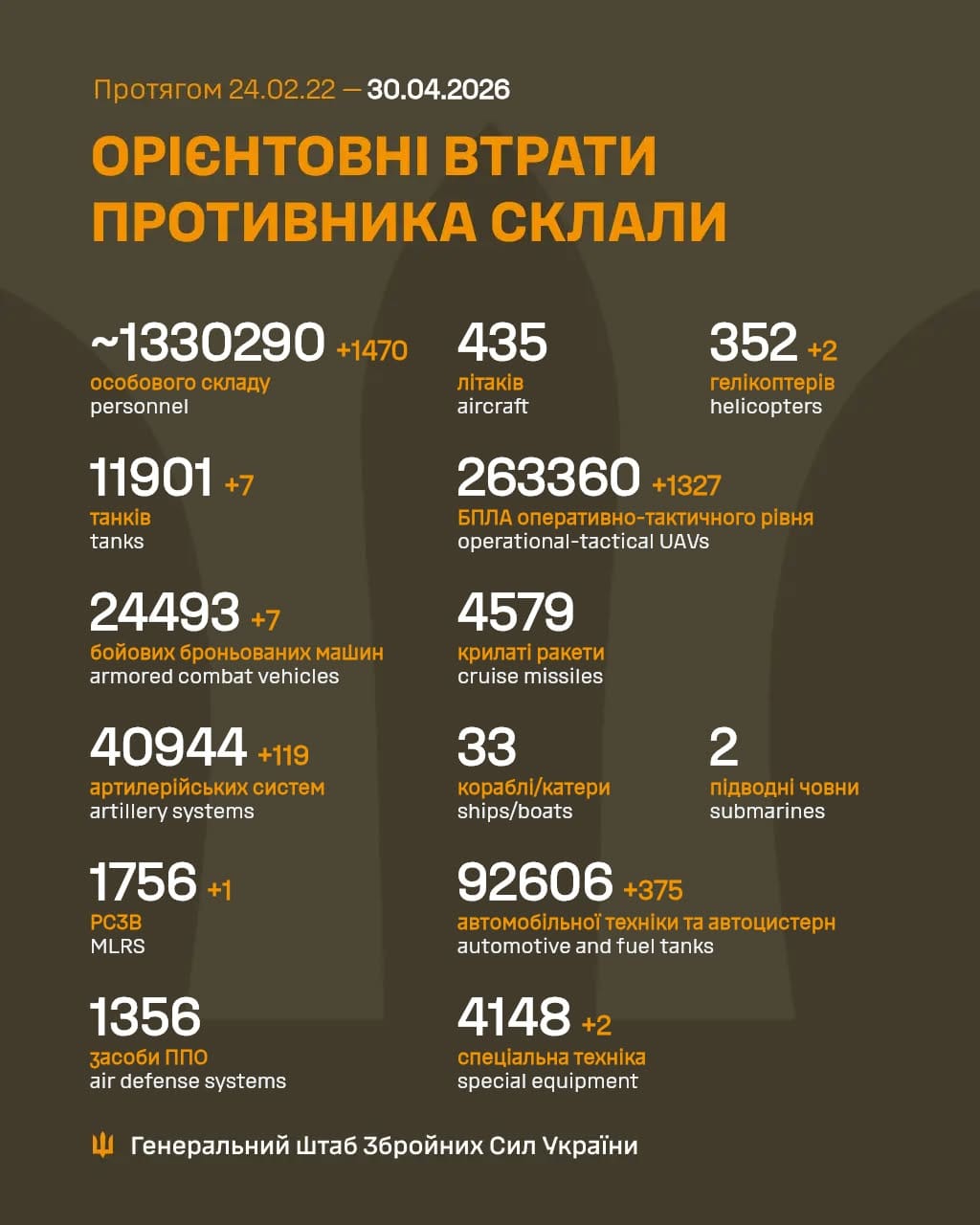
The seven tanks represent a high number for recent weeks, as does the loss of seven armored vehicles. Both of these appear to be connected to a failed Russian advance near Pokrovsk. Tanks and other armored vehicles that seemed so important in 2022 have all but vanished from this fight.
What remains extraordinarily high is the number of troop casualties as Russia continues to send soldiers into the sleet storm of drones.
As The Bulwark reports, the rapid expansion in both drone numbers and capabilities has turned this into a "Second miracle year" for Ukraine after Donald Trump's return to power made its future seem terribly bleak.
Despite flagging Western support, Ukraine "dug in" by not just creating more drones than its larger opponent, but by innovating to create more types of drones. The result is that while Ukraine has an advantage in the kind of short-range FPV drones that have made the battlefield untenable for armored vehicles, it holds a much larger—and growing—advantage when it comes to medium and long-range drones. That is why so many Russian radar facilities and oil refineries are sending up plumes of smoke.
... Ukrainian production of small drones appears to exceed Russia’s, with at least 3–4 million units produced in 2025 and a goal of up to 7 million in 2026. This is within spitting distance of the 10 million per year that Ukraine estimates it will need to completely overwhelm Russia and achieve decisive victory. It’s also a tremendous advantage. Drones are the dominant force on the lines today, causing approximately 75–80 percent of all casualties. Ukraine now has 1.3 drones at the front line for every 1 Russian drone, and they are of better quality. Additionally, Ukraine has reportedly begun operating AI powered small drone “swarms” that are semi-autonomous and coordinate their attacks.
Autonomy has become a growing part of Ukraine's technological push. Despite the extraordinary accomplishments of the Ukrainian military, there are reports that it is facing increasing problems with desertions as the war drags into its fifth year. Given the grinding conditions on a front dominated by drones and artillery, it's certainly understandable why some soldiers have had all they can take. As many as 150,000 Ukrainian soldiers may have left their posts, and unlike Russia, Ukraine doesn't have a collection of impoverished outlying provinces it can tap for green troops.
That's why last month's Drone Autonomy 2026 conference was a critical event with a keynote address from the Deputy Commander in Chief of Ukraine's military forces.
Among current priorities, the brigade general identified the creation of a large integrated system on the battlefield, the implementation of AI technologies in weapons management systems, the development of air defense, active defense complexes, the increase of autonomy and weapon technology elements, as well as the development of REB tools and unmanned systems.
It very much seems that Ukraine is working toward a system that integrates its air and ground drones to dominate the battlefield against short, medium, and long targets with a heavy reliance on autonomy. Giving drones more discretion in targeting, including the ability to operate to destruction without a human greenlighting the action, is certainly concerning. However, it might also be the step that Ukraine must take to secure a victory after the U.S. and others failed to provide the necessary level of support at the war's outset.
And, complete victory over the Russian aggressor now seems possible for the first time since 2022.
Strategically, Ukraine has a theory of victory that looks increasingly plausible, while Russia’s is crumbling. There is a path to Ukraine achieving overwhelming drone dominance at all levels and inflicting the casualties required to cause a Russian collapse. Russia bet the farm on the theory that meat waves would overwhelm Ukraine while the United States and Hungary blocked Western support, and failed.
With Victor Orban out in Hungary, fresh assistance on the way from the European Union, Russian oil facilities in flames, and the Russian economy seemingly worse than ever, Ukraine's position in the war is looking like something that may go beyond miraculous.
However, that miracle has yet to stop Russia's snail-like advance. Pressure may be growing on Vladimir Putin, but so far, that pressure is not so great that it's cutting off the flow of fresh meat. Even at a projected loss of 250 men per square kilometer, Russia is still moving toward its objectives.
This week, Russia made small gains near Petropavlivka in Kharkiv Oblast and Kostiantynivka in Donetsk Oblast. The total of these advances was only about 7 square kilometers, and largely represents consolidation of areas that were tacitly under Russian control earlier. However, these kinds of small advances are still happening almost daily at points along the long eastern front.
Maybe Russia will keep pressing forward until its forces culminate and a broad collapse occurs ... but that siren song is getting pretty old. If Ukraine is really going to achieve total victory, it would be great to see it start having more small victories.
And of course, they still have enemies.
Anonymous






Comments
We want Uncharted Blue to be a welcoming and progressive space.
Before commenting, make sure you've read our Community Guidelines.