


In February, SpaceX agreed to restrict Russia's access to its satellite-based internet system, Starlink. The restrictions, which locked Russian forces out of supposedly unauthorized Starlink terminals used to communicate along the front lines, had a clear impact.
Within days, panicked Russian troops were forced to abandon some positions in the Donbas. With communication lines in tatters, Ukraine was able to press its advantage in March and April, leading to the highest month of Russian casualties (March) and the first month in three years in which Russian forces lost ground (April).
The change in Starlink policy, widely seen around the world is direct intervention in the war by Elon Musk, has led to many news outlets, especially in the U.S., to credit Musk with the progress made by Ukraine in the first months of 2026, and led a reporter with the Daily Mail to ask Ukrainian forces on the front line a simple question: "Is Elon Musk seen as a hero in Ukraine?"
The answer from the troops was immediate and direct. "No."
That answer shouldn't be surprising. Though outlets like the Washington Post have been quick to credit Musk for years, Ukrainians are well aware that Musk is not their benefactor. He's their extortionist.
Starlink was not invented to help Ukraine, and was not handed out to Ukrainian forces like candy. The service went into operation in 2021, only months before Vladimir Putin's illegal invasion. Along with men, tanks, artillery, and just about every form of armament, Russia enjoyed a significant advantage in electronic warfare at the outset of the invasion. With a constant assault on Ukrainian infrastructure and radio communication subject to both ease-dropping and jamming, a Ukrainian official reached out to Musk to find a source of encrypted communication that was easy to deploy and difficult to intercept.
Recognizing a good publicity opportunity, Musk initially responded by making Starlink terminals available to Ukraine—though how many were donated is a definite area of dispute.
However, Musk soon pulled back from publicly supporting Ukraine and limited the Ukrainian military's access to the system in areas occupied by Russian forces. The most blatant example came in September of 2022 when Musk refused to allow Ukraine to use Starlink while conducting an attack on Russian forces in Crimea. The impact on Ukraine's capabilities at a time when they were rapidly liberating territory from Russia, was significant and lasting.
Musk justified his actions by insisting that he was worried allowing Ukraine to conduct an attack against the Russian naval forces would escalate the conflict. He followed this up with a "peace proposal" that mimicked almost exactly the Russian position, including calling for formal recognition of Crimea as part of Russia.
It wasn't until 2024 that it became widely know that during this period Musk had been conducted a series of personal phone calls with Vladimir Putin.
Following that revelation, Musk continued to insist that he supported Ukraine. However, he criticized President Volodymyr Zelekskyy, claiming that Ukraine was a "fraud machine," that Zelenskyy had blocked elections "because he knows that he would lose," and joining Donald Trump in calling out Zelenskyy for wearing military clothing rather than a suit and tie on a visit to the United States.
Ukrainians, as you might expect, did not like this.
In addition, it's been clear that Russian troops were also using Starlink terminals for years. That SpaceX agreed to block those terminals in February is great. But if all these Russian terminals were unauthorized, how did they get in the highly secure system? Also, if SpaceX knew the Russians were using these unauthorized terminals, why didn't they block them earlier?
The Ukrainian military, from Zelenskyy down to the troops on the front line, are aware that Starlink forms a critical component of their strategy. It allows them to share information with little risk of Russian forces listening in. Mobile Starlink terminals are now mounted on Ukrainian ground and sea drones, providing high speed communications needed for onboard cameras and weapon control.
Ukrainian leaders also aware that they are highly dependent on a man who has repeatedly proven to be mercurial in his positions; that this man is tied to politicians who are unabashedly pro-Putin; that he has pressed for Russian control of their territory; and that he can put the lives of the entire Ukrainian populace at risk with the flip of a switch.
Musk is a threat, not a hero. Ukraine isn't presently positioned to do anything about it. What's shocking is that the United States, which has options, decided to go all in with handing Musk the keys to our military communications even after seeing how he has treated Ukraine.
Who is a hero in Ukraine? Defense Minister Mykhailo Fedorov. It was Fedorov who talked SpaceX into finally cutting off Russia's supposedly unauthorized terminals after a series of meetings.
Formerly the Minister of Digital Transformation and graduate of a digital strategy course at Yale, Fedorov knows his way around communications gear. It was also Fedorov, back in 2022, who reached out to Musk just two days after Russian tanks rolled into Ukraine, asking for Starlink services, then worked with SpaceX to get local support.
In addition to everything else, Fedorov has been responsible for a number of digital services that have helped Ukrainians keep their lives together after millions were displaced by the war. He's just 35-years-old, and the most tech-savvy official in a nation that's become heavily dependent on tech.
If you're thinking about who might be the next president of Ukraine after Zelenskyy finally lays down his burden, Fedorov is a name to remember.
If you need another example of how drone warfare in Ukraine has made conventional military forces obsolete, watch this.
 Tim White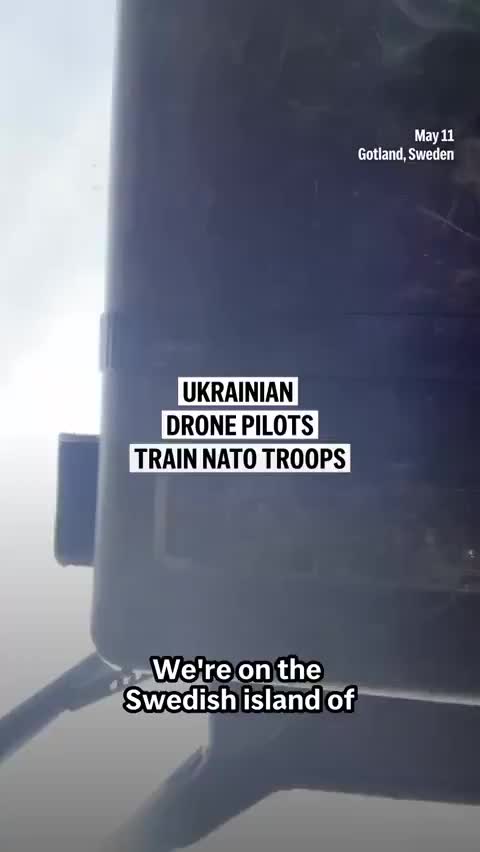
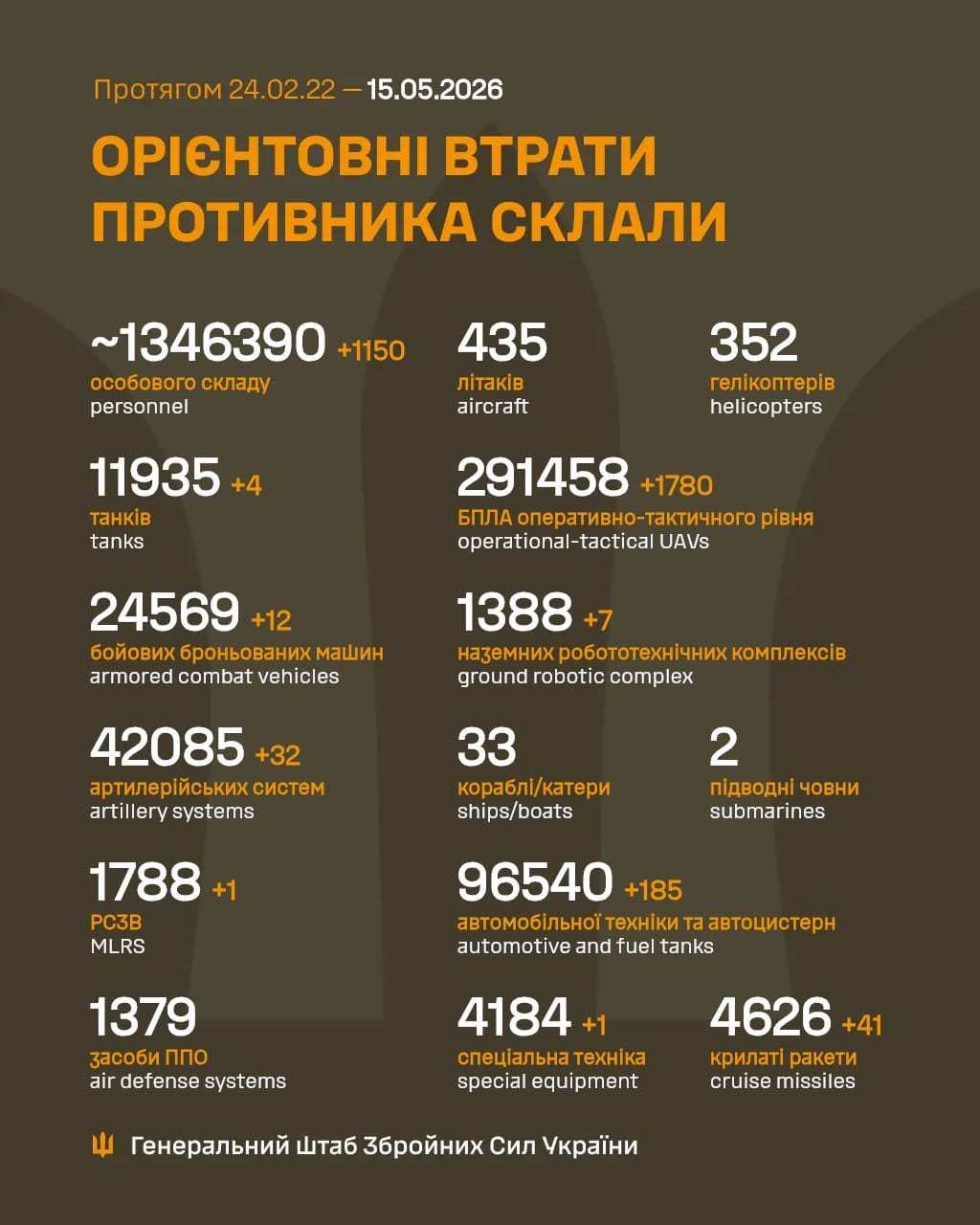
For the first half of the month, the story of May seems like an extension of the situation in March and April. Russia's spring advance has been almost entirely halted, the number of armored vehicles lost remains relatively low mostly because they're being held back, but Russia continues to lose an huge number of troops each day.
Russia is reportedly recruiting new troops at a rate of about 800 a day. For four months now, losses have exceeded the number of replacement troops. Even if Russia skips all training, they are losing the ability to maintain troop strength along the front line.
If you haven't looked at a map of positions in the last year, it may be shocking to see Russian forces once again close to Lyman and occupying a chunk of eastern Kharkiv Oblast that had been liberated during the Ukrainian advances in 2022 and early 2023.
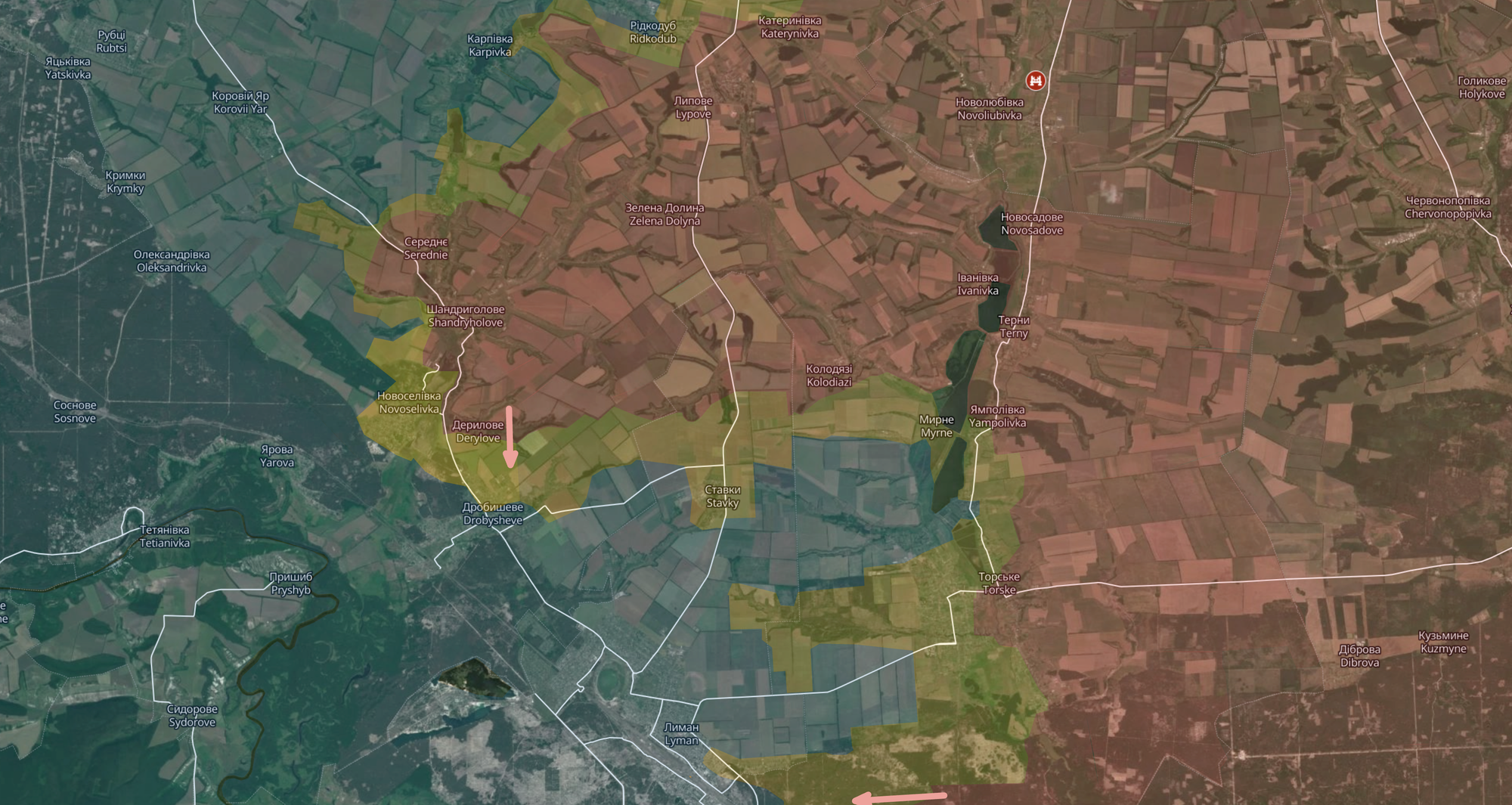
This area was recaptured during a series of small Russian advances in the summer and fall of 2025. It's frustrating to see Russia not only reoccupying the string of lakeshore towns north of Torske, but pressing out to the west into territory that was hard-won by Ukrainian forces who fought through "mud season" after the initial rapid advance had slowed. The strategic city of Lyman was officially liberated on October 1, 2022 after weeks of careful maneuvers and tough fighting. Seeing it, along with locations like Derylove and Stavky, back on the front line after all the work Ukrainians did to liberate this area is beyond disappointing.
This area has been the source of one of Russia's big pushes during the first part of 2026, with the recapture of Lyman a clear goal for the spring offensive. However, those attempts have gone nowhere in the first months of 2026.
 Dr. Michael MacKay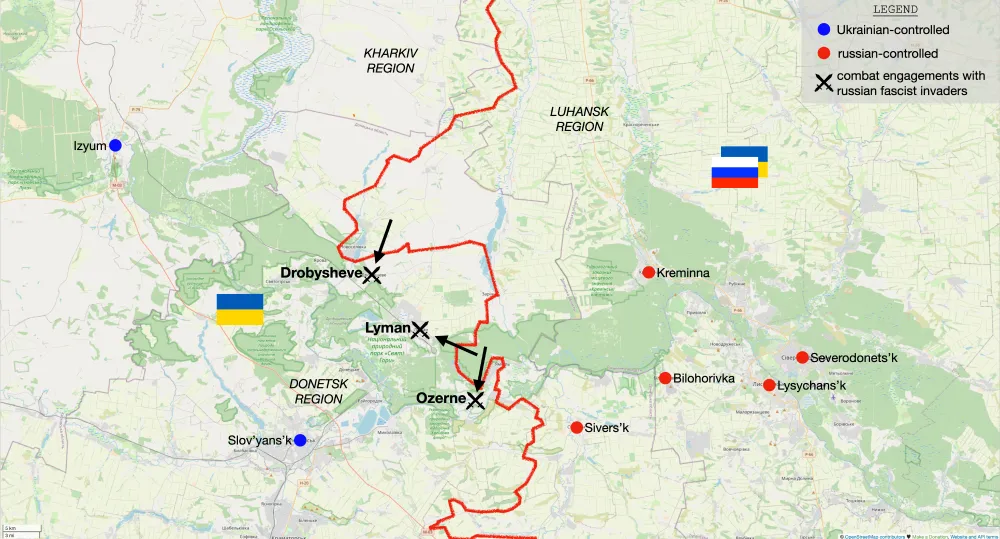
This story has been the same almost every day for the last three weeks. Russian forces keep attacking across the same fields, and through the same stretches of woods. As has become typical, these aren't the "human wave" attacks seen earlier in the war, but consist of smaller groups of Russian troops sent forward in an attempt to infiltrate Ukrainian lines and occupy defensive positions.
While Ukrainian forces seem to be holding, Russia has closed to a distance that puts Lyman in range of tube artillery. Many of the civilians who had returned to the damaged city following its liberation, or ridden out the past changes of control, are again looking for ways to get out. Which has led to several stories about another of using Ukraine's latest weapon.
 Anton Gerashchenko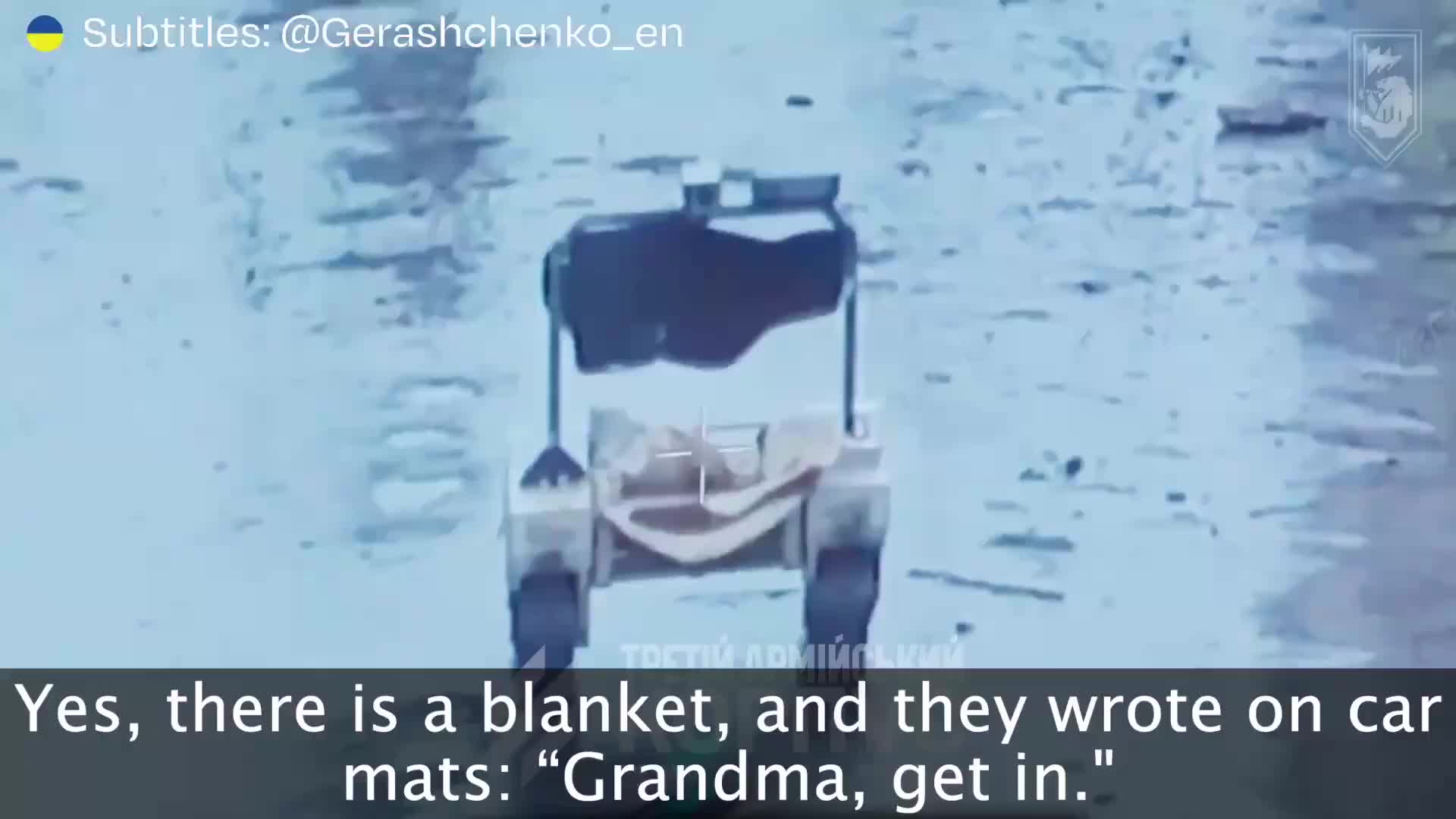
Emergency taxi service is probably not what anyone had in mind when designing this drone. However, like Russia's failing attacks, these drone rescues seem to have become an almost daily occurrence in Lyman.
Russian drones attacked a World Central Kitchen volunteer truck in Kherson.
 Anton Gerashchenko
Russian drones crossing the river and wandering the streets of Kherson to seek out civilian targets has become a tragic feature of the city. Many blocks of the city, especially though within a kilometer of the river, have been slowly abandoned.
 Euan MacDonald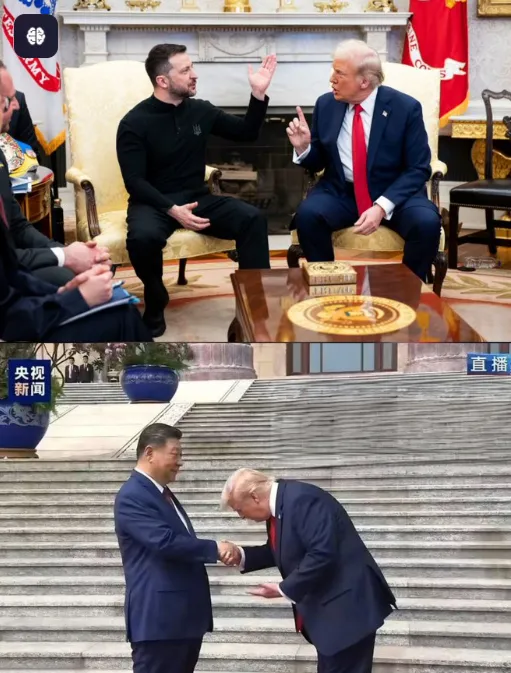







Comments
We want Uncharted Blue to be a welcoming and progressive space.
Before commenting, make sure you've read our Community Guidelines.