
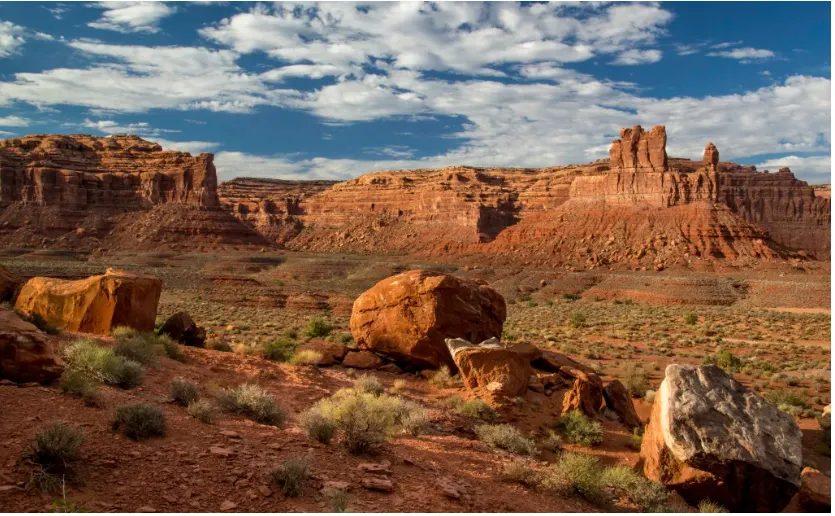
The fierce wrangling over two celebrated U.S. national monuments appears headed for a second round. According to multiple Utah news outlets, our Outlaw Prez is expected to sign an executive order Monday as he did in 2017 to reduce the size of Bears Ears National Monument and Grand Staircase–Escalante National Monument, reviving one of the most consequential public-lands controversies of his first term.
Although I could not over the weekend get a White House spokesperson or other government source to verify the reports, the news has spurred conservation organizations, tribal advocates, and Utah officials to begin preparing for a major legal battle over presidential authority under the Antiquities Act of 1906.
If the sources prove accurate, Trump can be expected to repeat what he did nine years ago — cut Bears Ears by roughly 85% and Grand Staircase–Escalante by nearly half. Several lawsuits challenging the move were filed at the time. But President Joe Biden restored both monuments nearly to their original boundaries in 2021 before federal courts ruled on whether the reductions had been lawful, leaving the constitutional question unresolved.
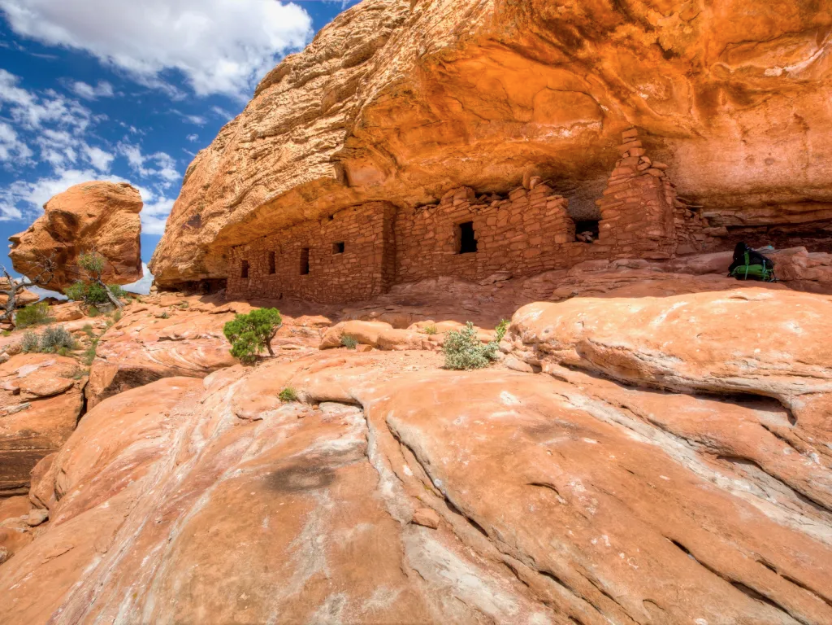
Bears Ears occupies a unique place in the history of conservation. At risk is the natural beauty of the land, the plants and creatures living on it, tens of thousands of American Indian artifacts, some dating back thousands of years, and sites of spiritual meaning to the tribes. Unlike earlier national monuments, it emerged from an unprecedented alliance of tribal governments. The Bears Ears Inter-Tribal Coalition — representing the Hopi Tribe, Navajo Nation, Ute Indian Tribe, Ute Mountain Ute Tribe, and Pueblo of Zuni — spent years advocating for federal protection of a region they regard as an interconnected cultural homeland rather than simply a collection of archaeological sites.
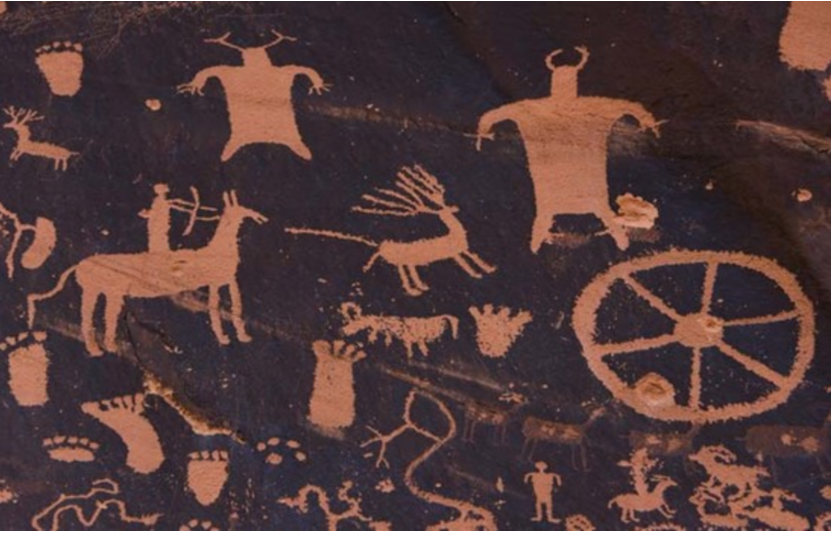
The monument is filled with sacred places, thousands of ancient petroglyphs, cliff dwellings, and locales where herbal medicaments and spiritual healing can be had. President Barack Obama designated the 1.35-million-acre monument in December 2016 after citing its extraordinary concentration of archaeological resources, sacred places, rock ark, cliff dwellings, and land where herbal medicaments and spiritual healing can be had.
Most importantly, the designation included the guarantee of formal co-stewardship over the land with the tribes working in concert with the U.S. Forest Service and the Bureau of Land Management. This has been a sort of template for other co-stewardship arrangements with various tribes ranging from northern Montana to southern Florida.
Grand Staircase–Escalante, established by President Bill Clinton in 1996, protects one of the world's richest repositories of Late Cretaceous fossils along with vast canyon systems, desert ecosystems, and scientifically significant geological formations. Ever since that designation, Utah’s congressional delegation has repeatedly sought reductions in monument-protected land to allow for more local control, recreation, grazing, mining, and drilling. Trump gave it to them, hacking 47% of the designated land out of the monument.
Within their current, restored boundaries, the two monuments encompass millions of acres that have become symbols in the broader debate over conservation, recreation, energy development, and federal land management.
Although this executive order is supposedly only going to be about the two monuments, Lanora Pettit in the Justice Department's Office of Legal Counsel issued a sweeping opinion a year ago saying presidents not only can shrink but also abolish national monuments altogether. This marks a reversal of a 1938 DOJ opinion that had concluded presidents lacked such authority. Pettit has gotten a lot of pushback ever since on that from legal advocates. John Leshy, an emeritus professor of law and former Interior Department lawyer under President Bill Clinton“ told The Washington Post last June, “Putting this out as a legal opinion is sort of tossing a bone to the right wing that hates national monuments and hates public land.” And a grenade at conservationists.
Supporters of reducing the monuments, including many Utah elected officials, have long argued that the original designations exceeded the authority granted presidents by the Antiquities Act and imposed unnecessary federal restrictions on local communities. They have complained that the feds control too much land in the West — 65% in Utah — that the rules governing use of that land are too restrictive, and that states are financially and otherwise harmed by this ownership.
Some also argue that the Western states are being unfairly treated because other states, particularly east of the Mississippi River, contain far less federally owned land. They point to the act's instruction that monuments should encompass the "smallest area compatible" with protecting the identified historic or scientific objects and assert that previous administrations designated far more land than necessary. Such arguments formed the basis of Trump's first-term review of selected large national monuments.
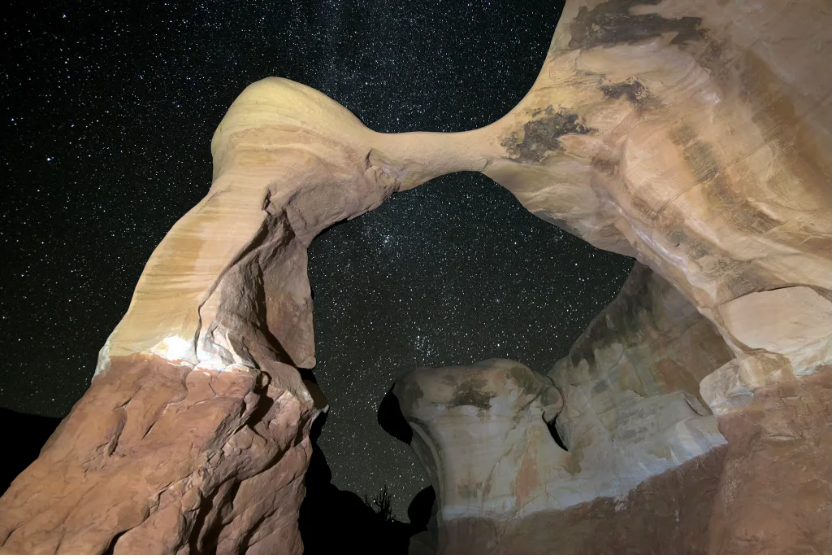
It's important to interject here that it was President Barack Obama who designated Bears Ears as a monument in the waning days of his administration. And as Trump has shown us time and again, he harbors a sick and deeply racist obsession with trying to wreck anything Obama did.
But as journalistic digging uncovered in 2018, that wasn't the sole motive for shrinking the monuments. Freedom of Information Act requests produced correspondence showing that Interior officials had focused their attention on what could be extracted from protected public lands if they lost their designation as national monuments: timber, fish, minerals, and gobs and gobs of fossil fuels. What was circumstantial before was made clear. It was if these industries were clients instead of constituents.
Interior Secretary Ryan Zinke undertook a review of 27 national monuments in the spring of 2017 with an eye toward eliminating some and lopping off hunks of others. When the review was completed with the recommendation that the acreage of some national monuments be greatly diminished, the response of foes was immediate. Said Randi Spivak, public lands director at the Center for Biological Diversity, “Zinke’s sham review was rigged from the beginning to open up more public lands to fossil fuel, mining, and timber industries.” Some Democrats also blasted the report. Rep. Raul Grijalva of Arizona noted, for instance, “The review has been secretive. It has been opaque and it has been contrived. I say it’s contrived because the conclusion was already written.”
That wasn’t hyperbole. Zinke was supposed to be supervising an objective study. He and his minions were actually burying the benefits of keeping the national monuments the size they had been designated and emphasizing how shrinking the monuments would be good for the economy. That wasn’t some new agenda from Zinke. Opening up more highly protected public lands to exploitation (and keeping less protected land from obtaining better protection) have been right-wing goals for five decades. See Sagebrush Rebellion.
The current Interior secretary, the oil-soaked former governor of North Dakota, Doug Burgum, conducted another monument survey last year. This was tied directly to Trump's "energy dominance" agenda and applied to all national monuments and mineral withdrawals, not just a selected list like Zinke's had been.
Critics saw the new review as laying the groundwork for revisiting Bears Ears, Grand Staircase–Escalante, Baaj Nwaavjo I'tah Kukveni–Ancestral Footprints (near the Grand Canyon), Chuckwalla, and other Biden-era monument actions. Unlike Zinke's study, however, no public report has been released. We may be seeing the first fruits of it Monday. And it may cast a much larger net than the two monuments that were reduced in 2017.
In a 2020 filing for a summary judgment against Trump's downsizing in Hopi Tribe et al. v. Trump et al., Native American Rights Fund attorney Natalie Landreth wrote: “The issue here is simple: whether the President had the authority to do what he did. He clearly did not. Neither the plain text of the Antiquities Act, nor its legislative history can be reasonably construed to allow the President to do what he purported to do here. […] These powers do not encompass the powers President Trump claims.” She said that if Trump gets his way, it might change the intent of the Antiquities Act, “render[ing] all national monuments subject to the impulse of every new President.”
It was clear in 2017 that Trump had ahead of time targeted the land he removed from Bears Ears for development, including mining and drilling. Before a court stay was put on more of those activities, significant damage was done to some previously protected land, just as expected. So it’s no hard task figuring out what will happen if the White House wins in court. The whole notion of preservation and conservation is poison to the Trump team and a host of modern Republicans, unlike President Teddy Roosevelt who twisted arms to get the Antiquities Act passed in the first place.
The expected new executive order drew swift responses Saturday from conservation organizations. Earthjustice, which challenged the 2017 reductions in federal court, announced it is prepared to return to court immediately if new such proclamations are issued. The organization argues that the Antiquities Act authorizes presidents to establish monuments but does not authorize later presidents to diminish or revoke them. Heidi McIntosh, managing attorney for Earthjustice's Rocky Mountain Office, said that another reduction would once again place nationally significant cultural and natural resources "in the President's crosshairs" and characterized the reported action as serving extractive industries rather than the public interest.
Southern Utah Wilderness Alliance Executive Director Scott Braden likewise weighed in:
“Monday’s anticipated action by President Trump is unlawful, unwise, and unacceptable. These spectacular landscapes deserve to be protected for current and future generations, not opened to exploitation at the behest of Utah politicians. This action will only bring uncertainty and chaos to places that should instead be protected for their rich biodiversity, unique geology, and remarkable cultural values. Grand Staircase-Escalante is a crown jewel of America’s public lands and Bears Ears is an incomparable cultural landscape; the protection of both is overwhelmingly popular with Utahns and Americans. The Southern Utah Wilderness Alliance is committed to defending the monuments — whether that’s in a court of law or the halls of Congress. We are confident that President Trump’s reckless and unlawful acts will be rejected and the Monuments restored.”
Most legal authorities familiar with the matter are also confident. They believe the vast preponderance of legislation and precedent means the plaintiffs fighting the shrinking of the monuments will ultimately win. However, that is not guaranteed given the trajectory the federal judiciary has been on. The Pettit opinion from Trump's DOJ probably clashes with Federal Land Policy and Management Act of 1976 (FLPMA). But that’s not totally certain. According to James Salzman writing in the December 7, 2017, issue of the Harvard Law Review. These would be key issues before the courts:
The meaning of the Antiquities Act. While the law is clear on how to proclaim national monuments, it is silent on how to revoke or reduce them. Therein lies the problem. Does silence mean that the president may only create and extend monuments—a one-way ratchet that only Congress can reverse? This was the view of a 1938 Attorney General’s legal opinion about revoking monuments. Other public land laws from that era included specific processes for how to reduce protected areas. Or does the silence mean it was too obvious to even mention that “what the president can do, the president can equally undo?” The historic practice cuts both ways. The large Grand Canyon and Death Valley monuments weaken the argument that the Act’s authority should be limited to small areas focused on historic artifacts. At the same time, a number of presidents have reduced the size of monuments, most notably President Wilson who reduced Mount Olympus National Monument by over 300,000 acres (almost half the total size).
The importance of the Federal Land Policy and Management Act of 1976 (FLPMA). This law comprehensively revised the management of public lands. FLPMA left the Antiquities Act in place and prohibited the Secretary of the Interior from modifying or revoking national monuments. The prohibition was strange because the Secretary never had the authority to create monuments, much less revoke them. As a group of law professors has argued, the legislative history makes it far more likely that this was an error left over from earlier drafts and that Congress expressed a clear intent to restrict executive branch authority from unilateral reductions in monuments.
And then there is separation of powers. These days, the idea seems to be separating everybody but the president from power.
When litigation over the matter gets to the Supreme Court, which it almost inevitably will, a reasonable ruling under FLPMA would be to leave downsizing of monuments solely in the hands of Congress. If that means simultaneously taking upsizing of existing monuments out of presidential hands, so be it.
Or the Supreme Court could rule in favor of one more expansion of executive power at the expense of Congress, giving another boost to the unitary executive theory so beloved by the late Justice Antonin Scalia. If that happens we could see the Trump-Biden clash in this matter repeated on steroids, with one administration shrinking or getting rid of certain national monuments and the next administration expanding them in a never-ending circle of absurdity.
For good or ill, whichever way the final ruling goes will affect the future of public lands throughout the American West and the 20% of national monuments east of the Mississippi River. Like so much else these days, defeating the impact of a bad ruling should that be the outcome, will have to wait for a new president and Congress to achieve. There's gonna be a long, long to-do list.






Comments
We want Uncharted Blue to be a welcoming and progressive space.
Before commenting, make sure you've read our Community Guidelines.