
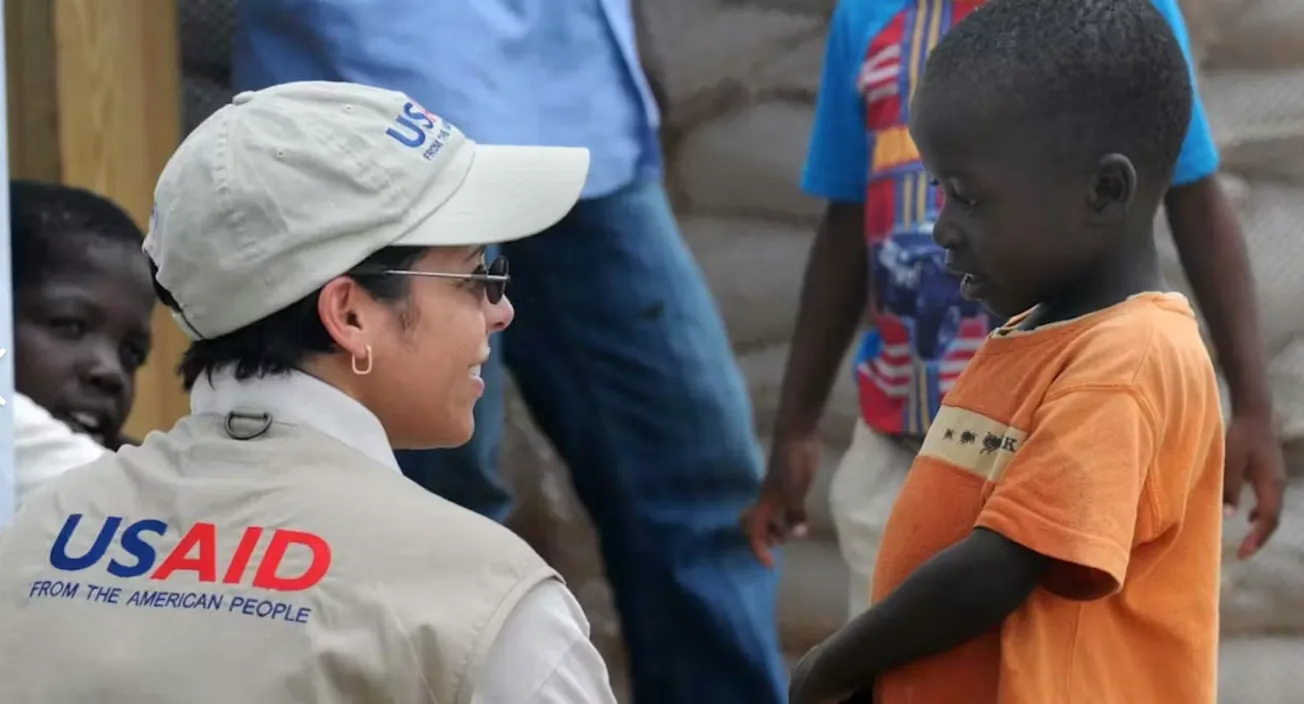
In a study published this week, The Lancet Global Health estimates that cuts to official development assistance could result in millions of avoidable deaths by 2030, many of them young children, many of them in places where mortality had been falling steadily for years.
Under a scenario of “mild defunding,” consistent with current donor-country trends, the study projects 9.4 million excess deaths, including 2.5 million among children under age 5. Under a more aggressive rollback — where aid falls to roughly half of 2025 levels — the number rises to 22.6 million deaths, including 5.4 million young children.
The U.S. Agency for International Development, for decades the world's largest bilateral aid agency, was dismantled in July, and reduced its programs by 83%, and overall funding by half, from $68 billion to $32 billion. The United Kingdom plans to reduce aid spending from 0.5% to 0.3% of gross domestic product by 2028 — roughly $6 billion redirected, in part, to increased military spending. Germany, Sweden, and other traditionally strong donors have also announced substantial reductions. The cuts will disproportionately harm the poorest people in the poorest countries.
Between 2002 and 2021, global child mortality declined sharply, particularly deaths from infectious diseases such as malaria and HIV/AIDS. The study’s authors, led by Prof. Davide Rasella of the Barcelona Institute for Global Health (ISGlobal), tie that progress directly to sustained overseas aid targeted at health systems, nutrition, and disease control. Their analysis finds that aid flows were associated with a 39% reduction in under-5 mortality, with especially strong effects on infectious disease and nutritional deficiencies.
This was not episodic generosity in emergencies. It was sustained financing of routine care. Aid paid for supply chains, trained health workers, provided basic pharmaceuticals, and surveilled disease — elements harshly affected by sudden funding withdrawals. When those systems weaken, mortality rises. Not eventually. Immediately.
As I wrote here in November, Trump regime's USAID cuts have unleashed a savage health crisis and soaring death toll across Africa:
The destruction was carried out under the banner of ending “a culture of dependency,” a talking point that reads like satire when juxtaposed against the abundance of graves now being dug because so much health-related funding has been terminated. In the wake of the cuts, mountains of the dead are African, and many of them, tens of thousands, are children, analysts say. This is one of the bitter aftertastes of Trump’s unsavory “America First” sham. As The Economist notes, “...the signs are growing that America First means Africa last.” [...]
The funding cuts’ impacts on children are especially noxious since USAID’s very first effort was spearheading child survival campaigns, which saved millions of lives with a simple intervention. The Foreign Assistance Act of 1961 establishing the agency was signed by President John Kennedy on Labor Day. Critics on the left later noted, accurately, that some USAID programs gave cover to CIA meddling, casting a shadow on the agency’s humanitarian efforts. But that’s a topic for another day.
The ISGlobal researchers modeled three futures: business as usual, mild defunding, and severe defunding. Rasella told The Guardian that the mild defunding scenario is “not unlikely,” given recent political decisions across donor countries. The severe scenario, he said, aligns with the implicit trajectory of policy platforms advanced by rightwing parties gaining power across Europe.
A commonly heard defense of aid cuts is that recipient countries can merely reallocate domestic resources. But Rasella’s field observations challenge this, illustrating how quickly aid withdrawals can destabilize care. In rural Mozambique, doctors told him they had run out of antibiotics for children because all the supplies had been distributed through USAID. Reallocating domestic resources, Rasella noted, “will never match the level of assistance we have been seeing.”
Once clinics close and staff disperse, restoring care becomes far more expensive — if it happens at all. Health systems cannot absorb sudden funding losses without structural damage. Eric Pelofsky of the Rockefeller Foundation, which helped fund the research, warned that the funding shortfalls created by government withdrawals are “too huge for any non-government to take on.” Philanthropic organizations can innovate. They cannot replace public systems operating at national scale.
Adding to all this bad news? If and when levels of assistance are restored, say because new administrations take over in the United States and among other big donor nations, restoring the butchered services that the aid funded will take far, far longer to achieve than did the lethal immediacy of chopping them. Clinics, supply chains, skilled staff, and health-monitoring programs sabotaged by the cuts cannot easily or quickly replaced.
Meanwhile, the United States, Russia, the UK, France, and China are spending hundreds of billions of pounds, dollars, rubles, euros, and yuan to upgrade and add to their nuclear arsenals. Foreign assistance even before the aid cuts was a virtually a pittance compared with that. Priorities, after all.
See also: Starvation by design: How U.S. aid cuts have become death sentences in Kenya and beyond








Comments
We want Uncharted Blue to be a welcoming and progressive space.
Before commenting, make sure you've read our Community Guidelines.