

With allies embedded at the highest levels of the Trump regime, a small, disciplined cadre of conservative ideologues stands close to what one calls “total victory” in demolishing federal climate initiatives.
Lisa Friedman and Maxine Joselow reported in The New York Times Tuesday that four veterans of our Outlaw Prez’s first term have spent more than a decade laying the groundwork to dismantle the federal government’s authority to regulate greenhouse gases — and they are now on the verge of succeeding. The big prize they’re hankering for is the revocation of the Environmental Protection Agency’s 2009 endangerment ruling, the scientific determination that carbon pollution threatens public health and welfare and therefore must be regulated under the Clean Air Act.
The official lies breathed into public discourse by the current chiefs of the EPA and Department of Energy are that carbon emissions are not as harmful as they are beneficial, and changing climate won’t be as economically destructive as has been claimed in scientific report after report since the 1990s.
The two journalists also reported:
On Thursday, [EPA Administrator Lee] Zeldin will move to repeal a scientific determination that requires the federal government to combat climate change, according to Karoline Leavitt, the White House press secretary. The action will have taken just over a year to finalize, a remarkably rapid pace for an agency that typically spends at least three years on such efforts.
Legal experts said the speed would be no accident: It could allow the Supreme Court to consider related legal challenges while Mr. Trump is still in office. There, the conservative majority with an anti-regulatory bent could chip away at the federal government’s power to limit the greenhouse gas emissions that are dangerously warming the Earth.
The scientific underpinning of the endangerment ruling was laid out 17 years ago in the agency’s 210-page assessment of whether greenhouse gas emissions are harmful to humans. The document was a response mandated by a 2007 Supreme Court decision regarding the intent of the Clean Air Act. The majority ruled the act didn’t just allow but obligated the EPA to regulate the emissions if agency scientists found the harm to be real. The scientists subsequently determined that there was ever more evidence that six greenhouse gases accumulating in the atmosphere were causing tremendous harm through heatwaves, stronger, more frequent storms and accompanying floods, with regional droughts and widespread effects on crop yields. All this was affecting human health, they found. These described impacts and others are now being felt far more widely and intensely than they were back then, just as climatologists predicted.
Key architects of the Trump rollback — Russell T. Vought, Jeffrey Clark, Mandy Gunasekara, and Jonathan Brightbill — claim to be motivated by cost-benefit analyses and regulatory efficiency, but that’s malarkey. It’s tempting to give them a bit of slack and chalk up their attacks on climate action simply to scientific illiteracy and the fantasy that climate change can be neutralized by failing to acknowledge it. As if turning away from the fire will stop the houses from burning. But they're far more sinister than that.
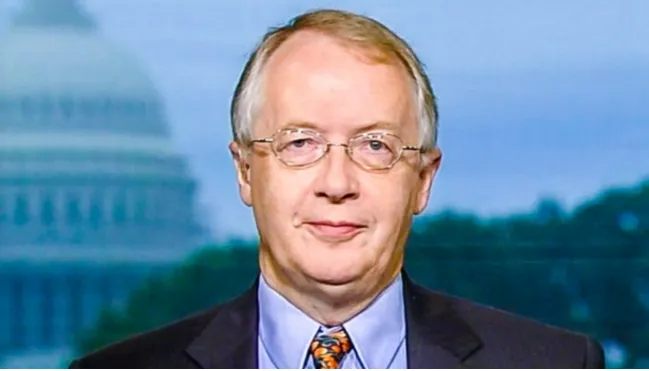
Who’s the guy who said, “We are pretty close to total victory”? Myron Ebell. He was head of Trump's 2017 transition team at the EPA and told E&E News at the time that the agency had "been staffed with scientists who believe the global-warming alarmist agenda." He suggested cutting the agency’s 15,000-person staff to 5,000. Ebell told the Times that:
...dozens of conservative activists, lawyers, scientists and others had worked for years to prepare the case against the endangerment finding. But he singled out Mr. Vought, Mr. Clark, Mr. Brightbill and Ms. Gunasekara as the ones who drafted detailed plans of attack that the second Trump administration has largely followed.
“No amount of outside public support would have done anything if there hadn’t been those four people: Russ and Jeff and John and Mandy,” he said.
Climate “skeptics” — a clumsy euphemism for science deniers like Ebell — claim to take seriously other issues like national security and economic stability. But in rejecting the conclusions of studies by thousands of scientists — a rejection that includes having created a sketchy, sloppy, widely sneered-at propaganda report attacking the climate consensus as “alarmism” — these deniers put national security, the economy, and a whole lot else at risk.
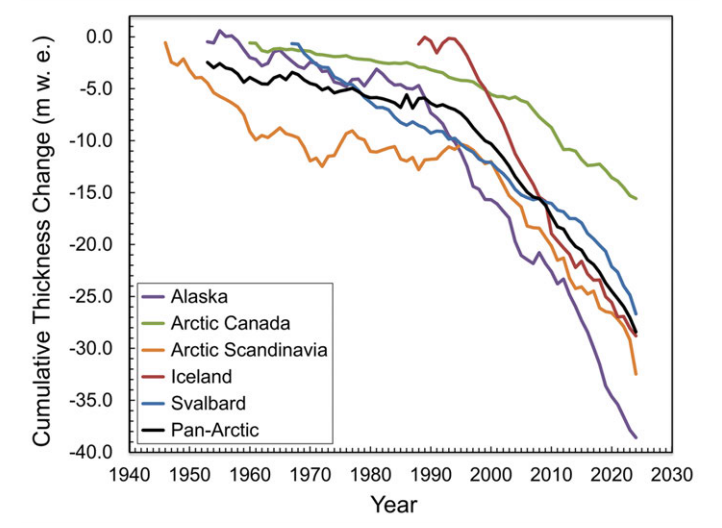
Consider just one example, the Arctic. In a Financial Times commentary last week, Florian Krampe, director of the climate change and risk program at the Stockholm International Peace Research Institute, explained how warming is literally altering the physics that underpin military stability. As melting ice reshapes ocean salinity and temperature, underwater acoustics — essential to submarine detection — become unpredictable. Permafrost thaw destabilizes runways and radar stations critical to nuclear early-warning systems. And the permafrost that covers a third of the northern hemisphere is melting. Exactly how large an impact this will ultimately have remains unknown, but it won’t be nothing.
Nuclear deterrence, for instance, depends on predictability. When detection systems fail or behave unpredictably, the risk of false alarms and miscalculation rises. The recent expiration of the New START Treaty, which restricted the number of nuclear missile warheads the U.S. and Russia could deploy, only heightens the danger, narrowing diplomatic margins just as environmental ones blur.
And yet, rather than integrating climate adaptation into defense planning, the U.S. is retreating from the scientific foundations that make rational planning possible at all. You cannot maintain deterrence with fantasy physics. The irony is brutal. Global military spending has surged, and Trump wants to increase it by another 50%, yet investment in protecting defense infrastructure from climate damage lags far behind. Fighter jets are grounded when runways buckle. Radar systems fail when foundations thaw. These are not mere inconveniences.
Of course the climate retreat will be and already is destructive in the civilian sphere too. As storms intensify and seas rise, the costs of inaction are being dumped onto states and municipalities already stretched thin.
Yet the architects of rollback insist they’re defending freedom and economic rationality. Rather they’re waging war on evidence itself. That should be no surprise since Exxon, the Koch Brothers, and an entire ecosystem of science-rejecting toadies and think tanks have operated under a prevarication agenda since the late 1970s. Gunasekara and Brightbill have openly described their strategy as a secretive effort to undermine scientific consensus and prevent public scrutiny. Clark has framed climate policy as authoritarian conspiracy. Vought has turned regulatory sabotage into an article of faith
The retreat engineered by the Trump team is not simply another pendulum swing in environmental policy. The endangerment finding is the legal keystone supporting emissions rules for vehicles, power plants, and industry. Remove it, and climate governance collapses not just for this regime, but potentially for decades. Future presidents could find themselves legally handcuffed, unable to act even as impacts accelerate if the Supreme Court majority goes along with the science rejectors.
There’s pushback from the states. Karen Zraick reports that New York and Vermont have passed laws based on a simple principle: polluters should help pay for the damage they caused. These measures aim to fund adaptation — flood defenses, resilient infrastructure — by assessing costs against the largest historical emitters. Other states, from Maine to Illinois to New Jersey, are considering similar bills.
Industry groups are panicking. Exxon’s lawyers deride the strategy as “ridiculous.” What they do not say is that the alternative is to continue externalizing costs onto the public — higher taxes, degraded infrastructure, unaffordable insurance and permanent disaster recovery. The American Petroleum Institute calls these laws an “existential threat” and is pushing for liability shields akin to those protecting gun manufacturers.
Welcome as it is, state action is not a solution but a stopgap. And since climate change doesn’t stop at state boundaries, what Arkansas or Idaho does or fails to do will be felt elsewhere. But these actions expose a truth the federal retreat tries to obscure: Someone will pay. Will it will be the industries that profited, or the communities left underwater?
Climate backtracking rests on a fantasy. Physics does not retreat. The Arctic will continue to warm, its glaciers and ice sheets to melt. Ports will continue to flood. Heat will continue to strain grids, workers. and food systems. Security planners will continue to face degraded detection environments whether or not the EPA is allowed to say why.
What, then, is to be done? First step, obviously, is to boot out the current regime. The replacement leaders we choose must be determined to move briskly and comprehensively in building new climate policies to catch up for lost time.











Comments
We want Uncharted Blue to be a welcoming and progressive space.
Before commenting, make sure you've read our Community Guidelines.