

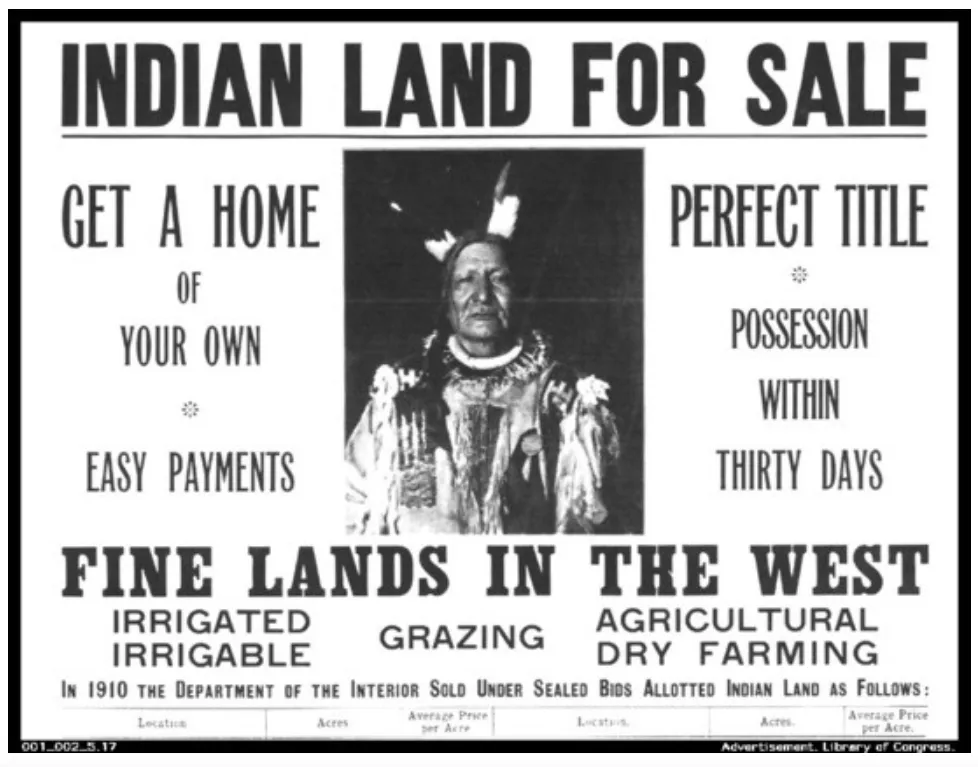
Only the most retrobate people with malevolent agendas — like the late Rush Limbaugh — still insist the U.S. government didn’t commit physical and cultural genocide against Native peoples, something that profoundly affects many of their descendants today. At the heart of it all? Snatching the land. Although interactions between tribes and the federal government have seriously improved in recent decades — most notably under President Barack Obama, who emphasized government-to-government relations — the chasm between promises and performance remains vast.
Some progress has come through negotiations that are returning small portions of ancestral land with co-stewardship of other public lands being undertaken, changes that most Native activists previously considered impossible. Wide-ranging activism among young Natives has also been rising — a very welcome sign. Under Obama and President Joe Biden, Natives at least had the impression we are being listened to. But all is not well.
Even before the recent budget crisis and government shutdown, the Trump-Vance regime strained the federal government’s capacity to meet its treaty obligations to the tribes, targeting funding and eligibility rules for programs that Native families rely on to escape poverty and hunger.
In less than a year, the administration has rolled back staffing and funding for public health programs, weakened workplace safety regulations, and cut critical research infrastructure that addresses structural health inequities. Major legislation also slashed Medicaid and CHIP, programs tens of thousands of Indigenous families depend on. While tribal populations are exempt from some new requirements, public health experts warn the cuts could widen gaps in tribal health services and exacerbate disparities caused by chronic underfunding.
SNAP, the nation’s key nutritional safety net once known as food stamps, also faces cuts. At least half a million Native households rely on it for food security. The phasing out of culturally relevant initiatives and reductions in overall funding weaken a program central to fulfilling U.S. government obligations to Native communities. As the Economic Policy Institute notes, “the relentless attack … on basic needs programs, access to data, and economic equity will harm the well-being of Native families and children even more.”


Broken Promises Then and Now
Every few years, the same story reappears, dressed in new bureaucratic language. Whether it’s health care, education, or infrastructure, federal “obligations” to Native tribes are viewed by many as charity. They’re not. They’re debts owed under law and history.
I’ve stood below Mount Rushmore, thinking about my own Native heritage and about that word — obligation. The Indian-unfriendly presidents dynamited into the Black Hills granite are a monument to broken promises: The Lakota were guaranteed “absolute and undisturbed use” of that land by the 1868 Treaty of Fort Laramie. But when flakes of gold were found by Lt. Col. Custer’s expedition into the area in 1874, Congress simply ignored the treaty. That is U.S.-Native history in miniature: promises of perpetuity revoked at the first whiff of profit or political convenience. The Black Hills are but one of a plethora of examples.
Unfortunately, the pattern survives today, just translated into budget lines. Every year, the federal government decides whether it feels like honoring its treaty obligations to Native nations. Most of the money that keeps Indian Country’s schools, hospitals, and public safety programs running comes from discretionary appropriations — meaning Congress must re-approve it annually. If lawmakers fail or fight, the pipeline shuts down. Imagine if Medicare or veterans’ benefits worked that way.
A recent Brookings study tallied roughly $37.5 billion in federal spending for Native communities in FY 2024. Sounds impressive until you realize that the Indian Health Service alone needs twice that just to meet basic standards of care. More than 90% of Bureau of Indian Affairs funding still sits in the discretionary category. Brookings’s researchers argue that this structure contradicts the very idea of treaty obligations: You can’t make a promise “forever” and then fund it “when possible.”
Recent Census data shows Native families remain disproportionately vulnerable. Poverty rates among Native children are more than double those of white children, and roughly one in four Native households faces food insecurity. Health coverage lags far behind the national average. Cuts to SNAP and Medicaid hit Native families first and hardest. That’s not just economics; that’s policy violence.
Legal Promises, Broken Precedents
The courts have long enabled this pattern. In Cherokee Nation v. Georgia (1831), the Supreme Court called tribes “domestic dependent nations,” cementing federal “trust” control. Then Lone Wolf v. Hitchcock (1903) handed Congress plenary power to break treaties at will. “Trust responsibility” became shorthand for “trust us — until we change our minds.” That legal rot — the ruling is viewed by critics as the Dred Scott decision for Natives — still shapes today’s funding chaos.
Brookings proposes turning core tribal programs into mandatory spending — like Medicare or Social Security. That way funding flows automatically, immune to shutdowns or partisan games. Advance appropriations and inflation adjustments would finally let tribal governments plan long term. That’s not radical. It’s just practical. You can’t build clinics or hire teachers when your budget expires every September.
Critics will call this expensive. But the cost of broken promises is higher. Every underfunded clinic, every understaffed school, every missing bridge or water system is an invoice stamped past due. The EPI’s numbers don’t just describe hardship — they tally the bill for federal indifference.
We all know a good portion of America loves symbols more than substance. We drape ourselves in words like “honor” while all too often ignoring what that would actually require. A start would be simply paying the bills long overdue to the people displaced. The legal foundation for change already exists. The trust responsibility doctrine says the federal government must protect tribal lands, resources, and welfare. Turning that principle into permanent funding isn’t a handout and it isn’t overly generous altruism. It’s compliance with obligation. It could restore a measure of economic self-determination to the tribes: When funding is secure, tribes can plan and build for their own futures rather than wait out Washington.
We’ve heard the excuses for two centuries — that “the budget is tight,” that “reforms take time,” that “progress is being made.” But time has already been taken, and progress delayed is still denial. If Congress can move billions overnight for defense contractors and tax breaks, it can move the funding that was promised to Native nations. Congress should move the Indian Health Service, the IHS, BIA, and BIE budgets into the mandatory column — permanently. No more annual cliffhangers. No more excuses.
Not that the current Congress will do that, obviously.
Turning treaty obligations into permanent, guaranteed funding would not only keep the lights on in schools and hospitals — it would also bolster an independence needed for real sovereignty, one that cuts against the ruling in Lone Wolf. The real test of national honor isn’t carved in granite or waved at a parade.
RELATED:
- In the Courts of the Conqueror: The Ten Worst Indian Law Cases Ever Decided by Walter Echohawk
- American Indian Sovereignty and the U.S. Supreme Court: The Masking of Justice by David E. Wilkins
- American Indian Treaties: The History of a Political Anomaly by Francis Paul Prucha
- The Heartbeat of Wounded Knee: Native America from 1890 to the Present by David Treuer















Comments
We want Uncharted Blue to be a welcoming and progressive space.
Before commenting, make sure you've read our Community Guidelines.