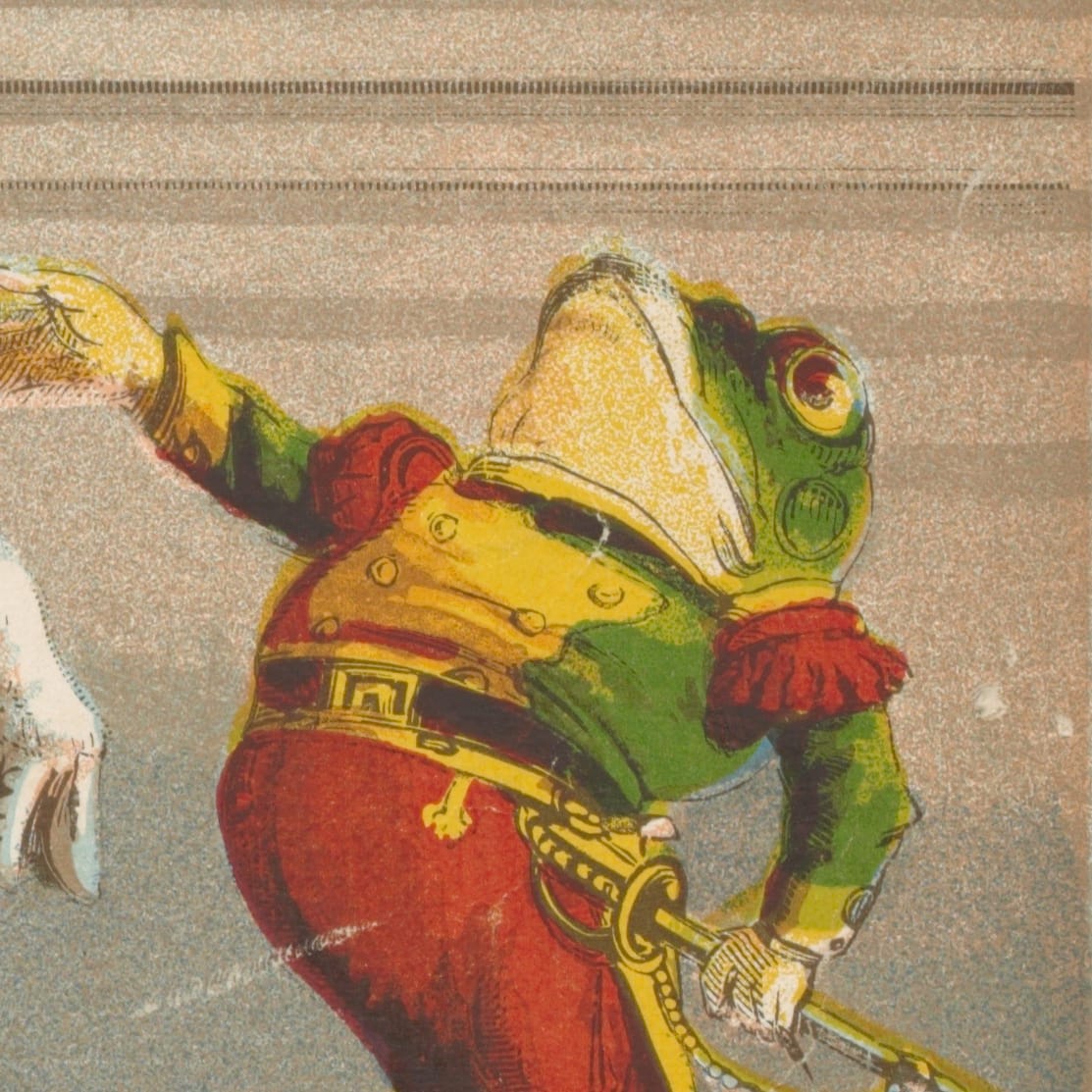


“The principle of non-intervention [is] one of the basic pillars of international relations in the Latin American vision. … [T]he intervening state is more powerful than the one suffering interference, and constitutes an illegitimate act of force.” — Augusto Cançado Trindade (Brazilian jurist)
“The Monroe Doctrine may have started as a shield against Europe, but it became the club with which Washington disciplines its neighbors.”— Eduardo Galeano, The Open Veins of Latin America, (1971).
Since the Trump regime’s first blasting of an alleged drug boat and its crew in the Caribbean off Venezuela, followed by more of the same — with implicit threats to put the Marines on the ground with the object of ousting President Nicolás Maduro — I’ve been thinking a lot about the wretched tally of U.S. interventions in Latin America over the past century and a quarter. These have routinely been justified with transparently self-interested excuses that somehow always seem to add up to money.
For the record, Maduro is an unpopular autocratic leader running a thuggish, incompetent government. Venezuelans deserve better. But the long U.S. record of overturning and trying to overturn governments (including Venezuela’s since 1999), reeks of failure and atrocity. In 1954, CIA Director Allen Dulles and his brother Secretary of State John Foster Dulles didn’t send in the Marines to overturn the freely elected president of Guatemala. They cajoled a Guatemalan to do it. He pulled it off almost bloodlessly. But this led to a civil war in which 200,000-250,000 Guatemalans were killed. The original issue? Ensuring impoverished peasants had access to fallowed plantation land owned by U.S. companies, including United Fruit, whose shareholders included the Dulles brothers. Can you spell corruption?
I spent six undergrad and graduate years studying Latin American cultural, political, diplomatic, and economic matters. At the time, in the superpower Cold War of the late 1960s and the wake of the Cuban missile crisis, Anastasio Somoza Debayle was the corrupt and iron-fisted president of Nicaragua. He was the younger brother of Luis Somoza Debayle, who had preceded him in office, after taking over for their father, the dynasty’s founder, Anastasio Somoza García Somoza, who was assassinated in 1956. President Franklin Roosevelt had once reputedly remarked that this first Somoza, who had murdered his foes in cold blood, was a “son of a bitch, but he’s our son of a bitch.” Whether FDR actually said that or not, it was certainly the attitude of his administration. His 1933 announcement of a “Good Neighbor” policy toward Latin America was an improvement over what had previously been true since his cousin Theodore’s time in the White House. But going forward all too often, it was U.S. authorities who were the s.o.b.s.
My diplomatic history books at the time referred to the Caribbean as a “Yankee lake.” Three of my professors took the position that this was appropriate and better for everyone concerned, especially in the Cold War. They’d have been okay with Trump’s “Gulf of America” renaming. And probably his attacks and threats against Venezuela.
We need to back up a couple of centuries. (Note: Succinctness mandates omitting many nuances and simplifying complexities.)
Shadow of Empire: How the Monroe Doctrine still haunts the Americas
In December 1823, President James Monroe issued what appeared on the surface to be a declaration of independence for the Americas. This Monroe Doctrine warned European powers not to interfere in the Western Hemisphere — a promise, supposedly, of hemispheric solidarity. But from the start, the doctrine contained a quiet fraud. It claimed to protect Latin America from empire while laying the groundwork for one of its own.
Two centuries later, its shadow endures. The Monroe Doctrine, together with its later mutation, the 1904 Theodore Roosevelt Corollary, opened an era of “Gunboat Diplomacy.” The corollary was spurred by debt troubles in Venezuela. It was never truly about liberty or sovereignty, but rather control. The doctrine and corollary gave sketchy moral and legal cover to a century and a half of military occupations, covert operations, and economic coercion that built the foundations of U.S. empire in the Americas. The story is not one of protection — it’s one of domination masked as divine providence.
Long ago I was taught that the U.S. imperial period didn’t begin until the 1890s, despite the war-ending treaty with Mexico in 1848, the invasion of Canada in 1812, and a century of land-grabbing Indian wars from 1788-1890. The young United States entered the 19th Century already addicted to expansion. Decades before the phrase “Manifest Destiny” was coined, the seizure of tens of millions of acres Indigenous lands, the annexation of Florida, and the Louisiana Purchase had convinced the political elite that growth equaled virtue. The Monroe Doctrine simply internationalized this belief: that the hemisphere existed to reflect U.S. interests and U.S. power.
At first, the doctrine was symbolic. The United States lacked the muscle to enforce it, relying on the British Navy to keep Europeans at bay. But the sentiment outlived the weakness. As U.S. industrial and military power grew, so did its appetite for influence. By the time “Manifest Destiny” became a national gospel in the 1840s, the ideology of expansion had already fused moral righteousness with economic ambition. The invasion of Mexico in 1846 — brazenly disguised as a defensive war that then-Congressman Abe Lincoln labeled “from beginning to end, the sheerest deception” — ripped away 60% of Mexico’s territory. Former President Ulysses S. Grant said in 1879, “I do not think there was ever a more wicked war than that waged by the United States on Mexico. I thought so at the time, when I was a youngster, only I had not moral courage enough to resign.”
The doctrine’s promise of a hemispheric shield soon became a lash. What Monroe tendered as a defensive statement of sovereignty became justification for empire.
By the turn of the 20th Century, U.S. elites no longer pretended their project was anything but imperial. The Spanish-American-Cuban War of 1898, sold to the public as a crusade to liberate Cuba, was the moment the mask dropped. The United States annexed Puerto Rico, Guam, and the Philippines, and occupied Cuba. The hemisphere was declared safe from Europe — but not from Washington.
President Roosevelt’s corollary to Monroe stripped away even the pretense of restraint. Declaring that “chronic wrongdoing” in the Americas required U.S. intervention, Roosevelt announced that the United States would act as an “international police power.” Folksinger Phil Ochs would later pan this in his searing 1966 song, Cops of the World.
From 1900 to 1930, U.S. Marines stormed ashore again and again: in Cuba, Haiti, the Dominican Republic, Nicaragua. They toppled governments, guarded customs houses, and installed compliant regimes. The Panama Canal, seized after Roosevelt orchestrated a revolt against Colombia, became both a marvel of engineering and a monument to empire. The United States no longer pretended to oppose imperialism — it had simply decided to monopolize it. The last Marines didn’t leave Nicaragua until 1933.
Throughout the early 20th century these so‑called “Banana Wars” repeated a pattern of U.S. Marine and naval interventions in the Caribbean and Central America to protect business interests and maintain political dominance. Honduras, Nicaragua, and Costa Rica saw U.S. troops landing or occupying territory in the name of stability and U.S. economic protectionism.
FDR backs off on Interventions
That approach got a change in the 1930s when Franklin Roosevelt introduced the “Good Neighbor Policy” to end the era of direct occupation. It replaced bayonets with loans. The age of gunboats gave way to market manipulation, but the hierarchy persisted. The rhetoric evolved, but the logic remained: Latin America’s independence was legitimate only when it coincided with Washington’s agenda. Self-determination was fine — until it threatened capital.
The Cold War reframed the Monroe Doctrine and Roosevelt Corollary under a new ideological banner. Anti-communism replaced the language of hemispheric “stability” as the justification for U.S. intervention. Yet the structural goal remained: to ensure Latin America’s political and economic subordination to Washington’s strategic orbit.
From the late 1940s onward, the U.S. positioned itself as the guardian of the hemisphere against Soviet influence, even where no such presence existed. Covert and overt interventions multiplied — in Guatemala in 1954, Cuba in 1961, Brazil in 1964, Chile in 1973, and throughout Central America in the 1980s. Each was framed as a defense of “freedom,” but in practice these actions aimed to preserve a hemispheric order favorable to U.S. capital and to suppress nationalist or socialist movements that threatened that order.


As historian Greg Grandin observes, “the Cold War made the Western Hemisphere the testing ground for empire” (Empire’s Workshop, 2006). The ideological battle between capitalism and communism became a proxy for maintaining political control and economic dependency, leaving much of Latin America scarred by decades of repression.
In the early 1960s, President John F. Kennedy launched the Alliance for Progress (Alianza para el Progreso) as a broad hemispheric initiative to link socio-economic reform with political stability in Latin America. With the twin aims of forestalling revolutionary upsurges (in the wake of the Cuban revolution) and building a capitalist-friendly development path, the program pledged roughly $20 billion in aid, loans, and investment to the region.
The rhetorically bold language—“techo, trabajo y tierra, salud y escuela” (roof, work and land, health and school) — signaled an attempt to move beyond mere military or police interventions and toward structural reform. In practice, however, the Alliance encountered deep political resistance. Many Latin American elites opposed agrarian reform, redistribution, and weakening of entrenched power structures. U.S. business interests were reluctant to support more radical changes; and the program’s developmental targets were modest and unevenly implemented.
Scholars have emphasized that while the Alliance was in one sense “anti-capitalist” insofar as it accepted the need for land reform and redistribution, it was simultaneously deeply embedded in capitalist development logic — promoting industrialization, export growth, and foreign capital flows.
For example, Michael Dunne writes that the Alliance sought to “reverse the ‘dependency’ of ‘underdeveloped’ Latin America upon the more ‘advanced’ economies of the north Atlantic area” by building up domestic capital while preserving the terms of integration favorable to the United States. Thus, while the Alliance temporarily offered a more progressive façade — especially compared to overt military occupations — it remained constrained by the logic of U.S. leadership and capitalist accumulation, and ultimately its legacy is mixed at best.
This era institutionalized U.S. imperial influence with new tools. The Organization of American States became an instrument of containment policy. The School of the Americas trained Latin American officers in counter-insurgency and torture techniques. The CIA’s “Operation Condor” network of the 1970s coordinated right-wing dictatorships from Santiago to Buenos Aires in the eradication of leftist dissidents. The Cold War thus extended the Monroe Doctrine into a transnational security system designed to insulate U.S. hegemony behind an anti-communist façade.
COLD WAR POLICIES
But while the logic of intervention shifted to ideological containment, the method remained the same: supporting right‑wing forces, coups, or military regimes against left‑leaning governments. In Uruguay, Argentina, Paraguay, Bolivia, and Peru, U.S. policy included training, intelligence sharing, financial support, and tacit or explicit backing of authoritarian regimes — often in coordination with local militaries or state security services under the rubric of anti‑communism.
In Chile, the Nixon administration helped engineer the overthrow of Salvador Allende in 1973 because a democratic socialist government was intolerable within the U.S. “backyard.” In Nicaragua, El Salvador, and elsewhere, U.S. dollars and weapons flowed to right-wing regimes, death squads, and counter-revolutionaries under the banner of “freedom.”
To get around a congressional ban, the Reagan administration secretly sold missiles to the Iranian ayatollahs and used the money to buy and deliver weapons for the anti-Sandinista contras in Nicaragua.
During a tour through Latin America, Reagan discounted the ever-growing mountain of reports that hundreds of Maya villages were being eradicated in Guatemala. In December 1982, I was in Huehuetenango, Guatemala, with two colleagues pursuing the latest massacre report when Reagan hailed President-General Efraín Ríos Montt as "totally dedicated to democracy" who had been "getting a bum rap" from human rights activists and journalists.
In this same period, the International Monetary Fund and World Bank became the new marines. Structural adjustment programs and trade agreements enforced a quiet discipline, forcing privatization, deregulation, and austerity on countries already reeling from debt and inequality. What military occupation once did with bayonets was now achieved with spreadsheets and accountants.
Nowhere is the modern afterlife of the Monroe Doctrine clearer than in Venezuela and Colombia. Since Hugo Chávez’s election in 1999, Venezuela has been the target of repeated U.S. attempts at destabilization — through coup support, economic sanctions, and diplomatic isolation. Each effort has been justified as a defense of democracy against the nation’s autocrats — but these moves have tightened the noose on ordinary Venezuelans while protecting the interests of oil and finance.
Colombia, by contrast, fills the role of favored ally. Billions in military aid under “Plan Colombia” turned its army into a regional extension of U.S. power, all under the veil of fighting drugs and terrorism, both real problems. Colombia has become the hemisphere’s model pupil — a nation disciplined into alignment with Washington’s priorities. Together, Venezuela and Colombia illustrate the two poles of modern imperial management: punishment for defiance, partnership for obedience. Colombia hasn’t escaped Trump’s attacks after its president criticized him.
Latin America has never accepted its assigned place quietly. From the Cuban revolution to Bolivia’s plurinational movement, from the Pink Tide governments to contemporary calls for regional integration, the hemisphere has continually reinvented its resistance. New alliances reflect a slow but steady rejection of the old imperial grammar. When leaders boycotted the 2022 Summit of the Americas over Washington’s exclusions of Cuba, Nicaragua, and Venezuela, they were declaring what Monroe never imagined possible: a hemisphere tired of permission.
The global order is shifting, too. China has become South America’s largest trading partner, and Russia, India, and others now compete for influence once monopolized by the United States. In this multipolar world, the Monroe Doctrine’s imperial paternalism looks less like stability and more like nostalgia for a vanished age of unilateral power.
The Monroe Doctrine began as a declaration against empire and became the rationale for one. The Roosevelt Corollary made that explicit. The Cold War rebranded it. The market free-for-all of the neoliberal era digitized it. Trump’s personal grudges and chaotic policies are adding something new, although one could hardly call it a doctrine or a corollary.
If the U.S. were to seek true partnership in the Americas, it ought to start by abandoning the pretense that it has the right to shape the destinies of others. That means ending interactions that impoverish nations, dismantling the economic hierarchies that keep them dependent, and acknowledging the legitimacy of governments even when they choose different socio-economic paths.
The Trump regime’s posture toward Venezuela is the total opposite of that. It marks a new chapter in hemispheric engagement — and not one that enhances U.S. strategic needs. The escalation of military and covert operations, new sanctions, designation of Venezuelan actors as terrorist organizations, and regime-change efforts will come at substantial geopolitical cost.
As Brian Finucane writes recently in Time, “the U.S. has an interest in strengthening, not weakening, the basic rules on the use of military force … by flouting international law … the United States is undermining some of its strategic interests, both in the short and the long term.”
Colombia President Gustavo Petro says, “Any military operation that does not have the approval of brother countries is an aggression against Latin America and the Caribbean.” Mexican President Claudia Sheinbaum says, “The sending of warships to waters near Venezuela is unacceptable and violates the principles of non-intervention and self-determination of peoples.”
The use of lethal force in international or territorial waters without clear authorization and without the consent of the Venezuelan government has been flagged by independent U.N. experts as potentially constituting “extrajudicial executions,” violating the sovereignty of Venezuela and the prohibition on use of force under the United Nations Charter (Article 2(4)) and customary international law. In the long run, resorting to military or quasi-military operations erodes international norms — and like the Bush Doctrine authorizing illegal “preventive wars” — offers precedent for other powers to act similarly.
The Trump regime’s posture signals a return to the doctrine of intervention, rather than a break from it. Just as the Roosevelt Corollary asserted U.S. rights to intervene when Latin American states “misbehaved,” today’s strategy uses drug-trafficking and “narco-terrorism” as the pretext for covert operations and maybe — we’ll soon know — military incursions. The empire may not be the same, but the imperial logic is. These saber-rattling threats and extrajudicial executions at sea are combined by Supreme Court that has turned Richard Nixon’s pernicious “...when the president does it, that means it is not illegal” into national policy. Not the kind of résumé that a smart person would add to their Nobel whingeing.
•••••
The U.S. intervened directly or indirectly in Latin America at least 41 times from 1898‑1994.
Selected Examples
- Argentina — U.S. diplomatic and intelligence ties with Argentine military leaders helped create conditions for the 1976 coup and subsequent bloodthirsty dictatorship. Declassified material and scholarship document U.S. knowledge and support for anti-left security policies, which included the “dirty war” in which leftists were murdered and their orphaned children given over in adoption to government-approved families.
- Bolivia — U.S. security assistance and counterinsurgency advising during the Cold War supported military campaigns against leftist movements. U.S. personnel also assisted counternarcotics and counterinsurgency operations in later decades.
- Brazil — The U.S. provided political, economic, and covert support to forces that overthrew President João Goulart in 1964 and helped consolidate the military regime that followed.
- Chile — The CIA and other agencies engaged in covert operations to destabilize Salvador Allende’s government and provided material support to opposition forces in the run-up to the 1973 coup that overthrew him.
- Colombia — Extensive U.S. military aid, training, and intelligence support (e.g., Plan Colombia) strengthened Colombian security forces. U.S. assistance has been linked to counter-insurgency operations that sometimes involved paramilitaries.
- Cuba — Repeated U.S. interventions (military, covert) from the 19th century through the Bay of Pigs invasion (1961), plus long-running economic blockade and covert efforts to unseat or assassinate Fidel Castro.
- Dominican Republic — U.S. occupation (1916–1924) and a large 1965 invasion (Operation Power Pack) to blunt a post-Bosch leftist movement; U.S. forces acted in ways that favored anti-Bosch/anti-left elements.
- El Salvador — Massive U.S. military and financial support for the Salvadoran government in the 1980s civil war (training, weapons, advisers) against leftist guerrillas. Documented ties show links between U.S. aid and government/paramilitary abuses.
- Guatemala — CIA-engineered 1954 coup (Operation PBSuccess) overthrew Jacobo Árbenz. U.S. support for successive right-wing regimes and counter-insurgency programs (including the 1960s–1990s internal conflict that killed hundreds of thousands) is well documented.
- Haiti — Multiple U.S. military interventions and occupations (e.g., 1915–1934), later 1994 intervention to restore Aristide, and involvement in the 2004 crisis.
- Honduras — A regional security partner: during the 1980s it hosted and received U.S. training/logistics for contra and anti-Sandinista activities and received significant military aid that bolstered right-wing security forces.
- Mexico — U.S. military invasions and interventions in the 19th century (notably the Mexican-American War, 1846–48) and repeated cross-border security/counter-drug operations in later periods; long history of U.S. pressure and interventions.
- Nicaragua — U.S. occupations (early 20th century) and overt/covert backing of the contras against the Sandinista government in the 1980s (including Iran-Contra links). Clear U.S. funding/training of anti-Sandinista forces even though prohibited by Congress.
- Panama — U.S. orchestrated support for Panamanian independence in 1903 (leading to control of the Canal Zone) and a full-scale U.S. invasion in 1989 (Operation Just Cause) to remove President Manuel Noriega.
- Paraguay — U.S. backing for anti-left forces and tacit support for authoritarian regimes in the Cold War era.
- Peru — Periods of cooperation in counterinsurgency and anti-communist policies (e.g., support for security efforts during the 1960s–90s).
- Uruguay — U.S. relationships with security services and support for anti-left measures during the 1960s–70s; Cold War policy included assistance to repressive governments combating leftist movements.
- Venezuela — Repeated U.S. covert action, diplomatic pressure, sanctions, and alleged support for or encouragement of opposition efforts (e.g., 2002 coup attempt) aimed at changing or isolating governments seen as hostile to U.S. interests.









Comments
We want Uncharted Blue to be a welcoming and progressive space.
Before commenting, make sure you've read our Community Guidelines.