
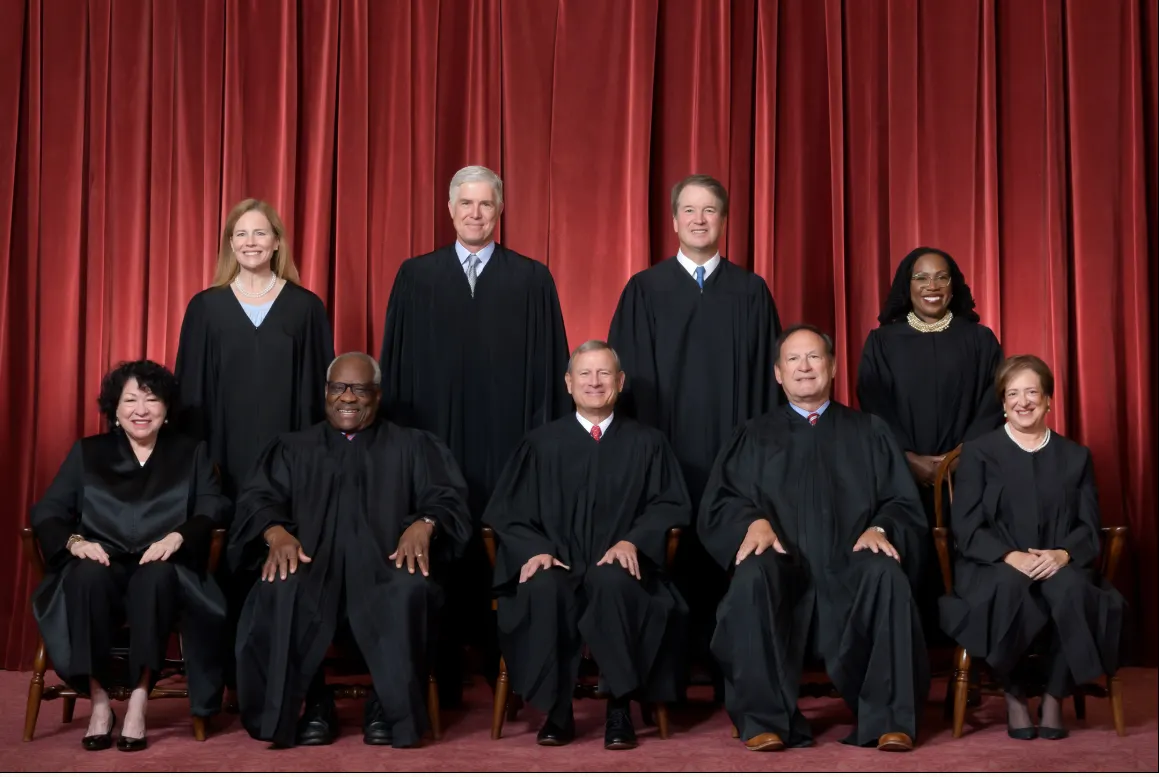
The long-awaited Supreme Court decision announced Tuesday to hear challenges this fall to prohibitions of AR-15-style semi-automatic rifles could be the third Second Amendment case in the past two decades that transforms gun laws coast to coast. It will be surprising if it doesn't. Remarkably, more than 30 years after the first nationwide ban was passed in 1994, the Court has yet to look at the constitutionality of such bans. Lower state and federal courts have done so, endorsing the bans every time until recently. Had the Supreme Court stepped in before the national law expired in 2004, the ultimate likely ruling would have been very different than what we'll probably see now given the sharp turns in recent gun law precedents from the more conservative makeup of the Court majority.
Specifically, the Supremes will take up lower court rulings upholding bans in Illinois and Connecticut and issue a ruling sometime between now and June 2027. The obvious questions: Will this become the biggest gun-rights decision since the Supreme Court recognized an individual right to own and carry firearms in District of Columbia v. Heller and NY State Rifle Pistol Association v. Bruen? Will a ruling to overturn the bans in Connecticut and Illinois be broad enough to extend to the other 10 states that has imposed them? Will the vote to nix the bans be 6-3? Or 5-4? Or will some miracle occur as two of the Court reactionaries choose to join the liberals in upholding these prohibitions?
That latter option may seem implausible even to propose. But Justice Antonin Scalia noted in the 5-4 majority ruling he wrote in seminal Heller decision in 2008:
• "The Second Amendment does not protect those weapons not typically possessed by law-abiding citizens for lawful purposes, such as short-barreled shotguns."
•"Like most rights, the right secured by the Second Amendment is not unlimited. From Blackstone through the 19th-century cases, commentators and courts routinely explained that the right was not a right to keep and carry any weapon whatsoever in any manner whatsoever and for whatever purpose." That might "It may be objected that if weapons that are most useful in military service—M-16 rifles and the like—may be banned, then the Second Amendment right is completely detached from the prefatory clause. But as we have said, the conception of the militia at the time of the Second Amendment's ratification was the body of all citizens capable of military service, who would bring the sorts of lawful weapons that they possessed at home to militia duty."
• "Miller's holding that the sorts of weapons protected were those 'in common use at the time' finds support in the historical tradition of prohibiting the carrying of dangerous and unusual weapons."
Both sides will find legal succor in Scalia's statements, using the ones that work for them and ignoring or dismissing the others. Chances are the bans will be disallowed although betting on the outcome of Supreme Court rulings can be riskier than putting household savings into crypto. If the Court does decide to deep-six the bans, it could also include an end to laws setting capacity limits for ammunition magazines. These are viewed by gun-rights advocates as an integral part of such weapons and thus protected by the Second Amendment, even though magazines do not require a set number of bullets to function. Or the justices might wait until a specific ammo case pops up. They declined last year to take on an ammo capacity case from Maryland.
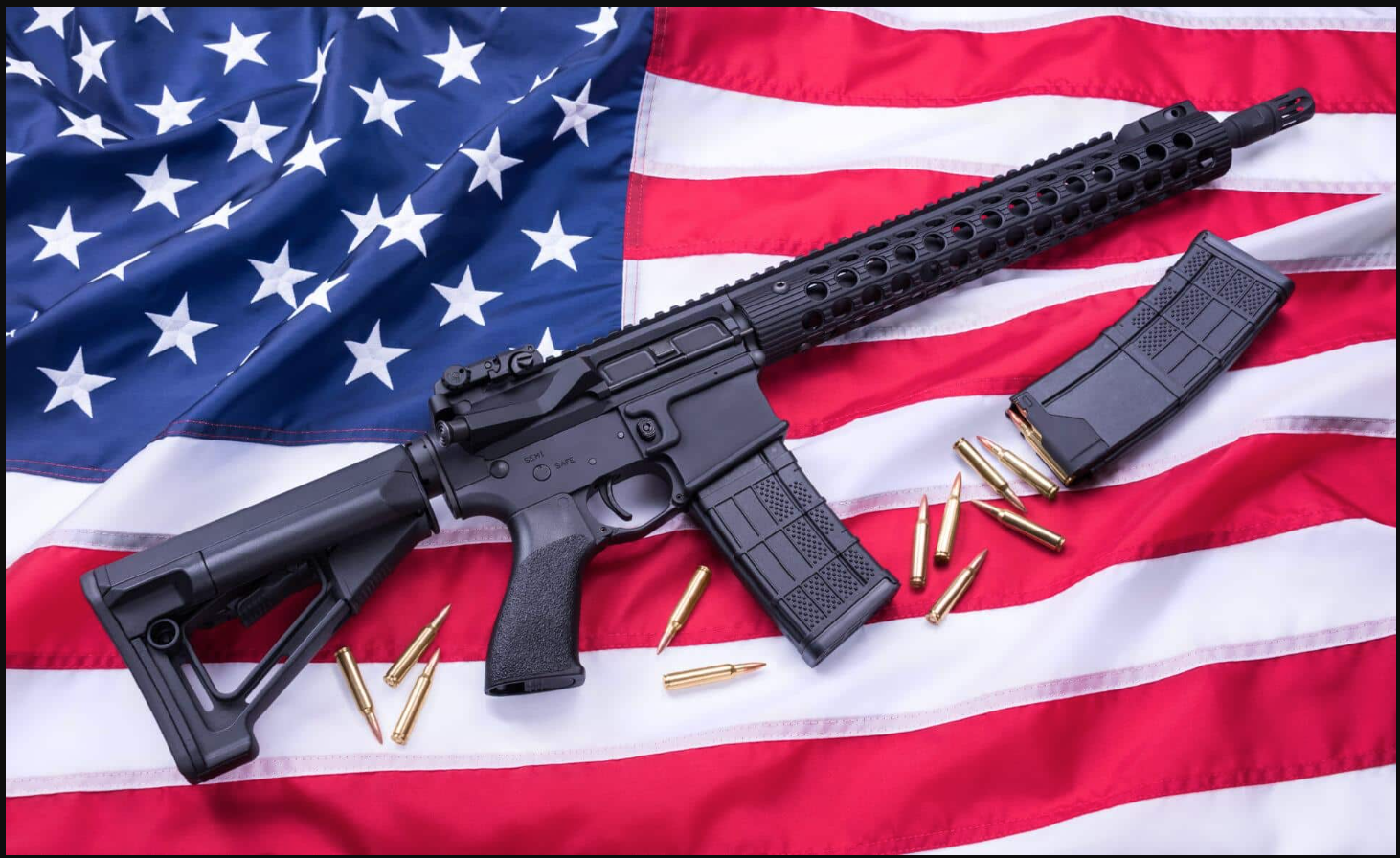
California was the first state, in 1989, to impose a prohibition on new purchases and transfers on a long roster of semi-automatic rifles, shotguns, and pistols. New Jersey (1990) and Connecticut (1993) followed with their own bans, and the federal government passed the nationwide ban in 1994. (Of note: eight Senate Democrats voted against that ban and eight Republicans voted for it. In the House of Representatives, 64 Democrats voted against the ban. When the national ban expired, several states adopted their own. As of July 1, 11 states and the District of Columbia prohibit a selection of semi-auto rifles, shotguns, and pistols: California, Connecticut, Delaware, Illinois, Maryland, Massachusetts, New Jersey, New York, Rhode Island, Virginia, and Washington. Hawai'i bans some semi-auto pistols.
The two challenges the Supremes have chosen to review are Viramontes v. Cook County, involving an ordinance enacted by Cook County, Illinois, and Grant v. Higgins, involving Connecticut's statewide assault-weapons ban (AWB). Petitioners in the Illinois case are Cutberto Viramontes, the Firearms Policy Coalition, and the Second Amendment Foundation. They challenged a Cook County ordinance that prohibits possession, acquisition, and transfer of covered weapons, including sem-iautomatic rifles with listed features like pistol grips and flash suppressors and roughly 125 rifles banned by name, including AR-15s. Violations can bring seizure, disposal of the firearm, up to six months in jail, and a minimum first-offense fine of $5,000.
The Seventh Circuit Court of Appeals affirmed judgment for Cook County. It leaned on an earlier decision, saying the plaintiffs had failed to show how the proscribed firearms differed substantially from machine-guns and military-grade weaponry. The challengers argue this turns Heller and Bruen upside down: AR-15s are “arms,” they are in common civilian use, and only weapons that are both “dangerous and unusual” may be banned. The challengers focus hard on Justice Brett Kavanaugh’s statement in Snope v. Brown that there is a “strong argument” AR-15s are protected and that the Court should address the issue soon.
The Connecticut case was granted only as to the Viramontes question and consolidated with it. The law bans certain semi-automatic rifles, including AR-15-type firearms, under a broader “assault weapons” scheme. The challengers say the Constitution protects semi-automatic rifles “in common use for lawful purposes,” including “the most popular rifle in the country, the AR-15.” The Second Circuit upheld Connecticut’s law, with the justices treating the case as part of the post-Bruen struggle over where “common use” fits in the analysis. The challengers say the court's approach effectively allows states to ban any arm, so long as other guns remain available.
In these cases, the states insist they're regulating an unusually dangerous class of firearms that has repeatedly been the death tool in some of the most lethal mass shootings in modern American history. They argue that AR-15-style rifles combine military-derived design features, high muzzle velocity, and compatibility with large-capacity magazines in ways that dramatically increase their lethality. They reject the view of gun-rights advocates who argue that a semi-auto rifle cannot be an assault-rifle because it cannot fire multiple bullets from a single trigger pull the way a military firearm like the M16 can. The AR platform's military origins and capabilities cannot be ignored, they say. Their position is not that governments may ban firearms generally. It is that governments have long possessed authority to regulate especially dangerous weapons and that prohibited rifles fall within that historical tradition. And they cite Scalia.
The challengers, of course, tell a very different story.
Their central argument begins with the fact that millions of Americans legally own AR-15-style rifles and don't engage in mass shootings. Estimates vary widely, but even the most conservative figures place civilian ownership at more than 20 million. These rifles are used for recreational shooting, competitions, home defense, and, where legal, hunting in some calibers. Whatever one thinks of their desirability, the challengers argue, they have become ordinary civilian firearms, the single most modern popular rifle type in the country. Under the Supreme Court's own recent precedents, they say, that should matter enormously. And they cite Scalia.
Illinois and Connecticut contend that history supports their authority to regulate especially dangerous weapons. They point to 19th century restrictions on Bowie knives and other weapons perceived as posing exceptional dangers, along with later regulation of machine-guns and other firearms. They argue that the Constitution has never prevented legislatures from constraining sale and ownership of weapons with especially dangerous technology. The challengers says these analogies collapse under close examination. Bowie knives, they argue, were regulated only with respect to concealed carry rather than mere possession. Machine-guns, they note, are fully automatic firearms capable of continuous fire with a single pull of the trigger. AR-15s are semiautomatic rifles that fire one round per trigger pull, functionally similar in that respect to countless other semiautomatic firearms that no state proposes to ban.
Most important, they argue, is the phrase "common use," likely to become the constitutional fulcrum of the case. If millions of Americans legally own AR-15-style rifles, can those rifles still be considered "unusual"? The challengers argue they cannot. Under Heller, they contend, widespread lawful civilian ownership places these firearms squarely within the Second Amendment's protection. Period.
The states argue that popularity alone cannot be a constitutional shield. Otherwise, a particularly dangerous firearm could become effectively immune from regulation simply because manufacturers succeeded in selling enough of them before legislatures acted to stop them. They also contend "common use" cannot be divorced from the Court's simultaneous reference to weapons that are "dangerous and unusual." In their view, AR-15 type weapons remain sufficiently dangerous to justify regulation even if many people own them, they say.
For much of the 20th century, courts generally evaluated gun regulations by weighing competing interests. Governments defended restrictions as reasonable measures to protect public safety. Gun owners asserted constitutional rights. Judges often balanced interests, giving legislatures considerable room to regulate while recognizing some Second Amendment-imposed some limits.
That approach largely ended with District of Columbia v. Heller in 2008. Writing for the five-justice majority, Scalia concluded that the Second Amendment protects an individual's right to possess firearms for lawful purposes such as self-defense. But Heller did something else that now lies at the heart of these cases. It distinguished between weapons "in common use" for lawful purposes and weapons that are "dangerous and unusual." The Court suggested that the former generally receive constitutional protection, while the latter may be prohibited. For years, lower courts struggled to apply that distinction. Many upheld firearm restrictions by concluding that governments possessed sufficiently important public-safety interests. Then, in 2022, the Supreme Court decided New York State Rifle & Pistol Association v. Bruen. The Court rejected the balancing approach that many lower courts had adopted and instructed judges to evaluate modern firearm regulations by asking whether they are consistent with the nation's historical tradition of firearm regulation.
Here's Justice Clarence Thomas, who wrote the 6-3 decision in Bruen:
"When the Second Amendment's plain text covers an individual's conduct, the Constitution presumptively protects that conduct. The government must then justify its regulation by demonstrating that it is consistent with the Nation's historical tradition of firearm regulation."
Can government prohibit one of the most commonly owned rifles? According to state and federal courts, the answer has been an unequivocal yes. States have routinely prohibited certain kinds of weapons. The federal government has also. Machine-guns have been tightly regulated since the 1930s, far more so since the 1986 Firearm Owners' Protection Act passed. Civilians cannot legally possess grenades or rocket launchers except for extraordinary exceptions allowed under stiff restrictions. Why, AWB advocates argue, should AR-15s be different?
The more avid gun-rights advocates have taken the historical methodology to mean that if an analog of a new gun-restricting law was not on the books in 1791, or when they're being generous, after 1868 with the passage of the 14th Amendment, then it's unconstitutional.
The post-Bruen shift has transformed the legal battlefield on concealed-carry permits, but its prescriptions for evaluating gun laws overall have influenced other lower court decisions as well. But not entirely. Since Bruen, the 1st, 2nd, 4th, and 7th circuit courts of appeals have upheld AWBs in Rhode Island, Connecticut, Illinois, and Maryland. In California, unarguably the state with the strictest and most extensive collection of gun laws, federal district court Judge Roger Benitez in San Diego first ruled the state ban unconstitutional in 2021 and in 2023 reupped this in even stronger language after the Ninth Circuit remanded the case to him following the Bruen decision. The Ninth has stayed the Benitez ruling until there is a ruling in another case, this one having to do with the state's magazine maximum capacity law. This is not the usual circuit court split that typically triggers Supreme Court scrutiny of a law, but it was apparently enough this time to get the justices finally to take on a subject the Court has been avoiding for nearly 40 years. Thomas, by far the most extreme of justices on the Second Amendment, must be drooling.
Predictions about Supreme Court cases are hazardous. Many who follow the Court long enough accumulate a graveyard of confident forecasts that proved mistaken. With that caveat, the challengers begin this litigation with a meaningful advantage. Thomas has consistently argued for a rigorous text-and-history approach. Samuel Alito has generally joined him in Second Amendment cases. Neil Gorsuch has shown little inclination to revive the interest-balancing approach rejected in Bruen. Kavanaugh wrote only last year that there is a "strong argument" AR-15-style rifles are protected. Chief Justice John Roberts signed onto the majority in both Heller and Bruen. While it's true he has often preferred narrower rulings on a variety of issues that preserve institutional flexibility, he has showed no such moderation with his decision to destroy the Voting Rights Act and accord even more imperial power as well as immunity to the presidency. So, he's unlikely to bolt from the reactionary majority in this case. That leaves Amy Coney Barrett. While Barrett voted with the majority on Bruen she has demonstrated flexibility in applying historical methodology in the matter.
If, as expected, the Court chooses to overturn AWBs, it won't make a dent in national gun violence. Handguns account for the overwhelming majority of identifiable firearm homicides in the United States, 91%. Rifles account for only about 5%, and shotguns for about 3%. However, thousands of homicide cases each year are recorded simply as involving a firearm of unknown type, making precise percentages impossible to calculate. Moreover, without a gun buyback program similar to New Zealand's, or a confiscation program like Australia's, there will still be millions of these firearms in private hands.
However the Supreme Court rules, gun violence needs serious attention, something it's not going to get under the current administration. And in a nation where it is now, in 29 states, legal to carry a concealed firearm without a permit, and in most cases without any training. It's called "constitutional carry." Just three states had no-permit-required laws before the National Rifle Association and Gun Owners of America got rolling in the 2010s to do away with them. Foes of no-permit laws argue they're guaranteed to cause more violence. Advocates argue that since the 1st Amendment doesn't require a permit for someone to speak, the 2nd Amendment is made a second-class right if permits to carry a firearm are required. That's how far apart the sides are. Whatever your views on the subject, gun-rights activists are winning. And their efforts are on the verge of obliterating many restrictive gun laws in blue states.
It's been argued that the only way out of this predicament is to repeal the Second Amendment. Not in my lifetime for sure. Maybe by the 300th anniversary of independence.
OTHER THINGS TO READ
• How the NRA sells guns in America today (May 2018)
• The ArmaLite AR-10 Rifle: The Saga of the First Modern Combat Rifle








Comments
We want Uncharted Blue to be a welcoming and progressive space.
Before commenting, make sure you've read our Community Guidelines.