We still don't know why Epstein-linked seditionist convicted felon Donald Trump suddenly pardoned former Honduran president Juan Orlando Hernandez, who was just beginning a 45-year sentence in federal prison for his part in facilitating the smuggling of hundreds of tons of cartel-produced cocaine in what was a truly massive Honduran corruption scandal.
More to the point, though, Trump doesn't appear to know why he did it either. Doesn't have a clue, didn't look into it, nothing. From Greg Sargent:
This came when Politico’s Dasha Burns pointed out that Hernandez’s pardon casts doubt on Trump’s commitment to combating drug trafficking—the stated grounds for his boat bombings.
Trump then responded:
Well, I don’t know him. And I know very little about him other than people said it was like, uh, an Obama-Biden type setup, where he was set up … there are many people fighting for Honduras, very good people that I know. And they think he was treated horribly, and they asked me to do it, and I said I’ll do it.
This is monumentally deranged stuff. Note that Trump admits he knows next to nothing about Hernandez’s case, even though prosecutors won a conviction after alleging that he helped bring more than 500 tons of cocaine into the United States. Trump pardoned him with zero serious reflection on the impact he had on drug use in our country. This is by Trump’s own admission.
Then, after Burns asked Trump if this sends “the wrong message to drug dealers,” Trump segued into claiming Hernandez was the victim of “weaponized” government, just as Trump himself was.
On the surface, this is no different from any other of Trump's second-term interviews. When pressed as to why he did a brazenly scandalous or almost certainly illegal thing, Trump professes to know next to nothing about that thing, insisting instead that he was following the advice of "his people" before unspooling into the usual pile of conspiracy claims, random asides, or insults hurled at his questioner. According to Trump himself, his administration is a blur of whatever his aides bring him, none of it worth more than a moment of his own contemplation, and all of it someone else's responsibility.
You can count on one hand the number of issues or projects Trump himself has a vested interest in and focuses on. He's obsessed with tariffs. He's quite convinced that he can bring the prices of anything down "800 percent" just by saying so. But most of his effort—possibly even by his own admission—is spent designing the Vegas-style "ballroom" he intends to construct over the debris of the East Wing, and on meeting captains of industry and browbeating cash payments out of them, and either accepting just-invented awards or bitterly complaining that he hasn't won others.
So, sure, this is a straightforward idea to accept: Donald, by his own admission, has little to no idea of what's going on around him. He's the bruised and swollen-ankled autopen that signs whatever he's brought, and as his health worsens his aides seem to be piling on new things to sign just as fast as they can scribble them out, all in apparent anticipation of the day when he eventually breaks.
But Sargent rightly points out that this by itself is not the biggest problem. Even the supposed hypocrisy of pardoning one of the most consequential mega-smugglers in the federal prison system while boasting of an illegal military murder campaign targeting what appear to be randomly chosen drug mules, migrants, or fishermen is also—despite that being the thing most journalists and pundits are focusing on, in an attempt to provoke a gotcha moment—not the biggest issue.
Pardoning a convicted cartel ally based only on the say-so of unidentified "people" is a huge problem all on its own.
Combine this with Trump’s confession that he granted this pardon because people “asked me to do it,” and the takeaway is inescapable. He did it as a favor, probably corruptly, or out of his narcissistic association of Hernandez with himself, or a combination of both: His narcissism subjects him to easy manipulation by corrupt actors.
The big questions here boil down to this:
- Who, exactly, was pressuring Trump to release Hernandez, one of the most infamous cartel allies to ever be sentenced?
- What did they promise in exchange?
It is trivial to convince Trump that any felon you can name is innocent. All you have to do is say it: Trump doesn't care. Just say the name, tell him that so-and-so was caught by "the Biden administration" or "the deep state" or by a prosecutor who once shook the hand of a man who once shook the hand of an Obama voter and Trump will believe it, because he is a pudding-brained narcissist who can only view the world as a theater production in which he is the star and everyone else is just there to dance around a bit.
This special gullibility of Trump's is exactly what makes him so dangerous, and such a useful pawn to hostile world actors, his own aides, and every would-be American oligarch with a fake trophy to present. But the pardon of the former Honduran president is an outlier even among Trump's usual unexplained actions. The only people clamoring for the release of the best friend certain drug cartels ever had are, ahem, Very Bad Actors.
Somebody had to put this idea in Trump's head, and not knowing who that "somebody" might be is a big issue. It might, given Trump's proven eagerness to assist hostile and corrupt foreign powers in exchange for favorable business deals, be a huge issue.
It also may we worthwhile to reevaluate the already election-bending partnership between Silicon Valley cryptocurrency boosters and Trump's crime-agnostic version of authoritarianism. Crypto leaders have used their purchased closeness to Trump to advocate for looser regulations and for the federal government to form a "strategic reserve" of cryptocurrencies, a brazenly corrupt scheme to use taxpayer money to prop up the speculative and crime-infested industry.
The ties between cryptocurrencies and drug smuggling are substantial, and Trump's willingness to overlook even the most brazen drug smuggling enterprises on the say-so of industry allies is already well established.
Given those associations, learning who specifically put the notion in Trump's brain to free a cartel ally from federal prison seems even more important. Say what you want about Trump's circle of malevolent misanthropes, but one of the most damning things about the crew is that, given the string of pardons Trump has flung at people from Paul Manafort to Roger Stone to a dozen others, you can't credibly argue that Trump's inner circle is not willing to work with foreign actors in manipulating U.S. policies for profit. Buddy, that's their whole thing. That's how Trump found these guys in the first place.
I do wish, however, that pundits would drop these notions of supposed hypocrisy. There's nothing inconsistent here. During the first Trump administration we were all subjected to a lot of fluff punditry that insisted Trump held special contempt in his heart for drug pushers, allegedly because of the harm done to family members, and for some reason he continued to be credited with this presumption even after surrounding himself with aides, adult family members, and random hangers on who frequently appeared to be at least 10% cocaine by volume each, judging from their television and podcast appearances.
That fiction is pretty much dead and buried, now that Trump's gone out of his way to pardon major drug dealers and even the founder of the most notorious online crimes-and-drug market the internet has yet produced.
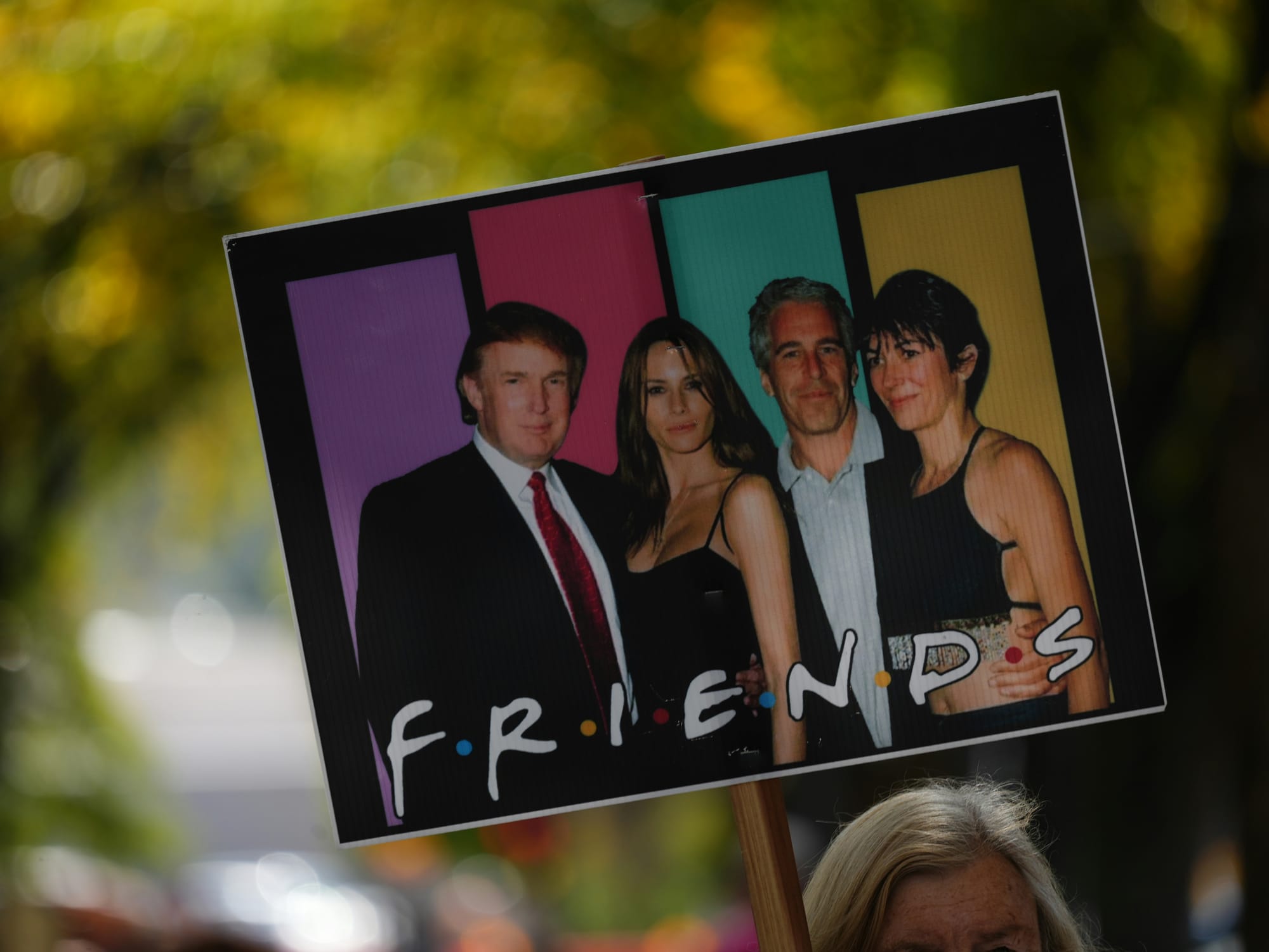
The man likes drug kingpins just fine, thank you very much. He is indifferent to drug use around him. He is a long-standing friend of debauchery of all types, from the 1970's New York club scene to whatever the hell Epstein counts as. You're not going to find anything Donald Trump has a moral aversion to—the only sin he recognizes is insufficient praise for Donald Trump.
If anything, Trump's long-running demands that low-level drug dealers face summary execution instead only appears to stem from his own desire to commit psychopathic violence, one that is aimed Duterte-style on whichever targets he believes society is least likely to defend.
And this, too, is perfectly consistent with how Trump's malignant narcissism controls his every impulse. He believes that the wealthy and powerful should be able to do whatever they want, unconstrained from laws, because he self-identifies as wealthy and powerful and insists on the power to break those laws himself. As for the poor, Trump believes they can be killed at will and that trials are unnecessary. An accusation leveled by a rich person should be sufficient reason to kill anybody, anywhere in the world.
You can see, then, why Trump would think nothing of pardoning even the biggest names in drug smuggling, and why merely coming to him with a name and an insistence that each felon was tricked into his felonies is all that's needed to secure a pardon.
But somebody had to press for it, every time. It probably wasn't Stephen Miller, this time around. It's unlikely it was Pam Bondi.
So ... who? Anyone want to pipe up here?




Comments
We want Uncharted Blue to be a welcoming and progressive space.
Before commenting, make sure you've read our Community Guidelines.