

On Tuesday, Elon Musk deployed his social media platform and millions of robotic followers to attack Secretary of Transportation and temporary NASA administrator Sean Duffy. While Musk’s X-tantrum seems like a distraction at a time when a would-be dictator is knocking down the White House to make room for a gladiatorial arena worthy of celebrating his next birthday, there’s more at stake here than which oversized ego gets the last sneer.
The outcome of this fight could determine the fate of NASA, human space flight, and … the future.

SpaceX is very, very late delivering a Moon lander
Less than two weeks ago, SpaceX completed the 11th test flight of its “Starship” launch system. Almost every aspect of that flight went spectacularly well, with both the booster and upper stage completing all phases of the test and a brace of pseudo-satellites being deployed. After completing a suborbital flight all the way to the Indian Ocean off the coast of Australia, the upper stage returned to Earth so accurately that it could be filmed by a camera buoy waiting for its arrival. Pretty good shooting.
The only real problem with the flight wasn’t what happened, but when. Hitting these marks in October 2025 puts SpaceX far behind schedule for completing its next big task: Providing a landing system for the Artemis III flight expected to take astronauts to the Moon in 2027.
Despite Musk’s insistence that SpaceX moves faster than any other player in the space industry, and his frequent snide remarks about other companies, it’s increasingly clear that every other component of Artemis III is going to be ready except the SpaceX lander.
Move fast, break contracts
In 2021, NASA awarded SpaceX a $1.15 billion contract to build the Human Landing System (HLS) for both the Artemis III and Artemis IV flights. NASA wanted to have two competing systems, as it did when it picked both SpaceX’s Crew Dragon and Boeing’s Starliner for the Commercial Crew Program. The repeated failures and delays with Starliner show the wisdom of planning for an alternative.
However, this time around, Congress refused to give NASA the funds needed to back the development of two options. NASA had to pick one winner, and SpaceX dangled a system that would have enormously more capability than alternatives. So they got the only ticket.
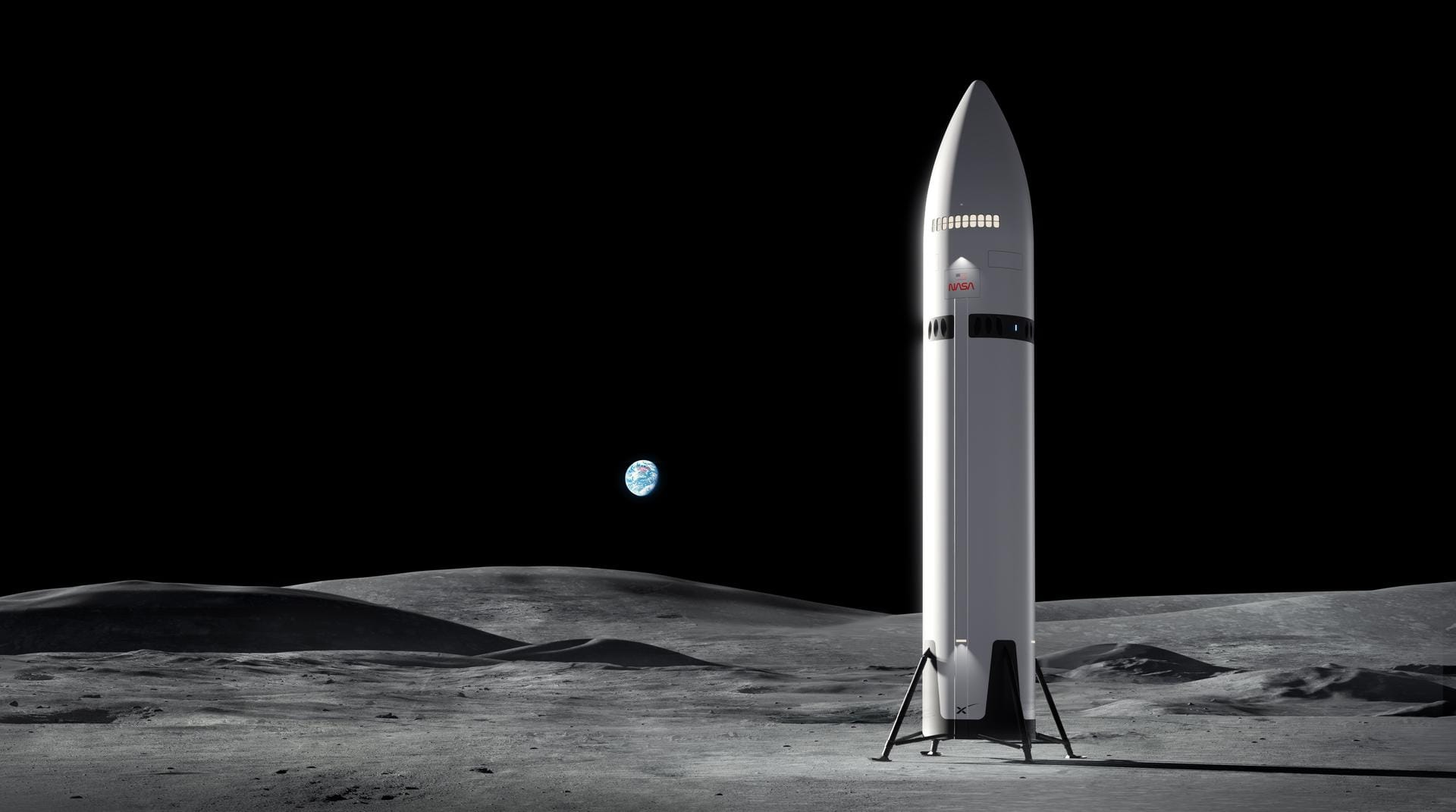
The proposed HLS from SpaceX is based on a modified version of the Starship upper stage. It's hard to tell from this image, but it's enormous. Where the Apollo-era lander had a livable volume of only 160 cubic feet—smaller than the interior space of many cars—SpaceX pitched a system that has over 21,000 cubic feet. It's practically a space mansion.
SpaceX has created at least one mockup of this system, and on paper it’s tremendously capable. There are elevators to lower astronauts and cargo, plenty of room for rovers and other gear, and the whole thing can take off and land as many times as it can be refueled.
However, SpaceX is nowhere near ready to test the HLS. It hasn’t even tested the ability to make a tricky in-orbit transfer of fuel, a feat that has to be pulled off multiple times to complete a single flight of HLS to the Moon.
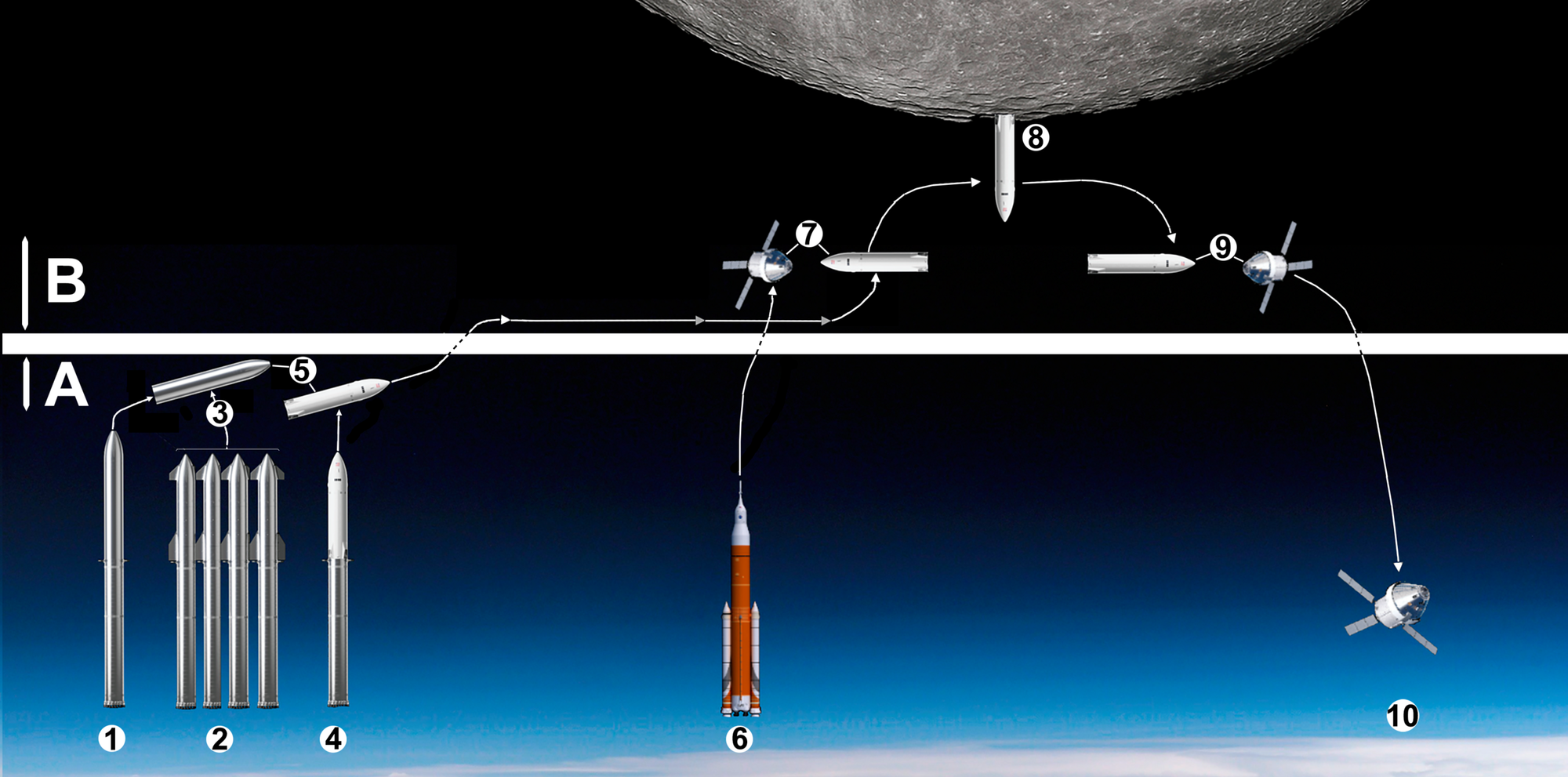
Despite eleven test flights of the Starship, very little obvious work has gone toward the steps necessary to make HLS a reality. SpaceX’s hardware-heavy development cycle, with another massive rocket flying every few months, has certainly given the impression of a company moving quickly. However, much of the company’s focus has been on the areas that matter to Musk.
SpaceX has spent enormous time and effort on creating a factory that will allow building hundreds of Starships down the line in service of Musk's plans for transporting people and goods to Mars. Test flights have also illustrated the importance the company puts on its biggest source of revenue, the Starlink internet service.
NASA's needs, and in particular the desire to have HLS ready for 2027, have largely been lost in the shuffle.
Duffy is ready to take away Musk's ball
With it becoming increasingly obvious that SpaceX will miss its delivery date, likely by several years, Duffy has made it clear that he’s looking for other options.
Speaking to CNBC on Monday morning, the former Real World contestant complained that SpaceX was "behind."
“We’re not going to wait for one company,” Duffy, who is currently the acting NASA administrator, told CNBC’s “Squawk Box” on Monday. “We’re going to push this forward and win the second space race against the Chinese. Get back to the moon, set up a camp, a base.”
The most important part of that statement may be the fervent desire to get astronauts back to the Moon before the Chinese program makes a planned landing in 2030. Over the last two years, China's efforts have been advancing steadily. With its own space station, new heavy launch vehicles, and a long string of successful flights, there are increasing warnings that China might just be ahead of schedule.
Musk's response has largely been to attack Duffy as a "dummy." It doesn't help that Musk's handpicked NASA administrator–billionaire Jared Isaacman, who has twice flown in SpaceX's Dragon capsule and is a notable fan of Musk's company–was rejected by Trump in favor of putting Duffy at the helm.
However, Musk has also used his social media platform to downplay the importance of beating China in this new space race, which certainly seems like an admission that SpaceX is not going to be ready in time.
Can they really boot SpaceX from Artemis III?
In a contract sense? Yes. In a practical sense ... maybe.
It's not exactly a secret that SpaceX has run into a series of problems that have compounded issues with a schedule that was always extremely tight.
The notable delays and spectacular failures already had potential competitors hopeful that NASA might open the door to other possibilities. In particular, both Lockheed and Blue Origin have indicated over the last several weeks that they were ready to put forward alternative paths to get astronauts to the Moon more quickly—if less luxuriously.
The details of Lockheed's plan aren't quite clear. They currently have a robotic lander in the works, but it's far too small to serve as the basis of a human landing system. The company's CEO has declared that Lockheed is "working with a cross-industry team of companies and together we are looking forward to addressing Secretary Duffy's request to meet our country’s lunar objectives," that sounds a long way from anything that looks like hardware.
However, there are intriguing possibilities for Blue Origin's bid.
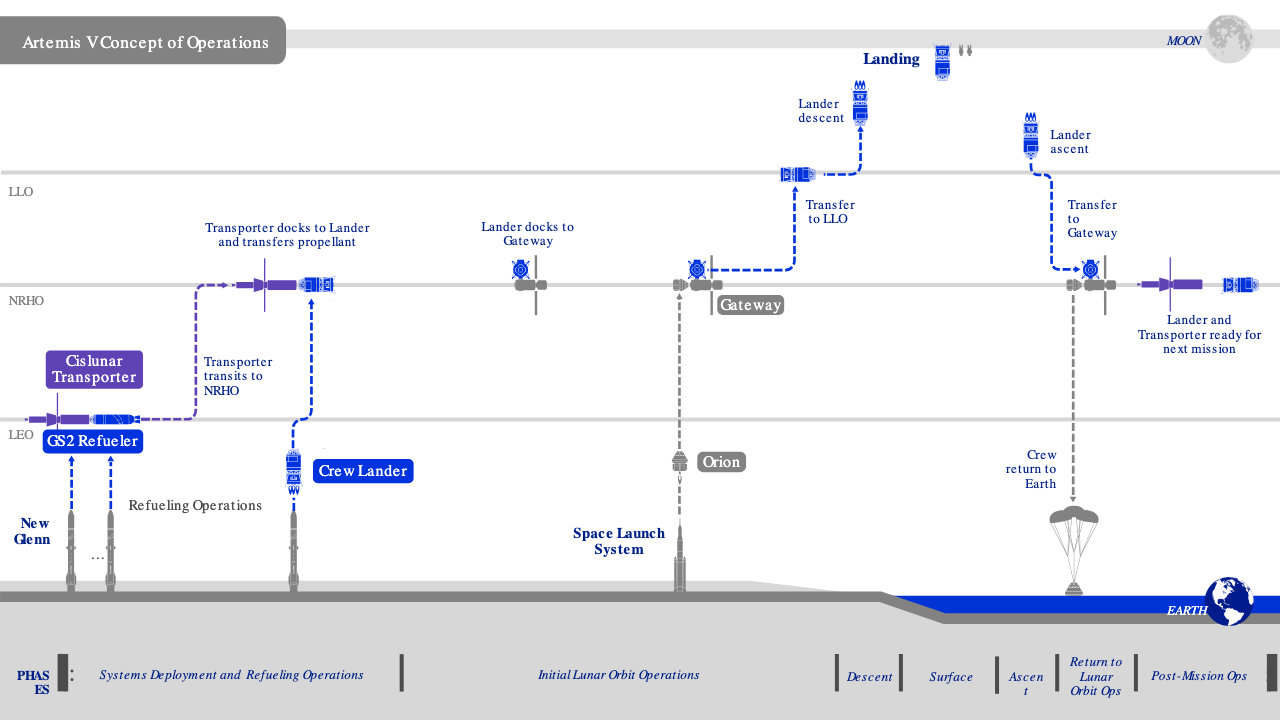
The Florida company, owned by Musk's fellow billionaire, Jeff Bezos, already holds the contract for a human landing system for Artemis V. It won that contract following a major lawsuit against NASA, reportedly leaving behind some bad blood at the agency (it also may never fly, as Trump wants to cancel the program before that flight). In any case, Artemis V isn't scheduled to go to the Moon until 2030, and the large "Blue Moon Mark II" lander is still in development.
Even if Blue Origin could rush the development of their lander, their plans for getting to the Moon are almost as complex as those of SpaceX. Their lander also needs refueling in orbit and they're at least as far away as Musk's team in testing this capability.
But there is an alternative. In addition to the Mark II lander currently intended for the Artemis V flight, Blue Origin has also developed a smaller Blue Moon Mark I lander that's intended to ferry cargo to the Moon.
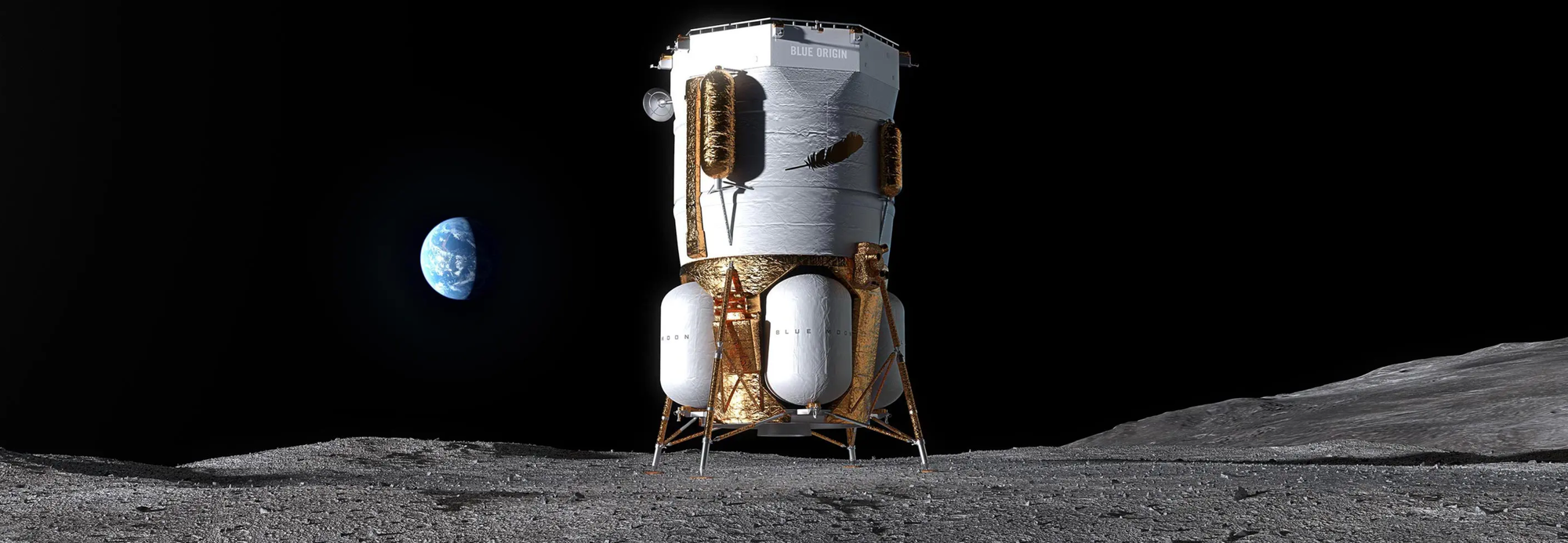
That lander was originally planned to fly to the Moon this month as part of a NASA program. Though that flight has been delayed by a few weeks, the flight will give the Mark I's systems a thorough test. If successful, it could put NASA on the path to an alternative for Artemis III.
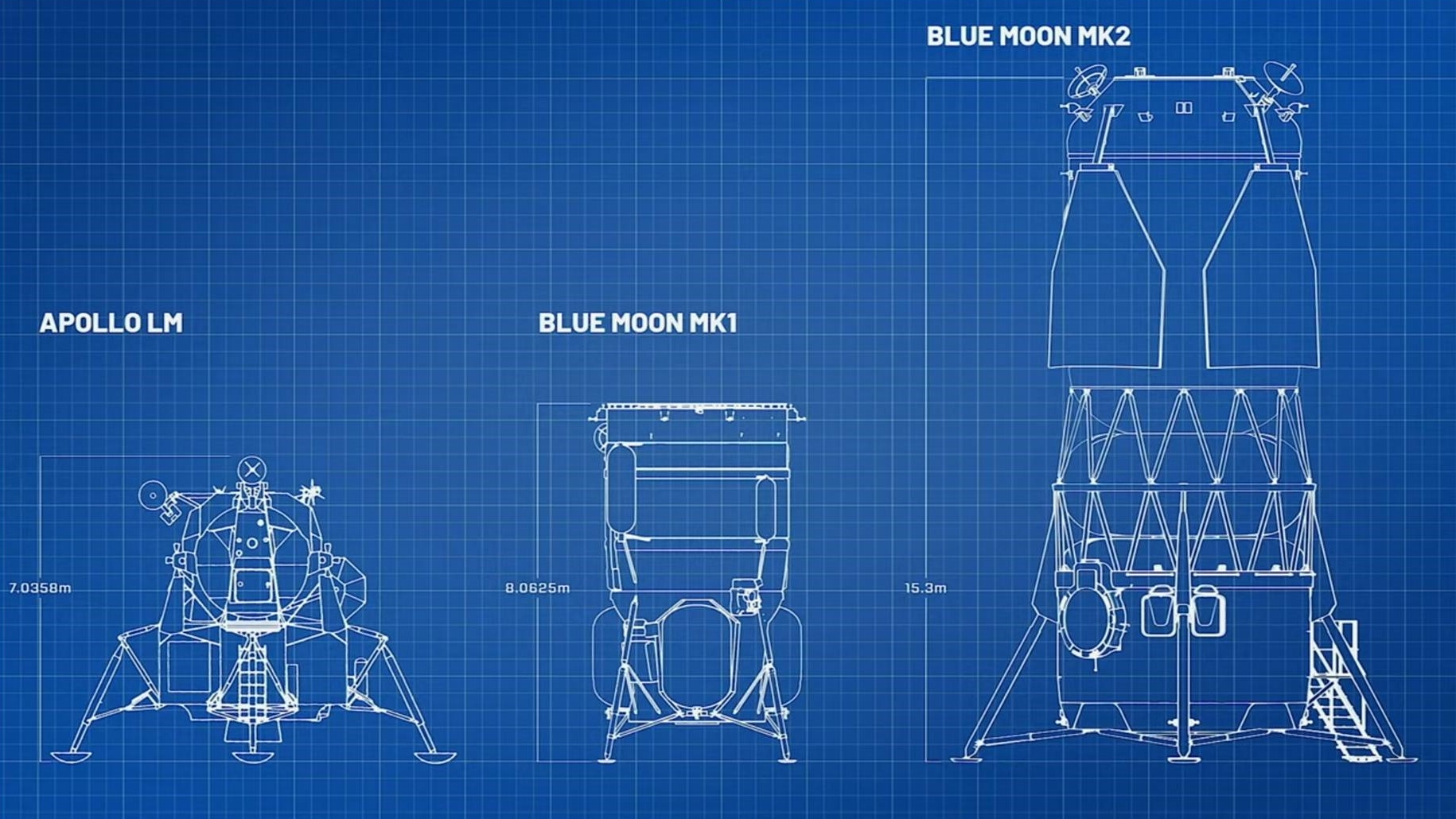
While the Blue Moon Mark I lander is considerably smaller than the Mark II, it's still larger and heavier than the Apollo lander. It's further along in development than any other system, and it can be sent to the Moon with a single flight of Blue Origin's New Glenn rocket, no refueling required.
To mark the Mark I work for Artemis III, a lot of changes would be required. The lander currently has no pressurized living space. It's also designed to land on the Moon and stay there. That's obviously something that would have to change.
These are not small modifications.
But at the moment, equipping the Mark I to become a new Apollo-like landing system in time for a 2027 flight seems a lot more likely than SpaceX hitting all the milestones necessary to make its HLS tenable.
Will NASA really change space horses in mid-Artemis?
To see NASA dump a contractor this close to the end of a program would be extraordinary. The reliability, frequency, and relatively low cost of SpaceX's Falcon launchers have won the company dozens of NASA contracts in recent years. The Dragon cargo and crew capsules have been critical to keeping the International Space Station up and running. NASA and SpaceX are tight.
In the last week, there have been reports that Isaacman is once again up for consideration. Duffy's announcement that he wants to reopen the contract may be little more than a move designed to paint Isaacman as a Musk proxy in a bid to keep the agency under Duffy's control. Should Musk's pal get the nod in this second bid at running the agency, this moment of rebellion against just handing everything to SpaceX could disappear.
But unless something drastically changes at SpaceX's "Starbase" on the Texas coast or at NASA's HQ, astronauts on Artemis III are going to be drumming their space-suited fingers, waiting for a ride.











Comments
We want Uncharted Blue to be a welcoming and progressive space.
Before commenting, make sure you've read our Community Guidelines.