
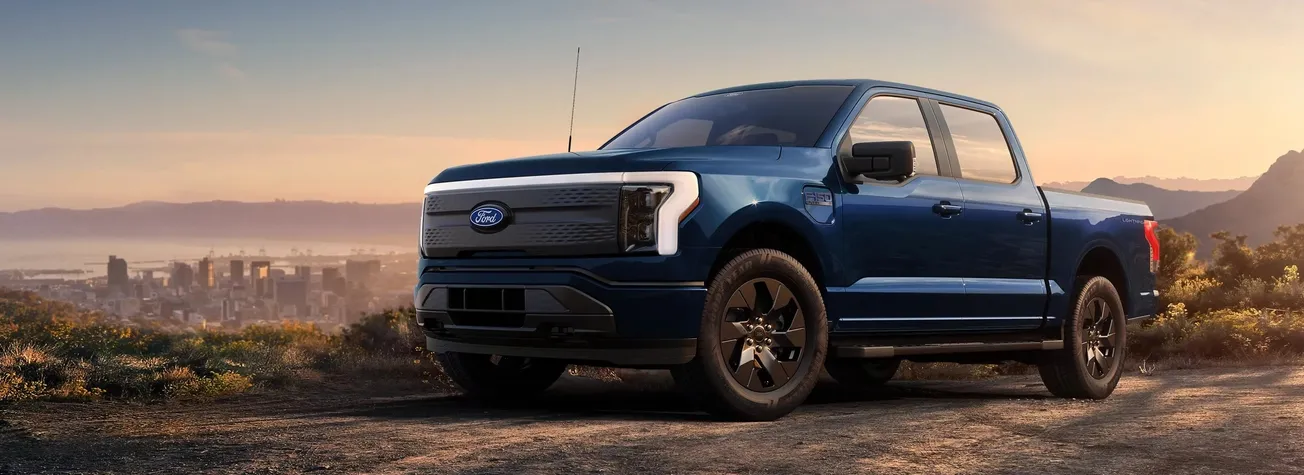
You don't have to look hard to find the headlines: "Ford killing F-150 EV pickup", "Ford retreats from EVs as Trump policies grip industry," and "The Ford F-150 Lightning is officially dead."
While some of the reporting in these articles is much more nuanced, the message delivered by the headlines, in broadcast blurbs, and social media posts is all the same: Ford's electric truck didn't sell, so now the company is killing it and backing away from electric vehicles.
That's a theme that probably makes Donald Trump happy, but it's a long way from being accurate.
While it's not sold in the kind of numbers that are usually associated with an F-150, which was the best-selling vehicle in America of any kind for almost five decades, the F-150 Lightning was actually the best-selling electric pickup on the market since its introduction in 2021. It continued to hold that position in 2025 despite competition from Musk's oddball Cybertruck and the longer-range Chevy Silverado EV.
Sales figures for 2025 aren't complete, but it seems likely that Ford has sold around 100,000 of the fully-electric trucks over the last four years. There are a lot of EV manufacturers who would be popping champagne corks over those kinds of numbers. But for the F-150, this is a serious disappointment.
There are multiple reasons for this.
First, this has been an off year for pickups in general. Midsized SUVs continue to gobble up a larger share of the vehicle market. In the first half of 2025, the F-150 actually lost its #1 position in overall vehicle sales to the Toyota RAV-4. While the F-series is sure to come out on top overall for the year, that's only because there are a lot of different models of trucks gathered under that banner. Ford has gone all-in on being a truck company, reducing the number of cars it sells to just the iconic Mustang. CEO Jim Farley knows that his primary task is staying on top of the pickup market at a time when Ford's revenues are dropping. They can't afford a model that's just "doing okay."
Second, EV trucks ran smack into truck culture. Sure, many pickups are bought to do real work, but even more are purchased to make a statement. For millions of young men, their first steady paycheck is viewed as a critical step to the most important moment of their lives: Driving home in a shiny new pickup, hopefully one that is jacked-up, tricked-out, and looks mean enough to have the Terminator under the hood. That doesn't have to make sense; it just is. For truck culture, the F-150 Lightning is way too conservative. Plus, some of them are sure that liberals cry every time a gas-powered truck rolls past. They want to do their share.
Third, towing. Yes, most pickups exist just to haul a single person to a job they could reach just as easily, and a lot more cheaply, behind the wheel of a Prius. But every truck owner knows that one day, one day, they are going to use that V-8 beastie to tow a big boat, or a trailer full of 4-wheelers, or some horses. Yeah, that's it. Horses. The ability to tow an unreasonably large trailer over immense distances is something that full-electric vehicles simply don't do that well. The added weight and awful aerodynamics of towing make it an exercise in emptying a gas tank, and this keeps prospective EV pickup buyers worried that they'll be spending all their time at the chargers.
Fourth, no matter how many shiny new fast chargers there are in your neighborhood, the electrical charging infrastructure still isn't good enough. Yes, just about any EV made these days can launch out on a trip along the interstates and expect to find chargers at more or less workable intervals, but the same can't be said when you're bombing around rural Alabama or crossing the endless expanse of South Dakota. These are places where almost everyone drives a pickup, and every one of them has a good reason to question the utility of an EV.
Despite all that, Ford is not killing the F-150 Lightning. Not. So, what's the truth behind those grim headlines?
On December 15, Ford announced its "Next Generation F-150 Lightning" would be a type of vehicle known as an Extended Range Electric Vehicle, or EREV. That's a vehicle where the wheels are actually driven by one or more electric motors, but the vehicle also carries a gas or diesel engine that can recharge the batteries on the go.
And I think that's a great idea.
Back in 2011, I was a writer for AutoBlog. And this was the article I wrote about the car I had just leased.
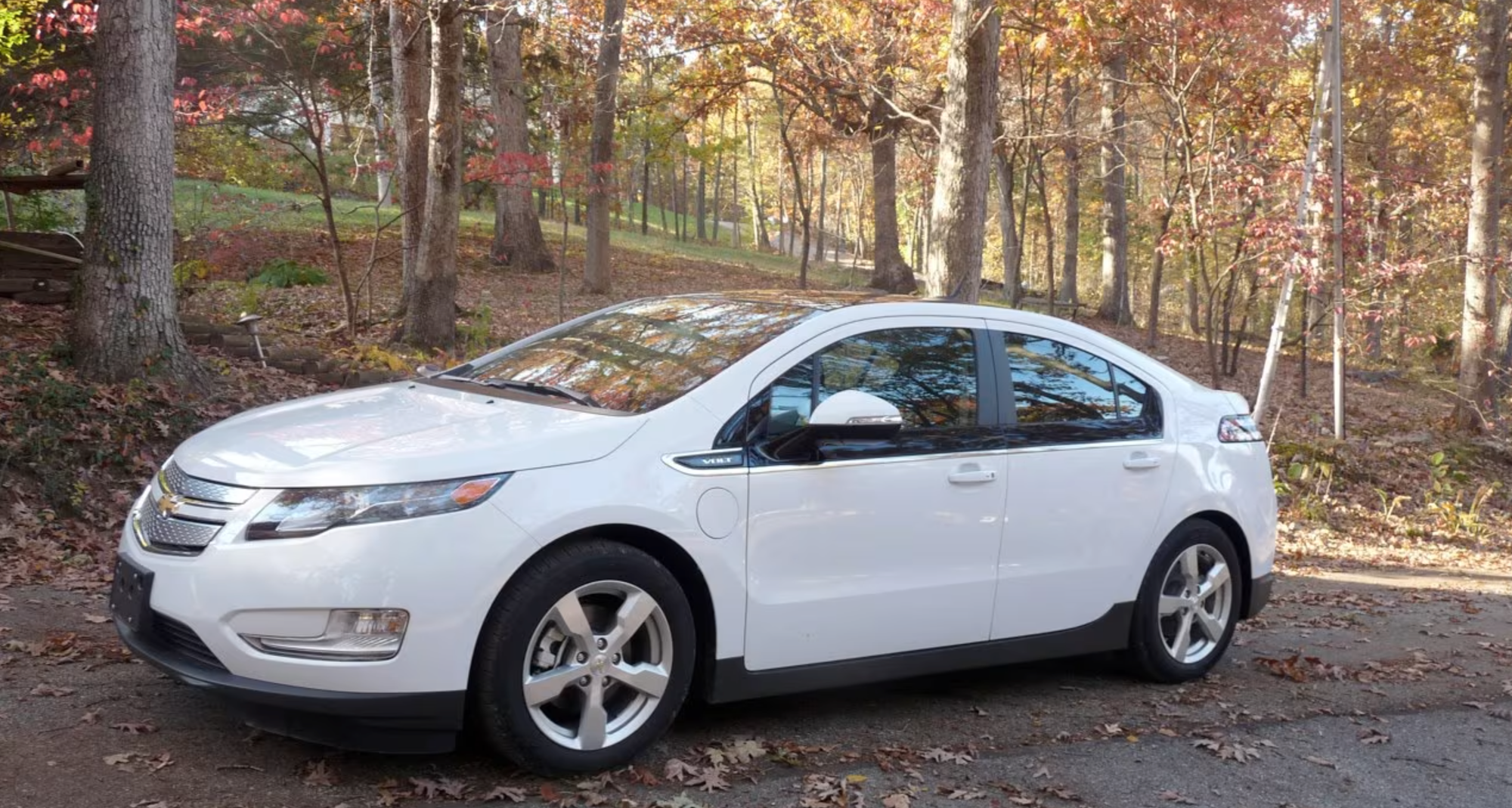
The Volt was the first EREV sold in the United States. It had a 16 kWh battery pack, about one-fifth the size of that in a small electric car today, and could reliably go about 40 miles on a charge. Since I had a 40-mile commute to my office, and there was an electric outlet in the parking garage, I managed to put over 6,000 miles on the car while rarely hearing the gas engine kick in. At the end of the year, it would often warn me that I needed to burn off at least one tank to keep the gas from going stale.
I loved that car. Loved it enough that when the lease ran out, I bought one.
What made the Volt workable in a world where there was essentially no electric charging infrastructure was the gas engine. I knew that, should I happen to need to make a longer trip, I could. And on holidays and during family emergencies, I did. Earlier this year, I had to make a trip into an area of southern Missouri where there wasn't a fast charger in over 100 miles, and none of the campsites where I was staying had any sort of outlet. I had to fill my fully electric Chevy Bolt (note the "B") to the tippy top, then sweated every mile worrying that I wouldn't have enough juice to make it back to the nearest place I could grab some electrons.
I really wished I still had my Volt.
But that's just the kind of hole that Ford is plugging with its next-generation F-150 Lightning. It's making its vehicle workable in a world where batteries still take a while to charge and infrastructure is still sparse in the places where pickups are dominant.
The smallest battery in the current F-150 Lightning is just under 100 kWh. The largest is over 130 kWh. Those batteries are what it takes to keep a heavy, blocky vehicle like a pickup moving for between 240 and 320 miles. They're also expensive and add a lot to the vehicle's weight.
Expect the battery in the new Lightning to be much lighter. With improvements in electric motors and systems, it could be fitted with a battery under 20 kWh and still deliver roughly the 40-mile range I used to get in my Volt.
Ford isn't currently saying much about the battery size, but they are saying that the total truck, counting both battery and gas, can be expected to get over 700 miles. That, along with the knowledge that you don't have to sweat finding a fast charger, makes this a much better truck for truck people.
Unlike a plug-in hybrid, the next F-150 Lightning is expected to be a true EREV. That means that, as on my old Volt, the wheels will always be driven by the electric motors. The gas engine will only charge the battery. This allows the gas engine to operate at a steady, optimum rate that provides the most power for the least fuel. It also means the truck will have the instant oompf that electric motors produce.
If the daily miles for the truck are less than the battery range, the gas engine may rarely kick in.
Of course, no gas-powered vehicle is going to be as efficient or clean as a pure EV. There's always the chance that Lightning EREV owners will treat them like conventional hybrids, expecting to get improved mileage while never bothering to plug in. That wouldn't be good for them or their vehicle.
One of these days, when the energy density of batteries is better, charging is faster, and fast charging locations are more ubiquitous than gas stations are today, fully electric pickups are going to rule. In fact, Ford says it is going ahead with its plans to develop a smaller, much less expensive electric truck. If they do, I'll be first in line to buy one. I can park it beside the Slate I've already ordered.
But for now, making the F-150 Lightning into an EREV looks like the right idea for both Ford and Ford's potential customers. It's not perfect. It doesn't have to be.














Comments
We want Uncharted Blue to be a welcoming and progressive space.
Before commenting, make sure you've read our Community Guidelines.