
There seems little question that the United States is in a time of political, governmental, and societal crisis. We've all spent considerable time arguing over where the fault lies, and in what proportions, but by far the most frequent question all of these arguments produce is the devilishly simple one:
So what happens next?
And you will note that very few thinkers anywhere are piping up with opinion pieces wading very far into that particular swamp. Ask the question and you'll mostly get some evasive mumbling, which is the only really honest answer it's possible to give—but it's also damn peculiar, given that the United States has had since its inception a robust fortune-telling industry called "punditry," one that exists almost entirely for the purposes of telling everyone else what the future will hold if we don't all immediately adopt each well-paid bloviator's self-declared Only Possible Solutions.
No, none of the people who regularly predict who will win which elections, divine the precise years in which specific government programs will become insolvent, and can tell you which wars will or will not be "cakewalks" before the first boot hits foreign soil are willing to squeak out an answer on that one. Among the current authoritarian movement's most vocal strategists, the only answer is "this new regime will last forever, and anyone who doesn't think so is probably a communist."
Of the people who aren't so sure on that point, mostly meaning people who have thumbed through a few history books or whose knowledge of politics extends beyond America's current borders or who remember a time when United States presidents would not willingly release invented videos of themselves wearing crowns while conducting aerial bombing runs that literally dump shit on their flag-waving citizens—ask any of those people what happens next and you'll get, most of the time, a dodge.
The problem is: We don't know. Nobody knows, and that's not just people blurting out the usual nobody can truly predict what the future may hold, the thing all of the cakewalk-predictors really ought to have piped up with instead of writing their pompous-ass murder columns. This is a level of nobody knows that stands at the top of the hill of things nobody knows. Look at it through binoculars: Somewhere up there, at the peak of Mt. Hell If Anybody Knows, you might be able to make out a single frozen foot.
And the reason nobody with any brains can confidently answer, despite being deluged with questions about what happens next, is because most of the smartest people in the room don't even know where we are.
The clearest explanation of this phenomenon I've read is from Jedediah Britton-Purdy and David Pozen in Boston Review, so I'm going to recommend it. Consider it an attempt to at least draw a map.
What kind of moment are we living through? Is our system of government undergoing a cyclical swing, an existential transformation, or something in between? Nine months into the second Trump administration, Americans confront three very different answers to these questions.
It's worth a read in full. The piece suggests that there are currently three disparate descriptions of our current moment, depending on who's doing the analysis. The probably-dominant view is that we are in an authoritarian crisis; the Trump administration and its acts are so fundamentally at odds with the American democracy that came before it as to be a different beast.
The emerging authoritarian crisis is also a constitutional crisis, as an ever more emboldened and presidentialized executive branch sidelines Congress and the civil service, deploys troops domestically over the objections of state and local officials, and flirts with ignoring judicial rulings. Variously framing the threat as one of autocracy, kleptocracy, fascism, patrimonialism, gangsterism, or another cousin of authoritarianism, this view insists that things have ceased to be “normal.”
That tends to be the "mainstream" view of the situation, say Pozen and Britton-Purdy, and that the most middling analyses of Republican Party actions are in broad agreement that they have provoked an extraordinary anti-democratic crisis is a sobering thought on all its own.
I'm going to interject here with a definition of my own choosing, since it's going to be unwieldy to keep choosing names for the Trump-led but fully Republican Party-backed movement and theory of governance we're referring to. Many authors choose to describe the movement as Trumpism, which is blessedly terse but which, subjectively, minimizes the scope of the movement and gives agency solely to one babbling narcissist and his enablers. Calling it MAGA or "America First" is similarly pointless; are there national elected Republicans who think of themselves as being "outside" MAGA, other than the former elected officials Republican voters have already expelled for that heresy? No? Then what is the distinction being made?
Given that even the most extraordinary abuses of the Trump White House have been met with near-unanimous Republican backing in the House and Senate, whether it be brazenly illegal impoundments, the deployment of troops to "Democrat" cities, or military attacks on in-distress fishing boats, and given especially the full-throated backing from House and Senate leadership, a better name for the movement is probably Republicanism. Is there meaningful daylight between Trump and Republican leaders, or is the party instead adopting every new White House atrocity, blocking oversight, and attacking critics with language the same or worse than Trump's own?
There you go, sport. This isn't the Donald Trump show; MAGA is a brand, but not the orchestrators. Trump is not the one carrying out government purges based on Heritage Foundation philosophies; "MAGA" is not the group producing new Supreme Court rulings asserting kinglike powers to ignore laws individual cabinet members find too constraining. Trump would be a single screaming cicada, his moment loud but brief, if he did not have the full force of the Republican Party, backed by the longtime think-tankers of the Republican Party, all doing the longtime will of the Republican Party while applauding his royal gildedness' every burble and belch. Calling it anything less than Republicanism or some similar party-focused variant only works to strip accountability from those instigating the crisis—and is an attempt to rationalize away the calculated and continued actions by party leaders as, somehow, forced upon them by outsiders.
This assertion that we are in an authoritarian crisis to begin with has detractors, however:
A second view, espoused by prominent voices on the left as well as some libertarians, asserts that Trump has not ushered in a new order so much as highlighted and exacerbated preexisting pathologies. It’s mainly more of the same. [...] The real constitutional scandal is not the sudden arrival of “executive lawlessness”—the War on Terror had that in spades—but a long-festering rot that has eaten away at our system’s ability to produce responsive governance and thereby created the conditions for Trump 2.0.
True enough. I don't think it's possible to plausibly argue against the theory that all of what we are seeing is based on preexisting national pathologies, many of them written into the Constitution from the outset. I don't expect anyone in the authoritarian crisis camp has even argued otherwise.
This interpretation asserts that the gap between Trump-era and Reagan-era governance is not nearly as large as our pundits and experts would have it, and that Ronald Reagan and other conservatives might well have posted a video of themselves shitting on American citizens if the technology of the time allowed it and if their contemporaries weren't such unbearable prudes. Or maybe they wouldn't have; the broader point is that you can't claim there was ever a period of American history in which democracy was not either illusory, given that most citizens were prohibited from exercising it for most of that history, or imperiled by ongoing, institutionalized manipulations and violence. The rise of Trump and his enablers, then, can best be seen a return to an unpleasant American norm—the one school history books tend to dodge around either a little or a lot, depending on what state you're in.
The third interpretation of the moment is the one preferred by the Heritage Foundation, Claremont Institute, and the rest of the far-right.
According to a third view, embraced by many of Trump’s advisors and supporters, U.S. politics are indeed undergoing transformation but in a familiar or at least not unprecedented way, as part of a process of constitutional regime change. [...] This revolution in law and governance, moreover, is at heart a “counterrevolution”—not so much a turn toward any foreign model as a return to principles that prevailed before the assaults of wokeism and Warren Court liberalism, the rise of the administrative state, and the proliferation of identitarian rights.
This narrative is indeed the one boasted of, in Claremont and Heritage think pieces, and it is held in ever-greater esteem the closer you get to the farthest fringes of the conservative movement. It is, straightforwardly, the central premise of the violent militia movement: Because democracy has allowed the population to change American governance in ways the speaker finds objectionable, democracy itself needs to be reined in, replaced with an enlightened subset can both set things right and make sure such offenses do not happen again. The view is only held by extremists; it posits the need to rebel against society itself for the sake of producing outcomes that it itself claims cannot be produced democratically.
The most dramatic example of this belief put into practice was the insurrection of Jan. 6, 2021, and in the subsequent reformation of both rioters and instigators into supposed heroes and patriots. It is also now central to the mythology of Republicanism itself; it is not we who are being extremist, in undertaking unprecedented acts or in overturning a century's worth of precedents; the rest of you have forced us into extremism by being Woke.
So there, broadly grouped, are the three diagnoses for the current disease. Perhaps we are in a unique and authoritarian-premised crisis; perhaps we are reverting to what America has long actually stood for, a more brutish nation than the history textbooks are willing to admit to and one that was hidden for a time by the relative liberalism of the post-Civil Rights era; perhaps we are making far too much of all of this, and it is perfectly right and justified for Republicanism to uproot what we thought to be basic legal and moral tenets because even if most American regimes have tended to avoid such radical upheavals, there has never been any prohibition against it.
The problem at hand, however, is not that that there are differing characterizations. Of course there are. The view changes based on the vantage point, and when each description can so readily be associated with particular ideological backers—centrist, leftist, libertarianism, rightist—we can already see hints that ideology is coloring characterization, if not dominating it.
No, the problem is that what happens next is almost entirely dependent on which of the three views is most accurate, and how accurate, and we have no bloody idea which view that is.
So here's your homework. Go read the Britton-Purdy and Pozen piece, then come back.
All done? Good work.
I want especially to highlight this part. I've narrowed the text considerably; refer to the original for the full version.
The disagreement between “authoritarian crisis” and “more of the same” comes down to continuity versus discontinuity: whether this presidency represents a decisive break with past practice or a cruder and more intense of version of it. That judgment, in turn, depends on how one sees the past.
Underlying most versions of the authoritarian-crisis view is the premise that the United States achieved a special degree of moral and political legitimacy—and a seemingly safe distance from authoritarianism—following Brown v. Board of Education, the Voting Rights Act of 1965, and the Second Reconstruction. Elections were generally free and fair. The judiciary was widely respected and meaningfully nonpartisan. [...]
From the more-of-the-same perspective, this picture of an exemplary country recently fallen reveals less about the reality of U.S. history than about “America’s narcissistic image of itself.” Despite the gains of the civil rights movement, where has due process been in an immigration system long known to be byzantine, backlogged, and chronically short on lawyers; in a criminal system where policing falls most heavily on poor and racialized communities and the vast majority of prosecutions end in coercive plea bargains; or in a civil system that shunts most workers and consumers to mandatory arbitration? Just how representative is a political system in which “the preferences of the vast majority of Americans” have exerted “essentially no impact on which policies government does or doesn’t adopt”? [...]
The constitutional-regime-change account agrees that the past fifty years have no special claim to democracy and the rule of law, but for a different reason: because they have been an era of liberal hegemony. All such eras end, this account stresses, and the constitutional system helps them to end peacefully. President Trump’s base did not find particularly democratic a regime in which federal courts enforced novel unwritten rights to sexual autonomy and same-sex marriage, federal agencies took on topics as broad as global warming without explicit legislative authorization while issuing controversial regulations on everything from vaccination to gender identity, and the professions fostered an elite culture that kept conservatives constantly on the back foot. The MAGA movement wishes to dismantle not just a policy here or a doctrine there but a whole edifice of laws, norms, and values that it sees liberals as having imposed through their dogma of “living constitutionalism” and their sway over regulatory bodies, universities, foundations, and legacy media organizations. Although a “radical” reform agenda of such scale may not sound very conservative, nothing less will suffice, on this view, to overthrow the prevailing forces of institutional and ideological control.
Critics of the authoritarian-crisis view on the left and the right thus agree that recent U.S. history featured much more arbitrary power than centrists care to admit. They disagree about who was under the boot. From both perspectives, those who accuse Trump of betraying the American democratic tradition have confused the features of a particular constitutional regime with constitutionalism writ large. The rise of Trump represents the failure of the previous regime to sustain its legitimacy.
The authors note that "As much as the scripts disagree with and denigrate one another, each captures an enduring political truth that is missing or downplayed in the others. Moreover, no script has been able to sustain majority support, which makes efforts at mutual comprehension and coalition expansion all the more vital."
And here's where I'm going to start to pick things apart a little, because I both agree and disagree—but, most consequentially, I think we are by this point fairly well positioned to say which of the three theories is closest to the truth, and how best to incorporate the points of the others.
Fundamentally, however, all three diagnoses may be less descriptive than they are self-indulgent. I mentioned before that the ideological uniformity of the three camps was suspicious. That smells of the usual pundit's fallacy, the eternal habit of presuming every circumstance is validation of one's previous ideology rather than a new challenge to it.
The way our three diagnoses have broken down was, I would argue, predictable from the outset.
- To liberals and centrists, the uprooting of at least a half century of social order is alarming. To liberals, for the obvious reasons, and to centrists, because centrism holds social and economic stability as the virtue to be championed above all others—rising even above safety and justice.
- For a narrow subset of left-and-right-of-center ideological groups, ones who are motivated primarily by vocal opposition to the center, the dominant response to every new crisis is a variation of I told you so.
- To the right, every action of their own is patriotic by definition; any act in opposition to their own is illegitimate, regardless of the public majority that may have produced it.
Each of my three declarations is put rather obnoxiously, to be sure, but each has proven predictive powers.
To the third point: There is no circumstance in which the current right will not declare their own obsession of the moment to be the only true American value; that is the premise of the whole bit. There is also no modern Republicanist value that is not coupled with an assertion that disfavored out-groups have conspired against them, thus forcing Republicanism into extremism that they would not have engaged in had they not been provoked.
To the second: For anyone who doubts the that there is a cottage industry of pseudo-activists who are less interested in securing ideological gains than they are in establishing alleged intellectual dominance over others, I give you the phenomenon of Bluesky reply threads.
And as proof that "centrists" value stasis over movement in any direction—other than, perhaps, expanding corporatism—I give you All Of Recent History.
Of the three theories of the current crisis, I think we can dispense with the regime change theory outright. The authors themselves admirably hide most of their own skepticism on this point, at one point noting that the premise is being "overtaken by events" and a "pattern of activity" from the Trump administration that is "hard to defend on any democratic grounds."
The constitutional-regime-change framing depicts the second Trump administration as an articulation of popular sovereignty and the rule of law, not the antithesis of these. But in any version, those principles stand for meaningful barriers to strongman rule. The style of governance that has been on display these past nine months is too brazenly self-enriching, power-concentrating, and enmity-mongering for many to accept that this is just how a constitutional democracy renews itself.
Indeed, there is nothing counter-revolutionary about raking in billions of dollars from dubiously premised "memecoins," or freely mixing governmental and personal business dealings, and the now-consistent Republican pattern of enabling corrupt acts by Trump's perceived allies while manufacturing alleged corruption by adversaries is counter-revolutionary only to the extent that the original "revolution" sought, as bare minimum, a government not made up entirely of crooks.
That the theory of patriotic revolution against the choices of the citizenry is the foundational premise of the most violent anti-government groups, from the militia movement to white nationalism to neo-Nazism, should be discrediting on its own. The notion of counter-revolution to societal or demographic change is inherently anti-democratic, and any theory of "patriotism" that so premises itself should be tossed aside as illegitimate.
We ought, at the least, start from a consensus that the United States ought to remain a democracy; that the government should not dispatch military troops as show of force against "opponent"-led cities; that government leaders are indeed expected to obey the laws written to constrain them; that attempted overthrow of the government is bad. Any theory of power that cannot muster up even that much cannot plausibly call itself constitutionally legitimate.
The "regime change" theory is obfuscation, not clarification.
So the "regime change" theory is obfuscation, not clarification. It is a supposition of maximal power that is not backed by any post-Civil War authority. Whether the current Supreme Court majority throws in with it should be treated solely as a measure of institutional corruption; legal scholars nationwide have already spoken out eloquently, frequently, and compellingly on the absurdity of the new claims and the growing dishonesty revealed by recent majority opinions.
As for assertions that the Republicanist movement is a continuation of past American sins, rather than a new malignancy enabled by them, this too feels more like self-indulgence than diagnosis. Of course the new crisis extends from those old roots; nobody is disputing it. Of course the fascist impulse in American society is not new; from America First to the attempted capture of patriotic imagery, the current fascist movement cribs pointedly from each of its predecessors, using those past movements as pedigree. Of course the Jim Crow era set the stage for these newest Supreme Court revanchism. There is no question that the Senate exists, by design, to forever thwart the popular will, and the founders themselves were happy to admit to it—that we stuck with the system even after the disparity between states grew to absurdist proportions is a sin piled on top of a sin.
But none of this contradicts the premise of authoritarian crisis, and those who diagnose the United States to be in such a crisis do not dispute the notion that we are reaping two and a half centuries worth of historical sowing. An assertion that current Republicanism is not authoritarian in nature feels the more narcissistic claim—a variant of American exceptionalism that supposes our national sins to be unique, and so unique that the simultaneous worldwide rise of similar authoritarian movements, in the current moment, ought to be considered coincidental rather than diagnostic of our own problems.
This, even though those worldwide authoritarian movements are specifically feted by Republican counterparts here? Even though the groups frequently share convention speakers and other supposed thought leaders? Are we sincerely claiming that even with all of those connections, the American version is a return to of our own flawed history rather than as variant of the same authoritarian virus that is roiling nations around the globe?
Of course not. It is absurd to claim so, just as it would be absurd to claim that our historic flaws themselves bear no weight.
Of all the times I have seen the this is America as usual argument in the wild, most have been indulgent: expressions primarily of nihilism, an argument that expecting America to do any better than its history is futile. It is only a useful diagnosis to the extent that it can offer proposed paths forward—but it does, in fact, and the prescriptions are now so broadly agreed upon that we can consider them the primary counterplatform to Democratic and centrist stasis.
The more-of-the-same script suggests a bolder set of remedies, based on a bleaker diagnosis. The system has been broken for a long time. Instead of seeking out the occasional Never Trump conservative to rally a “grand coalition” of the embattled establishment, the opposition should outflank the president on his populist side. Take the fight to economic oligarchy. Make strong statements of principle—say, on the free speech rights of student protesters or the due process and human dignity owed to noncitizens—so that everyone will know where you stand. Doesn’t Trump say many unpopular things that somehow persuade people he is authentic? Rather than romanticize judicial supremacy over the Constitution, push to deepen democracy through court reform, as activists and academics briefly did during the Biden administration. Don’t retreat to a liberalism of fear at a time when many voters have decided, with cause, that there is plenty to fear and detest in the present system. Turn toward a populism of hope.
All of that is familiar, and none of it provides evidence that we are not in the authoritarian crisis diagnosed by the first group. The two groups disagree as to the origins of the crisis, neither disputes that the crisis is real—the more-of-the-same group, indeed, counts the crisis as more severe than centrists would admit, and thus requires more dramatic rhetorical and institutional change.
What we have here, then, isn't at heart a conflict between those who believe the United States is shuddering its way into a collapse of the constitutional order and those who believe the nation is instead reverting to a historical norm far more brutish than what the last half century of liberal prosperity would suggest. The conflict here is solely between ersatz centrists-slash-institutionalists, who are dispositionally inclined to seek the narrowest possible structural change that will allow us to slip through the current crisis, and reformers who believe that without more dramatic and uncomfortable changes the nation may temporarily avert that crisis but will not escape the massive systemic pressures that produced it.
The reformers believe that without at least a mini-counter-counter-revolution, America will remain teetering on the edge of crisis for the indefinite future; the institutionalists believe, or at least assert, that with a little bit of spackle the republic can be patched up to a serviceable enough state, one where we can all go about our lives roughly the same as before and with no major disruptions to capitalism, to corporatism, or to party guest lists.
It should be noted that the institutionalists have history on their side, or rather we should note that those who have power over the institutions themselves have, historically, nearly always opted for the crude patch job over the disruptive systemic reform. The most heated part of the current debate, then, is whether or not authoritarian crisis is crisis enough to demand a bit more than that usual effort.
If we take only what is self-evident from the three competing theories of power, we can cobble together a description of the moment that ends up being ... quite coherent, actually?
- The United States is currently in a constitutional crisis, one in which an authoritarian movement is claiming executive powers that usurp well-understood legislative and judicial roles. The movement regularly claims public opposition to itself to be illegitimate, the product of a conspiracy, and/or evidence of collusion with enemies of America. It repeatedly acts to immunize its own members from the consequences of illegal acts, both through the use of pardons and through corrupt interference in investigations, while simultaneously targeting perceived opposition leaders with spurious claims and prosecutions. It ignores anti-corruption statutes. It threatens, and enacts, military deployments to quell imaginary "unrest" in opposition-led cities.
- The push to authoritarian power is coming from within our institutions themselves. A new Supreme Court majority chosen for ideological compatibility with the movement now issues rulings that presume executive powers and executive immunities that history does not plausibly support; the House and Senate have repeatedly conspired to block investigations of self-evidently illegal executive acts. A new class of hyper-wealthy elites provides nearly insurmountable funding used to bend elections, subvert the public will, and warp the distribution of information to the electorate, including through monopolistic capture of social and mass media. As the movement uses longstanding institutional and constitutional flaws to shield itself from public accountability, there is no apparent resolution to the crisis unless significant institutional reforms are enacted.
- Those within the authoritarian movement themselves assert their powers to be "counter-revolutionary" in nature, asserting not only the power of "regime change" but that such regime change allows them to absorb new powers and undertake new acts previously understood to be illegal—a premise that is self-refuting, in that a government cannot both claim constitutional validity and constitutional immunity.
There is no argument that can be made against the facts: All groups recognize that the movement surrounding Trump is premising itself at least in part on an ability to ignore legal precedents and ethical restrictions it opposes. From memecoins to firings to impoundments to tariffs to military acts at home and abroad, there has never been a point in modern U.S. history in which the executive branch has been accused, in courtrooms and by whistleblowers, of anything near the current flood of allegedly illegal behavior. It is, factually, unprecedented; all objective observers agree, and the few talking heads who do not agree are so transparently insincere in their arguments that they can be flushed from consideration.
The only real argument to be had is whether:
- We are in a moment of crisis that can be repaired with minimal institutional reforms.
- We are in a moment of crisis that cannot be repaired without significant institutional reforms.
- We are in a moment of crisis that ought not be repaired because the promise of national renewal outweighs whatever unconstitutional, illegal, and anti-democratic acts may be necessary to bring it about.
Indeed, that looks like a potentially nation-collapsing authoritarian crisis no matter what our modern or not-so-modern history may look like, and the assertions of the would-be revolutionaries would seem to only make the plain text version of the crisis worse.
So I do not think what the authors call the "authoritarian crisis" and the "more-of-the-same" theories of the current upheaval are exclusionary or even easily teased out except as a measure of individual appetites for reformation, and Pozen and Britton-Purdy themselves note that tangle.
Key parts of the anti-authoritarian camp, for example, have identified global financial markets as a crucial check on Trump, whereas key parts of the more-of-the-same camp see these same institutions as part of the undemocratic distribution of power that brought him into office. Reflecting this divide, when hedge fund founder Ray Dalio threw his weight behind the authoritarian-crisis view, comparing Trump to the fascists of the 1930s, he offered the government’s taking a 10 percent share in Intel as his main piece of evidence. Bernie Sanders, by contrast, praised the Intel acquisition in a rare moment of overlap with the president. On the electoral front, although some Democratic officeholders have expressed enthusiasm about economic populists running to unseat Republicans, they have been far more ambivalent about the openly left-wing platform of democratic socialists like Zohran Mamdani, whose bid for New York City mayor caused establishment figures to “freak out.” Clashes over the Mamdani campaign have brought to the fore another barrier between the camps: a deep divide over Israel and the Gaza war, which Trump has eagerly exploited.
For all these points of continued conflict, the authoritarian-crisis account and the more-of-the-same account have begun to merge and hybridize in a way that did not happen during Trump’s first term. It is more common now to find theorists of authoritarianism highlighting long-term causes such as the democratic deficiencies of the U.S. Constitution, and less common to encounter a progressive economic populist who genuinely doubts that his presidency poses a distinctive threat to core political values. As Mamdani’s primary victory reflects, there has been growing convergence among Democrats on U.S. policy toward Israel, as well as more general movement toward a shared sense of purpose, if not yet a unified agenda. Much is at stake in this nascent synthesis. The question today is less whether the two camps are willing to cooperate than whether they can find terms on which to do so effectively.
Indeed, and I so would again emphasize that this is not a divide between alarmists and realists or between modernity and history, but between institutionalists who envision the edifices their peers have built as sufficient and reformists who quite reasonably point out that if this is still within the bounds of what the institutions can be reasonably expected to produce, perhaps the institutions need to be subjected to a nice cleansing fire. The two groups do not dispute the scope of the crisis, only the solutions, and with every passing week and newly abandoned norm the institutionalists and reformers both become considerably more unsure of themselves, because nobody, not anywhere, seems to have predicted the astonishing speed with which those in actual positions of institutional power rolled belly-up, whimpering and subservient, when faced with a convicted felon president surrounded by anti-institutional extremists bent on remaking America in Viktor Orban's image.
All of us thought that legislators would, at the least, jealously guard their own power, and a plurality presumed that there would be some plain-written law that the Supreme Court majority would not grant Trump the special privilege of ignoring because, at the least, the acrobatics needed to justify such a ruling would be too personally humiliating for the justices to abide. The joke is on us, evidently; it was not so much that we believed in any version of American exceptionalism, and more that we believed the "institutions" would, if only from their own greed, not willingly debase themselves in favor of a reality television, literal shit-bombing regime of perpetual adolescents.
But we came into this trying to explain the impossibility of predicting what could possibly happen next, and I think the sheer scope of present circumstance demonstrates the impossibility of that task. I ran into a recent social media post that suggested that our near future could see the United States turned into a fully fascist, autocratic state, or we could see the attempt foiled and begin a Third Reconstruction, cementing multicultural democracy, or pretty much anything in between, and that is right.
It depends first and foremost on whether the public revulsion towards Republicanism's excesses, of the sort that produced turnout of 7 million Americans just a few days ago, can be mobilized into an even broader active resistance. That, in turn, probably depends mostly on whether the tariff and deportation schemes now grinding the U.S. economy towards recession result in an all-out depression; the surest way to mobilize Americans has always been to render them jobless, poor, and burdened with an excess of free time to vent about it.
There also may yet come a point in which Trump's less obsequious allies find some future administrative act so revolting, so absolutely beyond the pale of civilized human behavior that they can no longer tolerate being movement lapdogs. That is the only real way to get to the do-little solutions that the institutionalists are dreaming up in their own heads and columns—and it is also vanishingly unlikely, if current footage of paramilitary thugs rounding up crying mothers and zip-tied children isn't enough to jar such feelings loose.
That intraparty split is also likely the only future scenario that does not include an extended period of national violence, by the way. Full-fledged autocracy is inherently bloody, since it does not acknowledge the right of opposition figures to speak or even exist; any post-Trump institutional reforms meant to limit the ability of self-proclaimed revolutionaries to do the current catastrophic harms will be met with the same domestic terror that the revolutionaries have claimed as birthright since long before "respectable" Republicanism adopted those beliefs.
The future is unknowable; the present, though, is coalescing into the historically fairly well understood phenomenon of anti-democratic forces taking advantage of institutional and democratic weaknesses to embed themselves in government, then alter the government so as to prevent their democratic expulsion. The only people willing to opine that we are not in a constitutional and authoritarian-premised crisis are those allied with the crisis-makers; once Republicanism devolved into a vehicle for pardoning illegality by allies while inventing illegality by opponents, we found ourselves on familiar historic ground indeed.
This is what all authoritarian movements do. And it is not, at any point in history, an act undertaken by any non-corrupt government anywhere. That alone should be enough to prove the crisis. Bickering over what to do next is necessary, but rejecting wholeheartedly the notion that the authoritarians have either the legal right or popular mandate to commit such corruptions is the necessary first step. Publicizing the corruptions—despite a now-captured media environment that extreme wealth has put to the service of the authoritarians in exchange for whatever corporate favors can be gleaned—is step two.
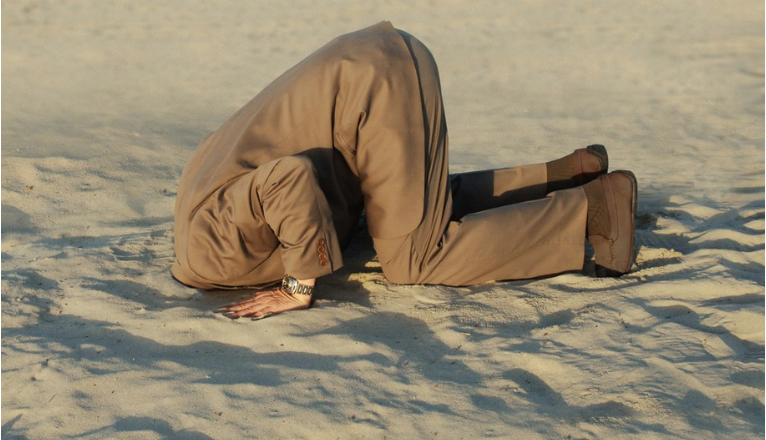
Little else can happen without widespread public outrage. The least destructive scenario is one in which elected political figures from both parties are finally convinced to put Trump in check so as to quell the wrath of furious constituents. Simple electoral self-preservation seems to have gone out of style, both among Democrats and Republican leaders; that may be because both sides now exist almost solely inside a media bubble that intentionally downplays the crisis in favor of stasis, illusion, and narcissistic navel-gazing.










Comments
We want Uncharted Blue to be a welcoming and progressive space.
Before commenting, make sure you've read our Community Guidelines.