
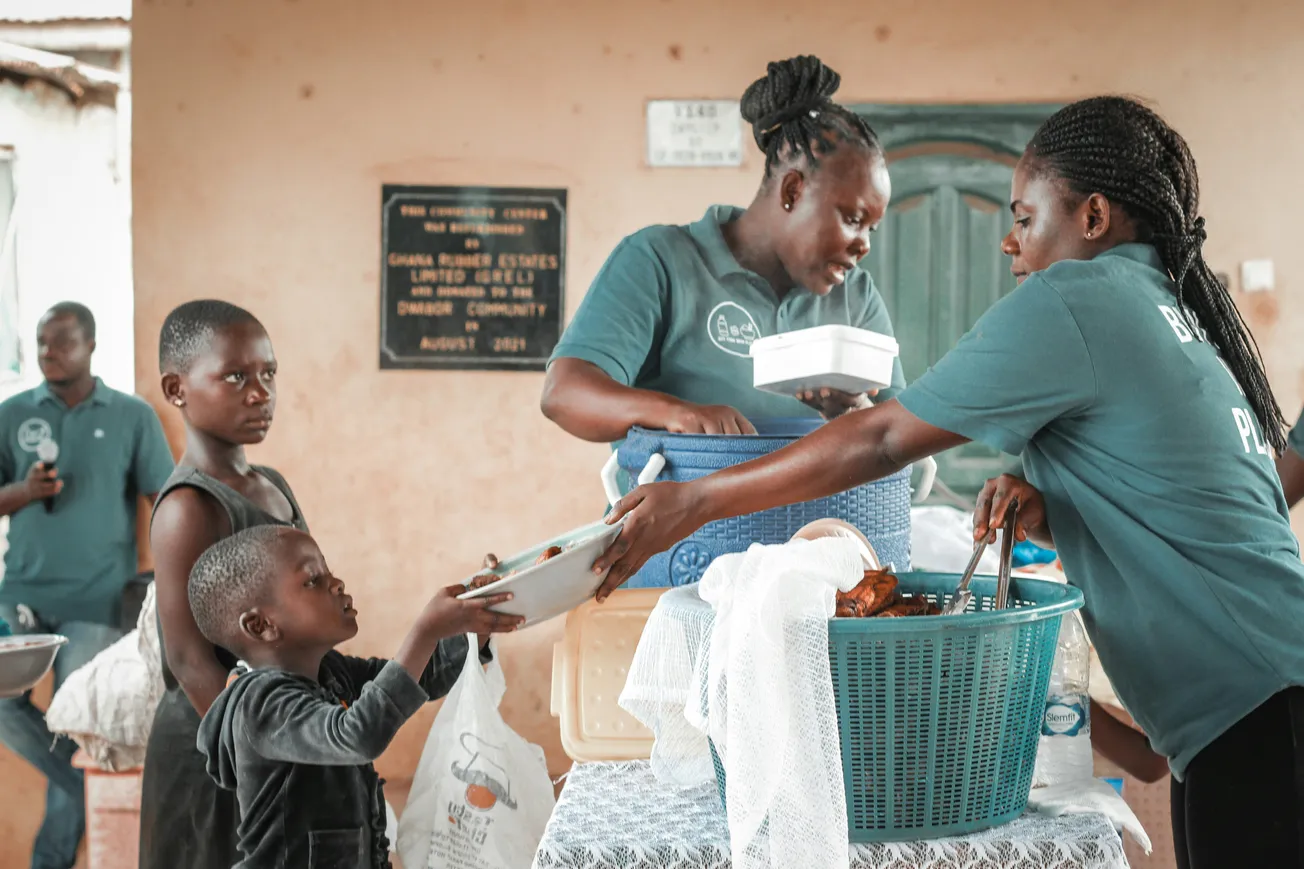
In his first days of office, Donald Trump unleashed Elon Musk’s attack DOGE to demolish the United States Agency for International Development and eliminate most of its funding. For reference, USAID’s spending in fiscal 2024 was 0.3% of the federal budget.
The destruction was carried out under the banner of ending “a culture of dependency,” a talking point that reads like satire when juxtaposed against the abundance of graves now being dug because so much health-related funding has been terminated. In the wake of the cuts, mountains of the dead are African, and many of them, tens of thousands, are children, analysts say. This is one of the bitter aftertastes of Trump’s unsavory “America First” sham. As The Economist notes, “...the signs are growing that America First means Africa last.”
In July, the highly respected The Lancet published a study, stating:
USAID funding has significantly contributed to the reduction in adult and child mortality across low-income and middle-income countries over the past two decades. Our estimates show that, unless the abrupt funding cuts announced and implemented in the first half of 2025 are reversed, a staggering number of avoidable deaths could occur by 2030.
How staggering? By 2030, an estimated 14 million extra deaths, including 4.5 million children under 5.
The funding cuts’ impacts on children are especially noxious since USAID’s very first effort was spearheading child survival campaigns, which saved millions of lives with a simple intervention. The Foreign Assistance Act of 1961 establishing the agency was signed by President John Kennedy on Labor Day. Critics on the left later noted, accurately, that some USAID programs gave cover to CIA meddling, casting a shadow on the agency’s humanitarian efforts. But that’s a topic for another day.
The Trump regime’s “America First Global Health Strategy,” released in September, asserts that African governments must “take responsibility” for their own health systems. But responsibility without resources is a slogan, not a plan — and DOGE ripped away those resources without warning. When tallying the lethal consequences, it should never be forgotten that the rationale behind the USAID cuts was the same as for the regime’s other changes: 1) give the federal government an austerity makeover; and 2) give yet more tax breaks to the ultra-wealthy.
Many of the data systems meant to track disease — at least partially funded by USAID— were shut down too. But we nevertheless still know that the death toll is horrific. Hundreds of thousands already have died, as The New Yorker has grimly documented. A million more are at risk, according to analysts Charles Kenny and Justin Sandefur at the Center for Global Development. The cuts mean more outbreaks. More untreated HIV. More maternal deaths. More children starving because food pipelines evaporated. More refugee camps erupting in deadly violence over bags of grain that only arrive sporadically.
Within nine months of the announced cuts, as The Economist reported, 86% of USAID contracts were terminated, including 77% related to health. Funding for the World Food Program was shorn from $4.3 billion to $326 million. UNICEF went from $1.1 billion to $265 million. The Global Fund from $2.3 billion to $1.3 billion. The State Department, which absorbed pieces of USAID, insisted it would maintain “life-saving” programs — even as contracts for anti-retroviral delivery to 2.3 million people disappeared.
The result? A continent-wide whiplash. Clinics shuttered. Food stocks vanished. Malaria programs collapsed.
In Madagascar, Dr. Velontafa Jackia described the brutal new reality: “More birth complications. More maternal deaths. More malarial deaths. Lots of outbreaks.”
In South Africa, clinics are now receiving what epidemiologists call “HIV migrants” — sick people crossing borders from Eswatini, Mozambique, Zimbabwe, and Lesotho because medication has vanished at home. “We are going backwards,” warned South African epidemiologist Olive Shisana, citing U.N. estimates of up to 6 million new infections and 4 million additional AIDS deaths by 2030.
In Somalia, the number of people served by the World Food Program has been slashed from 1.1 million people to just 350,000 — less than one-tenth of those in need.
Some estimates are horrifying precisely because they reflect what we no longer see. Much of Africa’s disease surveillance architecture was funded by USAID. When those systems closed, so did the capacity to count cholera flare-ups, maternal mortality spikes, and HIV treatment interruptions.
The justification for the cuts — that U.S. humanitarian aid creates dependency — collapses on contact with reality. African governments have long co-funded health programs. Community health workers have long staffed rural clinics. Ministries of health have long trained their own epidemiologists. What the United States brought was scale — the kind of scale that keeps pandemics small, epidemics localized, and HIV patients alive.
Cutting that support is not a push toward self-reliance. It’s a push toward catastrophe. And the quiet truth whispered in global health circles is this: Africa cannot fill this gap. Not in a year. Not in five. Not without massive outside investment. The U.S. cuts created a vacuum that Europe will not fill, as the U.K. has slashed its own aid and Germany and France are retreating into austerity.
Presuming he hasn’t declared himself emperor by then, Trump will be replaced in 2029 if not sooner. If Trumpism goes with him, and progressive young(er) Democrats take the reins of government, much of what USAID did can be restored. Yes, I know that second sentence contains a lot of unspoken ifs. Plus, any new version of USAID will be queued up behind a bunch of other urgent things on the restoration agenda.
But, all the iffy ifs aside, here’s what the most barebones new version could look like.
1. A Global Health Firewall Act
•Protect a baseline of U.S. foreign health funding from political manipulation
•Lock in a minimum 0.5% of U.S. GDP for global health.
•Require Congress to approve any funding reduction.
•Guarantee 10-year funding for PEPFAR, WFP, Global Fund, WHO, UNICEF.
2. PEPFAR 2.0: An Expanded Global Health Platform
•Expand PEPFAR as a multi-disease health delivery system.
•Integrate HIV, TB, malaria, maternal care, and vaccinations.
•Fund regional African pharmaceutical manufacturing hubs.
•Prevent future treatment interruptions by eliminating single-donor bottlenecks.
3. Global Outbreak and Surveillance Reconstruction Initiative
•Rebuild the disease-tracking architecture Trump gutted.
•Restore all USAID/CDC disease surveillance systems.
•Create African regional outbreak intelligence centers.
•Pay community health workers living wages.
4. Emergency Replenishment of Humanitarian Pipelines
•Restart the supply chains that keep people alive.
•Fund an Emergency Procurement Fund with African and U.S. oversight.
•Rebuild World Food Program’s logistics networks.
•Restore infrastructure for vaccines and HIV drug
The cuts to USAID have reversed global progress in health, reigniting diseases we once controlled, and killing people we once helped keep alive — mothers, kids, refugees, HIV patients, whole communities now left to fend for themselves as the Trump regime shrugs. We can rebuild USAID, and make it better. The first step, and it’s going to be a doozy, will be rebuilding trust.
RELATED:
•The many tragedies of ending US aid by Tim Harford
•Evaluating the impact of two decades of USAID interventions and projecting the effects of defunding on mortality up to 2030: a retrospective impact evaluation and forecasting analysis at The Lancet
•Cuts and consequences: The end of USAID — a PBS news documentary
•USAID Cuts Devastating to Central Asia Programs by Catherine Putz at The Diplomat








Comments
We want Uncharted Blue to be a welcoming and progressive space.
Before commenting, make sure you've read our Community Guidelines.