War with Iran is not inevitable. But the fog of war always is. And it doesn’t begin when a war does; it precedes it. We are neck deep now in prewar fog. That is, we’re afflicted even more than usual by the unreliability of some informants, the stepped-up deception of officialdom, the secrecy and censorship of the involved parties, the inadequacies and ideologies of major media, and a plethora of murky conspiracy theories.
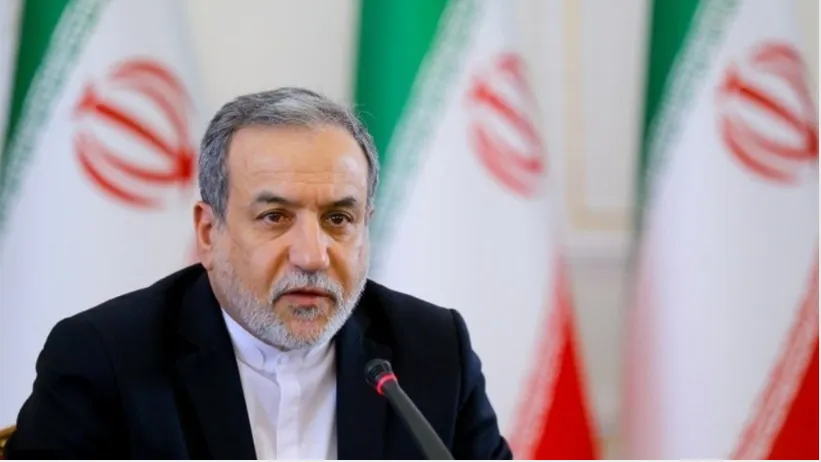
In such an environment, Donald Trump has indicated he’s fed up with current negotiations in Geneva regarding changes he says Tehran must agree to. Last Friday, he gave the regime 10-15 days to make a deal about its nuclear program and other matters or face “bad” consequences. Reportedly “last ditch” negotations will continue on Thursday. The Iranian foreign minister has said it will soon present a new draft proposal. Meanwhile, the two carrier groups with dozens of ships, hundreds of fighter jets, several AWACS and tanker planes, extra Patriot missiles and THAAD interceptors that Trump ordered weeks ago to perch in the eastern Mediterranean and the Persian Gulf are now on station. Awaiting further commands.
From the lies that greased the invasion of Iraq to the “surgical” interventions that metastasized into regime-change disasters, U.S. military adventures in the Middle East have followed a script: exaggerate the threat, marginalize diplomacy, promise quick results, and downplay the human cost. Then comes the quagmire, the blowback, the coffins, and the bill — paid not by the architects of war, but by ordinary people here and abroad.
An attack on Iran might be a “limited” or “contained” operation. Or it might be the opening act of another potentially catastrophic regional war.
Ilan Goldenberg and Nate Swanson write at Foreign Affairs:
No one, including Trump, has any idea what effect strikes would have on the psyche of those resisting the regime and those upholding it. U.S. strikes could galvanize protesters and lead to the defections among the security services necessary to foment a change in regime. But they could just as easily lead to a cycle of violence that could accelerate an uncontrolled descent into chaos. An indecisive outcome against a wounded, cornered regime increasingly willing to use violence against its population could replicate the conditions that led to the Syrian civil war, further destabilizing the country and the region.
But restraint does not mean total disengagement. The United States should intensify economic and diplomatic pressure to isolate the regime internationally and hasten its demise.
Will Trump order attacks, or won’t he? If Tehran won’t bend far enough, it’s hard to imagine any world where Trump doesn’t carry through on his threats, although he certainly abandons other promises remorselessly. Maybe he’ll just be TACO man again. Here’s what we know for certain, courtesy of a statement from White House spokeswoman Anna Kelly: “The media may continue to speculate on the President’s thinking all they want, but only President Trump knows what he may or may not do.”
Well, day-um. Talk about Rumsfeldian known unknowns.
Nobody expected and we’ve not seen anything like a coherent, consistent foreign policy from Trump in either of his terms in office. He’s too feckless and fickle for that, as proved by his interactions with the would-be tsar in the Kremlin and U.S. allies everywhere. One critic, Stephen W. Walt of the “realist” school of international relations, calls him a “predatory hegemon.”
California Democratic Rep. Ro Khanna tweeted last Wednesday that he plans to put his and Kentucky Republican Rep. Thomas Massie’s War Powers Resolution up for debate and a vote before Congress this week. On Xitter, Khanna said he “won’t let Trump launch a disastrous war without Congress voting to stop it.” Massie, also at Xitter, said he “will vote to put America first which means voting against more war in the Middle East.” Could that pass both houses of Congress? If it did, would the White House salute or flip them off?
Trump is notorious for using “a couple of weeks” as the time-frame for announcing big progress or big plans that never come. However, bogus time-frames can serve tactical purposes. Remember that last June after he warned Tehran that it had two weeks to get serious about negotiations, he only waited 30 hours before — surprise! — sending the B-2s to blast Iran’s deep underground nuclear facilities at Natanz and Fordow, something the Israeli Air Force could not.
Of a new intervention, Reuters reports in Haaretz:
The possible timing of an attack is unclear. U.S. Secretary of State Marco Rubio is due to meet Israeli Prime Minister Benjamin Netanyahu on February 28 to discuss Iran. A senior U.S. official said it would be mid-March before all U.S. forces were in place.
But some Arab and European officials say they are unsure what Trump's endgame is, and European governments want the U.S. to spell out what strikes would be meant to achieve — to degrade Iran's nuclear and missile capabilities, deter escalation or pursue something more ambitious such as "regime change."
Trump’s stance has been the same as that of every U.S. president since 1979 — Iran should not be allowed to obtain a nuclear weapon. As a signer of the Nuclear Non-Proliferation Treaty in 1968, Iran vowed not to build its own nuclear weapons, although it has in the past been caught doing precisely that. This in spite of a fatwa from Supreme Leader Ali Khamenei forbidding nuclear development as “unIslamic.”
The NNPT, however, allows nations’ to implement nuclear programs for peaceful purposes, including the right to enrich uranium ore to make it a suitable fuel to run power plants, which is just under 4% concentration, and for medical research, at about 20% concentration. Three nations that did not sign the NNPT built their own nukes: Israel, Pakistan, and India. While Trump has said an agreement must include absolutely no nukes and zero enrichment by Iran, he also aligns with U.S. hawks who want an Iranian retreat on ballistic missiles, and curtailment of the Islamic Revolutionary Guard Corps’ support of regional and global proxies.
The nuclear agreement negotiated by the Obama administration in 2015 set restrictions on Iran’s nuclear program, limits that the regime maintained until Trump withdrew from the pact during his first term. That move vindicated the hard-liners in the IRGC who had opposed the agreement before it was signed until Khamanei told them to stand down.
After the U.S. withdrawal, Iran gradually enriched hundreds of pounds of uranium to 60% concentration, still short of but much closer to weapons grade. Before the June bombing, Iran had spun its centrifuges long enough to accumulate nearly 1,000 lbs of uranium at that level. Enough when concentrated further for a few nuclear bombs. It’s unknown how much it Iran has left after the bombing. However much, the U.S. wants it to sell the stuff abroad. Iran’s negotiators have said they won’t do that, calling enrichment their right. Reuters and other media have reported that a possible compromise being discussed might permit Iran to continue enriching at low levels under close monitoring by the International Atomic Energy Agency. We’ll see how that goes.
At Foreign Affairs, Karim Sadjadpour, a senior fellow at the Carnegie Endowment for International Peace, writes:
The Islamic Republic has sought to turn its military humbling into an opportunity to rally the country around the flag, but the indignities of daily life are inescapable. Iran’s 92 million people make up the largest population in the world to have been isolated from the global financial and political system for decades. Iran’s economy is among the world’s most sanctioned. Its currency is among the world’s most devalued. Its passport is among the world’s most denied. Its Internet is among the world’s most censored. Its air is among the world’s most polluted. [...]
Khamenei’s age, inflexibility, and looming departure have left Iran suspended between prolonged decay and sudden upheaval. Once Khamenei is gone, several possible futures are foreseeable. The Islamic Republic’s totalizing ideology could collapse into the strongman cynicism that has been the hallmark of post-Soviet Russia. Like China after the death of Mao Zedong, Iran might recalibrate by replacing rigid ideology with pragmatic national interest. It could double down on repression and isolation, as North Korea has done for decades. Clerical rule might yield to military dominance, as it has in Pakistan. And although increasingly unlikely, Iran could still tilt toward representative government—a struggle that dates back to the Constitutional Revolution of 1906. Iran’s path will be unique, and its course will shape not only the lives of Iranians but also the stability of the Middle East and the wider world order. [...]
For nearly five decades, Iran has been governed by ideology; its future, however, will hinge on logistics—above all, who can most effectively manage a country nearly five times as large as Germany, endowed with vast resources yet beset by daunting challenges. Out of this volatility, Iran’s post-Khamenei order could take several forms: nationalist strongman rule, clerical continuity, military dominance, populist revival, or a unique hybrid of these. Such possibilities reflect the country’s factionalism. The clerics are intent on preserving the Islamic Republic’s ideology. The Islamic Revolutionary Guard Corps The Islamic Revolutionary Guard Corps(IRGC) seeks to entrench its power. Disenfranchised citizens, including ethnic minorities, demand dignity and opportunity. The opposition is too fractured to unite but too persistent to simply vanish. None of these factions are monolithic, but it is their aspirations and actions that will define the struggle over the kind of country that Iran will become. [...]
Yet to whatever degree outside powers may tilt the balance, Iran today is large and resilient enough to chart its own destiny. It has all the makings of a G-20 country: an educated, globally connected population, tremendous natural resources, and a proud civilizational identity. For Iranian democrats, however, the international climate could hardly be less favorable. Western governments that once championed democracy have withdrawn resources and are preoccupied with their own democratic backsliding. The United States has pared back institutions—such as the National Endowment for Democracy and Voice of America—that were central to its Cold War success. In this vacuum, Iran is more likely to follow the broader global trend in which strongmen rise by stressing the virtues of order rather than the promise of freedom.
Presuming the two sides cannot come to agreement in Geneva, besides not attacking at all, Trump supposedly has two options. One is to undertake a week or so of attacks on Iranian military and remaining nuclear infrastructure and see if that creates a new attitude in the Tehran regime. Such limited attacks might instead be used to decapitate the nation’s leadership in hopes that would spur new, less militant leaders to emerge. The second option is to go all out. Hit Iran relentlessly until the leaders give in.
However, the second option is really the only available one at this juncture. According to Joint Chiefs Chairman Dan Caine, without allies on board, and with depleted munitions from defending Israel and helping keep ammo and weapons flowing to Ukraine, the scale of even a week’s worth sorties against Iran would be daunting, much less an extended war. Iran is four times as large geographically as Iraq, with twice its population. And, whatever impacts Iran’s mostly obsolete tech and other military deficiencies might present in a fight with the best armed nation on the planet, there would almost certainly by American casualties, unlike in the abduction of Venezuelan President Nicolás Maduro and the June attack on the Iranian nuclear centrifuge bunkers.
Weak as the Iranian regime is, battered as its economy and environment are, angry as a huge portion of its population is, and corrupt as its elites continue being, its autocratic rule is multilayered and deeply entrenched after nearly half a century in power. It also helps to be ruthless if you think your very existence, your privilege and power, are at risk. That’s why Iran killed thousands, possibly tens of thousands, of protesters last month and is still hunting others down.
The regime, of course, is no match for direct conflict with the American military. But that doesn’t mean the U.S. (or anybody) can implement a military resolution to the political clash without massive commitment and risk. The outcomes in Afghanistan and Iraq ought to be evidence enough of the perils of that. And in those wars, the U.S. committed hundreds of thousands of soldiers. Nobody in authority in Washington seems to be talking about a “cakewalk” this time around. So that’s something.
At the Middle East Institute, Alex Vatanka writes about the mindset of the Iranian leadership:
The final wild card is, therefore, the one Iranian officials fear most: that the United States and Israel will synchronize military pressure with a renewed push for internal destabilization. Iranian elites openly talk about this possibility, the so-called hybrid war option. They worry that covert action, information warfare, economic suffocation, and targeted strikes could together spark a new domestic uprising and tip the balance at a moment of maximum vulnerability.
For Tehran, the threat is not merely incoming missiles but an American-Israeli strategy that blends external attack with internal fragmentation. In that scenario, deterrence becomes more complicated, and retaliation may not be enough to restore balance. It is the scenario in which attacks on regional oil infrastructure and even the US homeland — with cyberstrikes, drones, or terrorist operations — would become plausible.
This is the landscape in which diplomacy now operates: a narrow corridor between escalating military preparations, rigid political red lines, and deep mistrust. [Rafael] Grossi [director-general of the International Atomic Energy Agency], may still believe that a technical agreement can stop the slide toward war, but every sign on the ground suggests otherwise. The Trump administration most likely aims for a limited conflict that reshapes the balance of power without trapping it in a quagmire. Iran’s leaders think they can survive such a strike as long as they retaliate hard enough to deter the next one.
That fact the United States has so far launched neither a short-term nor long-term assault on Iran after the June nuclear facilities raid may have as much to do with domestic politics as any foreign policy “vision.” White House aides reportedly do not all agree that any attack is a good idea. Since Trump campaigned on ending forever wars and lowering prices they believe the economy and not foreign adventures is where his focus should be. The most recent poll of Americans on the subject show 70% don’t want a war with Iran, with only 18% in favor. And while Republicans are much more likely to support intervention than Democrats, there are many dissenters, with MAGAs among them. Foxagandists have nonetheless been diligently at work cheerleading an assault on the Islamic Republic, with Sean Hannity leading the charge, including showing Defense Secretary Pete Hegseth working out.
To be clear, Iran’s autocratic, theocratic, lethally homophobic and misogynistic regime, with its medieval punishments and terrorist mission, deserves to be toppled even though there’s more than a little irony that the pursuit of no nukes for Iran is proceding at the same time Russia, China, the United States, and the UK are all involved in massive upgrades in what are already the largest nuclear arsenals on Earth. For the outcome of any ouster of the leadership to be positive, it is a job for Iranians. The U.S. can support this in various ways, but assaults on Iran that kill thousands — 900 Iranian civilians were killed by the anti-nuclear strikes eight months ago — would be counterproductive to longterm stability.
We were told the invasion of Iraq would be swift and decisive. Instead, it unleashed sectarian bloodshed that killed hundreds of thousands and displaced millions. The region has yet to recover.
Americans are deeply weary of war. After two decades of protracted ground conflicts in Iraq and Afghanistan — at a cost trillions of dollars and thousands of lives — the broad public is extremely resistant to further military entanglements abroad.
The economic consequences of a conflict with Iran could be massive. Iran sits astride the Strait of Hormuz, a chokepoint through which roughly one-fifth of the world’s petroleum passes. Analysts project that even a limited military confrontation would push oil prices sharply higher, sparking inflation and economic disruption globally. This would translate into higher gasoline prices, increased costs for goods and travel, and broader strain on households and businesses. U.S. taxpayers would also bear the cost of war directly: Estimates for a limited war range from tens of billions to well over a trillion dollars within just months of combat.
Americans were told the invasion of Iraq would be swift and decisive. Instead, it unleashed sectarian bloodshed that killed hundreds of thousands and displaced millions. The region has yet to recover.
The military risks should not be underestimated. Iran’s missile forces, cyber capabilities, and regional proxies could retaliate swiftly and sustain such attacks, even if Tehran’s mostly ancient conventional air force and navy are profoundly outclassed. Iran would almost certainly retaliate against U.S. assets, bases, and allies. Tehran still commands a network of proxy groups in Iraq, Syria, Lebanon, and Yemen — all capable of unleashing difficult-to-contain asymmetric attacks. A military assault could transform a limited strike into a regional escalation. We’ve seen this movie before.
Moreover, history suggests that military action can strengthen regimes rather than weaken them. External attack often fuels nationalism, rallying even reluctant populations around their leaders. Iran is no exception: a U.S. strike could consolidate support for hardliners, marginalize moderates, and shut down the internal pressures for reform. That dynamic played out in other contexts — from Saddam Hussein’s Iraq to sanctions onTehran — where external pressure fortified the political center around authoritarian leadership.
On the other hand, right now, with the graveyards full of dead protesters, the economy in tatters from mismanagement, corruption, and crippling sanctions, internal solidarity from the populace with the Iranian regime is probably at its lowest point since the revolution 47 years ago. That raises the odds of a successful uprising whether the United States attacks or doesn’t.
A direct attack on Iran also would carry significant diplomatic costs. After 9/11, the United States had help from numerous nations, Even Libya and Iran stepped up against al qaeda. When it came to Iraq though, several allies said no way would they join that fight, but others gave support, including troops of their own. But now, many in the international community — including the U.K. and other prominent U.S. allies — have expressed deep reservations or outright opposition to military intervention. Even Saudi Arabia, far from being a friend of Iran, is not allowing use of its air space for a pre-emptive attack. The British government told the U.S. it would not allow it to use the island of Diego Garcia as launching pads for hits on Iran.
Acting unilaterally risks isolating the United States on the world stage still further, weakening coalitions, and further undermining any moral authority Washington claims to uphold.
Diplomacy is slow and often frustrating. Why can’t we all just get along? But the costs of abandoning it in favor of bombs are almost always higher than any risk it entails. Negotiated settlements and arms-control agreements, though imperfect, have prevented conflicts that once seemed inevitable. A negotiated agreement previously constrained Iran’s nuclear program until Trump dumped it in great part because he couldn’t stand the fact it was negotiated under President Obama.
That agreement was imperfect but valuable. It demonstrated that continuing to talk can produce good results even among hardened enemies. And hammering out another such agreement — even if this takes more than 10 or 15 days — is a far better path than another war. Once that’s done, find a way to give the democratic elements of the Iranian resistance the kind of assistance they need.










Comments
We want Uncharted Blue to be a welcoming and progressive space.
Before commenting, make sure you've read our Community Guidelines.