
The world is on track for 2.6 °C of heating. That headline should terrify everybody the way it terrifies climate scientists. The latest comes from media coverage of the International Energy Agency’s 519-page World Energy Outlook 2025 report released Wednesday. The IEA also notes that the ongoing green transition — which has been an encouraging counterpoint to climate pessimism — is slowing down, thanks in large part to the Trump regime’s outright war on renewables.
But we’ve become numb to the numbers. Polls show repeatedly that despite what’s happening with the climate right this minute, and despite what scientists have warned us is yet to come, only a small fraction of Americans include climate as a top priority for action. As any activist can tell you, lots of people don’t want to talk about climate at all.
At one level, this is understandable given the dystopian horror show being visited on us by the regime and all its acolytes, including a big chunk of establishment media. There are plenty of immediate impacts to worry about: rising food and housing prices; crippling regulatory agencies; slashed budgets; killing programs and grants; erasing old — and refusing to gather new — data on a range of matters; kicking out immigrants who have lived here decades or all their lives; and mucking around with Medicaid, Medicare — and soon enough quite probably, Social Security. Under these circumstances, it’s not hard to understand why climate isn’t very high on most people’s roster of concerns.


Not so for Native peoples faced with sea-level rise on the Alaska and Louisiana coasts, or the families and businesses of a drought-ridden Southwest, or the workers in much of the country ever more affected by extreme heat, or the people on the Atlantic coast suffering “100-year floods” every 10 years.
Two-point-six degrees Celsius (4.7 °F) of warming is, for most, an abstract statistic. However it translates into the collapse of ice sheets, the drowning of coastlines, the eventual loss of millions of lives to heat, hunger, and floods. It means an Earth that would feel alien to the one our grandparents knew. And if the predictions of our current trajectory are right, it means we are failing, utterly, to act in time to deter this.
At the COP30 climate summit now conferencing in the Amazon city of Belém, Brazil, delegates are again pledging “ambition,” again vowing to “accelerate” the “transition.” But the IEA — whose reports have long been treated as the gold standard for energy forecasting — projects that global greenhouse-gas emissions will continue rising through 2050 under current policies. In its so-called “Stated Policies Scenario,” which assumes governments actually follow through on their announced commitments, the agency notes that the aspirational limit of 1.5 °C (2.7 °F) is all but dead. And as we have repeatedly learned over the decade since the Paris Agreement was signed, only a few nations are on a trajectory to meet those commitments. It’s also clear that some nations — the United States aggressively much among them — are not just missing their commitments, they’re retreating from them.
If this were a movie, it would be the scene where the alarm starts flashing red and the protagonist finally yanks the emergency brake. But in the real world, the train keeps accelerating.
The Mirage of “Peak Oil”
Just months ago, IEA reports were being heralded — especially by Western governments — as proof that fossil-fuel demand had peaked. “The age of oil is over,” policymakers reassured us, as if the market itself were solving the crisis. But the 2025 Outlook is a cold shower (unless you’re hip deep in shares of fossil-fuel companies).
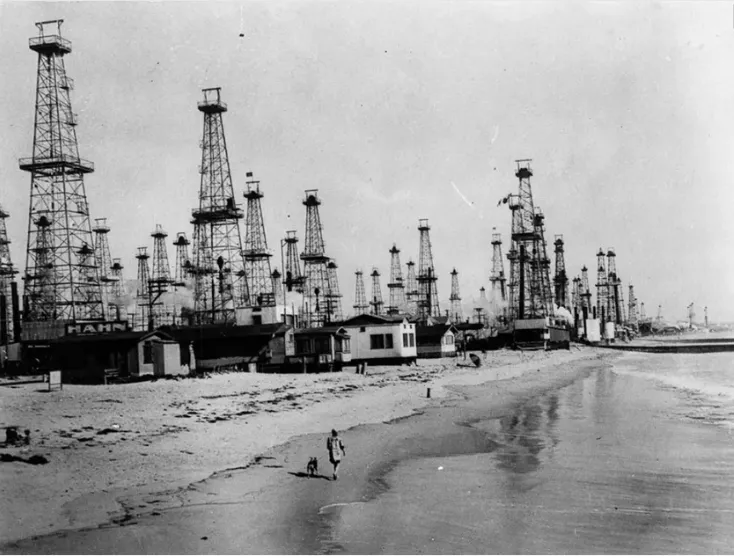
The agency’s “Revived Policy Scenario” now shows no peak in oil or gas demand this decade. Instead, consumption will keep climbing for another quarter-century, it predicts. Fossil-fuel companies, far from winding down, are ramping up. New exploration projects are planned in the North Sea, the Gulf of Mexico, and West Africa. U.S. liquefied-natural-gas exports are set to triple. According to IEA data, investments in oil and gas infrastructure remain double what would be compatible with a 1.5 °C pathway. The so-called “energy transition” is being built atop a mountain of oil, gas, and coal. The outcome? Renewable energy is expanding as an add-on instead of a substitute, grafted onto an unchanged fossil economy. A hybrid monster.
Said Rachel Cletus, senior policy director for the Climate and Energy program at the Union of Concerned Scientists:
“The IEA’s latest report underscores the daunting challenge ahead for rapidly decarbonizing the world’s economy but also highlights the opportunity for tremendous wins for consumers’ pocketbooks, public health and addressing energy poverty that pathway provides.
“With the world on the brink of overshooting 1.5 degrees Celsius, it’s crucial to prioritize renewable energy, energy efficiency and a climate-resilient energy system. A fast fair phaseout of fossil fuels—coal, oil and gas—is also essential, yet nations continue to recklessly expand these polluting sources of energy at odds with climate goals. All too many political leaders are beholden to entrenched fossil fuel interests who are profiting off perpetuating a fossil fuel-based economy.
“Contrary to the IEA’s framing, cooperation and collaboration among countries will be key to accelerating the manufacture and deployment of clean energy technologies globally.
“At COP30, we need world leaders to live up to the commitments they made in Dubai to advance a clean energy transition within this critical decade. Richer nations must also provide finance to lower-income countries to enable this transition.
“The choice for decision-makers should be clear: either they invest in a fast, fair transition to clean energy that brings overwhelming benefits, or they will force people to face the rapidly escalating harms and costs of unchecked climate change.”
The Math of Catastrophe
Every fraction of a degree of added warming magnifies disaster. At 1.5°C, hundreds of millions face extreme heat waves every five years. At 2°C, those heat waves come every year. At 2.6°C, vast regions of the tropics become uninhabitable for outdoor work. Crop yields collapse. Water crises multiply. Sea-level rise displaces tens of millions. Coral reefs vanish entirely. Arctic summer ice becomes a memory.
This isn’t “climate change” anymore; it’s climate disintegration. The “safe operating space” for humanity — what scientists call the planetary boundaries — is being breached on multiple fronts. And the world’s governments, knowing this, continue to approve new drilling leases and subsidize fossil fuels to the tune of $1.3 trillion annually. Even in Brazil, whose COP30 hosts have a good recent record on deforestation and talk smart about acting on climate, oil leases in the Amazon River delta are being pondered.
Unless you agree with Trump and crew that solar panels and wind turbines don’t actually work, our problem isn’t technological or scientific. It’s political and economic. As Glen Peters of the CICERO Center for International Climate Research put it, “a system that talks transition while investing in the opposite.” Oil and gas majors are planning 25 years of expansion, locking in infrastructure that will keep emissions rising through mid-century. These aren’t just business decisions—they are death sentences written in corporate shorthand.
Climate Analytics CEO Bill Hare told The Guardian, “A world at 2.6°C means global disaster,” adding that could mean passing tipping points including the death of coral reefs and the transformation of the Amazon rainforest into savanna. “[These and other changes mean] the end of agriculture in the UK and across Europe, drought and monsoon failure in Asia and Africa, lethal heat and humidity,” he explained. “This is not a good place to be. You want to stay away from that.”
What drives this madness is the logic of profit in a carbon-addicted capitalism. Fossil fuels remain the most lucrative commodities on Earth, and governments — especially those of the United States, Canada, and the Gulf monarchies — are structurally dependent on their revenues and geopolitics. Wall Street and the City of London bankroll extraction because for rank-and-file shareholders and CEOs alike, quarterly returns trump planetary survival. As one climate advocate told Olivia Rosane at Common Dreams, “The fossil fuel industry is still running the show, and the IEA is simply describing the theater of the absurd.”


Justice on Paper
At COP30, delegates from the Global South are demanding a “just transition” — a reordering of global energy and finance that puts justice, not profit, at the center. They are right to insist on it. The poorest nations, responsible for a fraction of historic emissions, are bearing the brunt of the damage. Yet even as the by now hoary term “just transition” makes its way into speeches and communiqués, the funding to make it real remains microscopic.
Loss-and-damage finance, promised at COP27 in Sharm el-Sheikh, has trickled in at a rate that would barely cover the flood damages from a single hurricane season. Debt-burdened nations are told to invest in clean energy while paying interest to the very banks that financed the fossil boom. Climate justice becomes another diplomatic slogan.
A genuine just transition would mean massive wealth transfers: hundreds of billions annually in grants, not loans; cancellation of odious debts; technology sharing without patents; and democratic control of energy systems. It would mean planning, not markets, guiding the shift—an end to the illusion that private capital will decarbonize out of the goodness of its heart. But at COP30, as in every COP before it, it appears that the proposals that could make such transformation real are being politely ignored. However, the summit isn’t yet half over.
U.N. Secretary-General António Guterres called the likely failure to stay below 1.5°C “a moral collapse.” He’s right. But the phrase doesn’t quite capture the scale of betrayal. The moral calculus is obscene: every new well, every gas terminal, every pipeline built in 2025 and beyond is a guarantee that somewhere, a village will drown or a harvest will fail.
This is the dark heart of what Naomi Klein has called disaster capitalism — a system that monetizes catastrophe and sells us the ashes as growth. It is, in Orwellian fashion, a politics of doublespeak —where “net zero by 2050” serves as a permission slip for more emissions today, and “carbon capture” is the alibi for endless extraction.
What Is To Be Done
The math is pitiless, but not hopeless. Every tenth of a degree avoided still saves lives. The world can still slam the brakes, but only if it abandons the too gradual incrementalism that has defined climate diplomacy for three decades. The steps are not mysterious; they are simply politically inconvenient:
- No new fossil-fuel development. Expanding is collective suicide.
- Redirect subsidies and finance. The $1.3 trillion annually propping up fossil fuels should be redirected to renewables, efficiency, and adaptation—especially in the Global South.
- Public ownership and democratic planning. Energy transitions cannot be left entirely to corporations whose fiduciary duty is profit. There are models for alternatives at home and abroad.
- Repair and redistribution. Wealthy nations owe a climate debt to the develoopmentally emerged ones. Paying it is not charity; it is restitution.
- Mobilize like it’s war—because it is.
If we do not confront the fossil-fuel titans, overhaul global finance, and reclaim democracy over energy,no future COP will rescue us. The fires, floods, and hunger we are already seeing will be mere appetizers. We need to get off this path before the main course arrives.
None of this can, obviously, be done with the current U.S. Congress and president. Changing both means a key aspect of climate activists’ work going forward has to be focused on electing candidates who take the crisis seriously and act on it.










Comments
We want Uncharted Blue to be a welcoming and progressive space.
Before commenting, make sure you've read our Community Guidelines.