
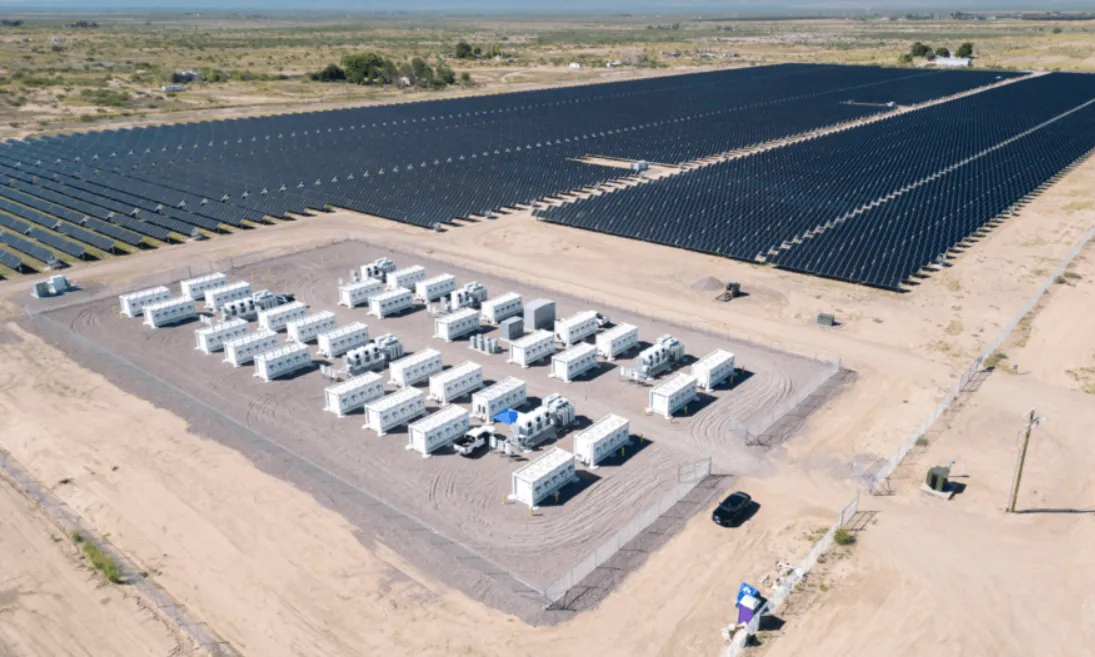
Even if it’s just the ketamine talking, Elon Musk is right about one thing. Donald Trump’s crusade to kill further expansion of renewable energy sources is insane.
For three decades environmental activists and a slice of Democratic politicians have sought to reduce or end fossil fuel subsidies, the bulk of which go to industry giants making giant profits in what is one of the nation’s most mature enterprises. They failed. A head shaker. You’d think it would have been a slam dunk.
These are, after all, subsidies for an industry that has abandoned millions of dangerous oil and gas wells that taxpayers’ must pay to plug. An industry which, in the aggregate, every year across the globe kills 7-8 million people and harms tens of millions more with air pollution. An industry that floods the members of Congress and state and local governments everywhere with lobbyists and dissemblers and campaign cash (with the expected favors ensuing).. An industry that likes to pretend to green virtue in countries with strict environmental laws but whose true colors can be seen in nations where such laws are lax, unenforced, or non-existent.
It’s an industry that lied and paid others to lie about rapid climate change in order to keep those giant profits flowing and now whine they shouldn’t be held legally or morally accountable for the lies nor the damage caused by failing to start addressing the climate situation 50 years ago. A global industry of preposterous wealth with tendrils absolutely everywhere in just about everyone’s daily lives.
Disentangling a global society from those tendrils takes time. The trouble is, the delays achieved by hook and by crook against a green transition have taken away decades of time. A transition should by now be approaching its final stages. We are instead far from that goal. If there is to be any hope of easing the worst ravages of global warming, it now needs to be pedal to the metal on renewables and batteries. It’s not just that flash floods like the one on the Guadalupe River are going to be more extreme. It’s that they and other disastrous events are going to be more frequent. Just one sample of where we are headed. Every molecule of extra carbon pumped into the atmosphere makes the situation a little bit worse. We need to stop.
The Inflation Reduction Act, flawed as it was, funded an accelerated transition. Not perfectly. Not completely. But it was a step toward stopping the perilous global warming trajectory we are on. Given the sausage-making that went on it’s miraculous anything as good as the iRA legislation emerged, whatever its defects.
Trump and the Republican Congress with its just passed Kid Killer Act have now accelerated the IRA’s demise. They’ve ended the tax credits for residential and commercial solar and put obstacles in the path of community solar and wind. Still, the impact won’t be quite as instant as the House version. However, “not as bad as it could have been” is cold comfort. It’s highly destructive nonetheless. And has produced dozens of headlines likes these:
• How the ‘Big Beautiful Bill’ positions US energy to be more costly for consumers and the climate • Trump’s ‘big, beautiful’ law tethers the US to the past • US rooftop solar companies are bracing for devastation • 'We Lose The Auto Industry': LG Energy Chief's Warning If America Backs Off EVs • Trump orders crackdown on ‘green’ subsidies • IRA Cuts Would Sacrifice $1 Trillion of Economic Growth
Whether through ignorance or obstinance, Trump is, of course, a full-on-denier of climate science. As such he sees no drawbacks to reviving the coal-fired power plants. (Speaking of insane.) Not, mind you, just keeping the nation’s existing but much-reduced coal plant fleet in business, but also expanding it and bringing new plants on line after two decades of hundreds of shutdowns.
The Chinese do it, he says. They do, indeed. But Trump rarely mentions how much clean energy China is also adding every year. Nor the 40,000 kilometers of high speed rail built in less than 20 years. America has zero. China already has a lead in affordable electric vehicles. Whatever its economic problems, structural and acute, it also has a lead in many other elements of the green transition that will shape the future, and not just of China. This did not happen by accident. If the United States continues this numbskull retreat from participating in this transition, that lead will inevitably widen.
Investors don’t want anything to do with new coal-fired plants since electricity from solar and, to a lesser extent, wind, is a good deal cheaper than from the most efficient coal plant. And a whole lot cleaner for both greenhouse emissions and other pollutants. As a consequence, we see outcomes like this: FERC: Solar + wind made up 96% of new US power generating capacity in first third of 2025.
Maybe Trump could wheedle some of Saudi Crown Prince Muhammad bin Salman’s rich cousins and pals to take a loss on a few coal operations as part of whatever other deals the Trump Organization and the Saudis have going on. Besides, the Environmental Protection Agency has been ordered not to measure power-plant emissions going forward. So no pesky enforcement to worry about.
Obviously, if you don’t accept what climate scientists tell us is underway and a climate-inflaming industry buys a $96 million chunk of you in the election, you pay them off with whatever favors they seek. Even if they’re poisoning everyone. That’s deplorable, and bribery, but also reality.
What’s truly stunning isn’t the corruption. Ye gods, the media normalized that in his case long ago. Rather it’s Trump exhibiting not merely an aversion but an absolutely pathological hatred for renewables. Clearly many congressional Republicans have for years had the long knives out for renewables credits and subsidies. Most, however, don’t get unhinged about it. Trump brings vendetta to the table. Not in whispers, but aloud he’s ordered a veritable hit on solar arrays and wind turbines, as if they personally offend him. This crippling of what amounts to the only U.S. industrial policy will reverberate well beyond the Trump administration.
—Meteor Blades
WEEKLY ECO-VIDEO
RESOURCES & ACTION
- How climate change is worsening extreme heat. The latest science on the link between climate change and natural disasters — and how they may be playing out where you live
- Disaster 101: Your guide to extreme weather preparation, relief, and recovery
- 5 ways we’re making progress on climate change
RESEARCH & STUDIES
- World’s Biggest Polluters Least Affected by Conflict and Environmental Damage. The world’s biggest polluters are also the most protected from the environmental harm they helped create, according to a study published at Communications Earth & Environment by researchers from University of Notre Dame and University of Wyoming.
- Huge groundwater losses have occurred along Colorado River. Published by AGU, a study from researchers at Arizona State University shows that the seven states of the Colorado River basin has lost 27.8 million acre-feet over the past 20 years. That’s about as much as contained in Lake Mead, the nation’s largest reservoir. How much of this is due to ongoing aridification and how much by users turning to groundwater because demand for water is exceeding supply from aboveground sources.
- Amplified warming accelerates deoxygenation in the Arctic Ocean. Researchers for study published in Nature Climate Change say rapid warming of the global ocean and amplified Arctic warming will alter ocean biogeochemistry. They show that Atlantic water inflow, and the subsequent subduction and circulation, is reducing dissolved oxygen in the Arctic due to reduced solubility with increased temperature
- A mining reality check on net zero. Researchers authoring a collection of articles show a massive shortfall in the supply of lithium and copper required to reach net zero emissions by 2050. These resources won’t run out but we may run out of time because some mines take decades to bring into production.
- As nitrate levels soar in Iowa, new research underscores risks for babies. A study published in PLOS Water has added to existing evidence that pregnant women exposed to nitrates in drinking water negatively affects birth outcomes, including premature deliveries and low birth weights. These risks are present even when exposures are below allowable limit standards. Nitrate levels in major Iowa waterways are at record highs.
- Satellites reveal tropical wetland flooding did not cause methane surge. Researchers at the University of Michigan found that the unexpectedly large increase in atmospheric methane between 2020 and 2022 did not come from tropical wetland emissions responding to the changing climate. But their study published in Communications Earth & Environment did not uncover the source of the methane surge.
- Heat wave duration is accelerating faster than global warming, researchers find. In a study published in the journal Nature Geoscience, researchers led by UCLA and the Universidad Adolfo Ibañez in Santiago, Chile, found that not only will climate change make heat waves hotter and longer, but the lengthening of heat waves will also accelerate with each additional fraction of a degree of warming.The duration of a heat wave worsens the risk to people, animals, agriculture, and ecosystems.
HALF A DOZEN OTHER THINGS TO READ (OR LISTEN TO)
Killer Whales Are Giving Fish to Humans Worldwide – What’s Going on? from the American Psychological Association. From California to New Zealand, 34 documented incidents reveal orcas bringing fish, rays, and squid to people in the water, on boats, and even onshore. Scientists say this behavior, usually seen between whales as a bonding act, may show a surprising willingness to connect with humans. In some cases, the whales even tried more than once after being turned down, as if waiting for a response. What drives this mysterious generosity? Researchers think it could be cultural, playful—or a sign of something much deeper.
‘Animals in War’ Film Anthology Tells Stories of Animals and Ecosystems Impacted by Russia’s War on Ukraine by Cristen Hemingway Jaynes at EcoWatch. The Russian invasion of Ukraine and the ongoing war has led to the confirmed deaths of thousands of people, displaced millions, and caused millions more to seek refuge in other countries. But it isn’t just humans who are impacted by the war. Millions of animals — both pets and wildlife — have been killed. In occupied and frontline regions, animals must try to survive while facing stress, hunger and constant danger. Their homes and ecosystems have been destroyed and polluted, while those who cared for them have sought refuge in shelters or ended up on the streets themselves.A Ukrainian-German film anthology, Animals in War tells the stories of animals who have had their lives turned inside out by war. The seven short films in the collection had their world premiere at the international independent Tribeca Film Festival in New York on June 8. Most of the stories were based on true events. The collection encompasses various narrative styles and genres centered around one common theme — compassion.
RELATED: Amid Devastation in Gaza, a Deepening Environmental Wound


What sharks are worth—and why that matters by Rhett Ayers Butler at Mongabay. Shark conservation is not a field for the faint of heart. It pits biology against commerce, sentiment against symbolism, and, frequently, science against entrenched bureaucracies. Sharks themselves, apex predators honed over hundreds of millions of years, are now among the most imperiled inhabitants of the world’s oceans. Vilified in pop culture, sliced up for their fins, and managed more like commodities than living creatures, sharks have few allies in high places. One of the more persistent, however, is Stefanie Brendl. Brendl did not arrive at shark advocacy by way of academia, marine biology, or institutional science. Her background was in scuba diving and ecotourism, and her immersion in shark conservation began not in a laboratory but in the ocean itself. What began as a fascination morphed into a calling, spurred by a single free-diving encounter with a tiger shark: A moment Brendl describes as transformative, almost mythic in tone. But it was what followed that mattered. Within a week, she was inside Hawaii’s legislative chambers, helping craft America’s first major ban on the shark fin trade. That campaign would become a blueprint.


Trump Cuts Threaten Federal Bee Research by Sarah Trent at Civil Eats. Public support for pollinators is nearly ubiquitous. Surveys show that 95 percent of Americans want to protect the bees, butterflies, and other creatures that are essential to ecosystem health and boost crop production, adding billions of dollars in value to U.S. agriculture—especially at a time when pollinator populations are declining. However, the Trump administration is pushing cuts that would make bee research and pollinator conservation slower, more expensive, and far less effective, experts warn. Through proposed layoffs and budget cuts, the administration has taken multiple actions that threaten an obscure division of the U.S. Geological Survey (USGS): the Ecosystems Mission Area, or EMA, which houses almost all federal biological research. Eliminating the division was prescribed by the Heritage Foundation’s Project 2025 agenda, despite the amount of research EMA provides. The 1,200 biologists and staff who work there document contamination in private and public wells, study the effects of wildfire and drought, and track wildlife disease outbreaks, including avian influenza.
RELATED: U.S. Beekeeping Survey reveals highest honey bee colony losses during 2024-2025
Ghost Factories Are a Warning Sign for Green Manufacturing’s Future by Saijel Kishan at Bloomberg Green. The vast tract of land off Route 85 was meant to be a symbol of Made-in-America manufacturing. A billion-dollar battery factory was going to rise, bringing thousands of new jobs. The business announced, “Get Ready Arizona,” the governor said the state was thrilled and even the US president gave the project a shoutout. But here, in the boomtown of Buckeye, less than an hour away from Phoenix, the 214-acre lot sits empty. Work on the site had started, said Shelby Lizarraga, who manages the gas station next door, “but then it went all quiet.” Four years after the fanfare, battery maker Kore Power Inc. abandoned its plans for a plant in Buckeye. The company’s chief executive officer stepped down and a promised $850 million federal loan was cancelled. Kore isn’t alone in its dashed ambitions. In Massachusetts, a wind turbine cable factory set to be built on the site of a former coal power plant was scrapped. In Georgia, the construction of a facility that would have made parts for electric vehicle batteries was suspended more than halfway through. And in Colorado, a lithium-ion battery maker said it wouldn’t go forward with its factory there, at least for now.
The war lasted 12 days. The environmental impact on Iran may last decades by Jessica McKenzie and Sara Goudarzi at The Bulletin of the Atomic Scientists. Doug Weir, the director of the Conflict and Environment Observatory, an organization based in the United Kingdom that studies the effects of conflict on the environment, said direct environmental impacts of the war include kinetic damage to sites that contain environmental pollutants, including not just the nuclear facilities that have dominated news headlines, but also fossil fuel infrastructure like oil refineries, oil storage tanks, and power plants. “Energy generating and energy fossil fuel sites are always of concern in these situations, where we see very intense potential for environmental damage and for human exposure,” Weir said. A recent Conflict and Environment Observatory report shows the pollutants typically generated by major oil fires are varied and dangerous; they include particulate matter, nitrogen oxides, nitrous acid, carbon monoxide, sulphur dioxide, volatile organic compounds, and possibly dioxins, furans, hydrocarbons and polycyclic aromatic hydrocarbons. Depending on concentrations, all of these can be harmful to humans. Although pollutant levels in the Iranian capital after the attacks on Tehran Refinery and Shahran fuel and gasoline depot have not been made public, they will be affected by the mountains surrounding Tehran, which tend to trap pollution, much like the Los Angeles Basin.
WEEKLY BLUESKY SKEET
ECOPINION

When we harm wolves, we harm ourselves by Clark Tenakhongva at High Country News. The hysteria around gray wolves across the United States, and Mexican wolves in particular, needs to be addressed urgently. First, the wolf named Ella was found murdered on ancestral Hopi lands, near Mount Taylor. A few weeks later, a collared wolf, Asiza, likely pregnant, was “mistakenly” murdered by Arizona Fish and Game in Greenlee County, also ancestral Hopi lands. It is my hope that by offering a perspective that predates the institutions “managing” these wild creatures, perhaps some rational thinking and conversation can occur. [...] Hopi ranches don’t have fencelines, and we honor the migration of all wild animals. In our spiritual worldview, wolves and other wildlife are people that roam the land. We believe that the Creator told them that they are scavengers who should control the population, that this is their norm. They take out the old, the weak, the sick. Whose right is it to say that someone or a wild animal cannot be in a place it has existed since time immemorial?
The Dark Side of Ecotourism: When Green Travel Exploits People and the Planet by Kate Petty at Wiki Observatory. Ecotourism is built on a dual promise—to protect natural environments and to share them with visitors—yet fulfilling one often puts the other at risk. In April 2025, I interviewed Dave Blanton, founder of Friends of the Serengeti. He started the organization in response to a proposed commercial highway through Serengeti National Park, a development that would have fragmented the ecosystem and destroyed critical migratory routes. He explained the paradox: “On one hand, the growth of tourism in the Serengeti-Mara region will generate government revenue and create jobs. On the other hand, it will increase environmental pressure and diminish the traveler experience.” Blanton, whose connection to the Serengeti spans over four decades, said, “It is difficult to ensure high standards and best practices in the face of increased demand, competition, and overly ambitious goals for growth.”

Floods In Texas — It’s The Climate, Stupid! by Steve Hanley at CleanTechnica. An ocean of words have been written about the devastating floods in Texas that killed more than 100 people last week. Was it Elon Musk’s fault for getting DOGE to slash funding and cut jobs at NOAA, which is the parent organization of the National Weather Service? Possibly. It would be hard to argue those cuts had no effect. The warning about the extreme flooding may have been “sub-optimal,” as the political apologists like to say, but focusing on that aspect of the tragedy really misses the point. The facts are not in dispute. According to a report by Le Monde, “In 45 minutes, the Guadalupe River rose by 8 meters (26 feet). This sudden flooding was triggered by torrential rainfall in the center of the state of Texas, in the southern United States. Nearly 300 millimeters (12 inches) of rain fell per hour — about a third of the region’s average annual precipitation — all at once.” Go back and read that again. The area got a foot of rain in one hour! The river rose 26 feet in 45 minutes! These are not normal numbers. These are not extraordinary numbers. These are off the charts outrageous numbers! The elephant in the room is why did a foot of rain fall on Kerrville, Texas in one hour? The obvious answer is: because changes in the Earth’s climate make such anomalies far more likely.
As Trump Unwinds Federal Oversight, States Become Battlegrounds for Environmental Data by Sharon Kelly at DeSmog. Secret chemicals. A hush-hush atmosphere surrounding airborne pollution. Non-disclosure agreements preventing open discussion of industry impacts. Some of the same transparency issues that reared their heads during the early days of fracking a decade ago are making a resurgence at the state and local level across the U.S., this time with new twists under the current federal government. With the Trump administration slashing funding and staffing for programs that collect environmental data, and, in some cases, even forbidding the use of terms like “climate change,” the public’s access to this state and local information is more important than ever. The second Trump administration is silencing science even more aggressively than the first, “going after entire agencies and shuttering whole offices dedicated to addressing climate change, rather than individual people or policies,” Columbia Law School’s Sabin Center for Climate Change Law noted in April, calling that ultimately “more destructive.”

Did National Weather Service cuts lead to the Texas flood disaster? We don’t know by Rebecca Solnit at The Guardian. The desire to have an explanation, and the desire for that explanation to be tidy and aligned with one’s politics, easily becomes a willingness to accept what fits. But knowing we don’t know, knowing the answers are not yet in, or there are multiple causes, being careful even with the sources that tell us what we want to hear: all this is equipment to survive the information onslaughts of this moment. We all need to be careful about how we get information and reach conclusions – both the practical information about climate catastrophes and weather disasters and the journalism that reports on it. Both the weather and the news require vigilance.
Oil Change International Reacts to House Passage of Republican Reconciliation Bill by Colin Rees, U.S. campaigns manager at OCI. “Congress has betrayed the working people of this country. This budget bill is the largest-ever transfer of wealth from working families to the ultra-rich and one of the most environmentally destructive pieces of legislation in U.S. history. [...] Research shows the bill includes nearly $18 billion in new giveaways to the fossil fuel industry over the next ten years. That’s on top of the $170 billion in taxpayer-funded subsidies the industry is already set to receive over the next decade. Congress is helping hugely profitable oil and gas companies escape paying even the corporate minimum tax, while brutally cutting Medicaid, SNAP, and programs that help families pay their energy bills. Every member of Congress who voted to prioritize giveaways to Big Oil over meeting the needs of working families struggling to afford groceries, healthcare, and electricity bills should be held accountable for their monstrous actions. Voters will not forget who sold them out to Big Oil billionaires.”
OTHER GREEN STUFF
Biggest Climate Fund Approves Allocations as US Withdraws • West Virginia To Host A 335 Megawatt Coal-Killing Wind Farm • As California faces court battles, states scramble to save their climate goals • A deadline looms for a new Colorado River plan. What happens if there isn’t one? • The Dark Side of Ecotourism: When Green Travel Exploits People and the Planet • The “green” corporations funding anti-climate groups • Utah Sen. Mike Lee Says Selling Off Public Lands Will Solve the West’s Housing Crisis. Past Sales Show Otherwise • California proposes break to rooftop solar contracts, raising average bills $63 • Melting glaciers are awakening Earth's most dangerous volcanoes










Comments
We want Uncharted Blue to be a welcoming and progressive space.
Before commenting, make sure you've read our Community Guidelines.