

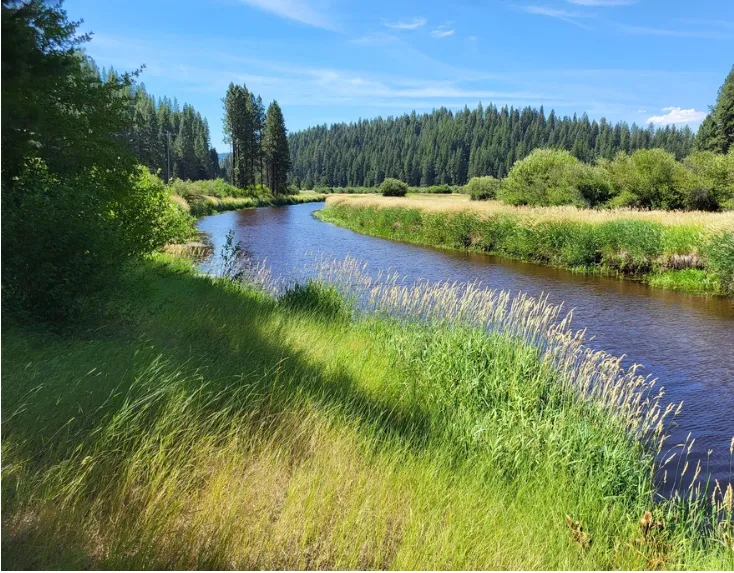
Sticking to its crackpot fossil fuel agenda, Interior Secretary Doug Burgum announced Wednesday that the Trump regime will do away with the Public Lands Rule the Biden administration finalized last year. It’s been clear since April that this was coming as part of the regime’s slash-and-burn of environmental protections and defunding of agencies dedicated to enforcing them.
Formally known as the Conservation and Landscape Health Rule, 92% of Americans who participated in public comments during the drafting supported it. Just 4.5% were opposed. But it’s the public and private comments of oil and gas companies, ranchers, loggers, and other industries that are holding sway as they have but for brief hiatuses over more than a century.
Two of the rule’s key elements stirred the most opposition. Under the 1976 Federal Land Policy and Management Act, the Bureau of Land Management can issue leases for the public to “use, occupy, and develop public lands.” The Public Lands Rule added to new kinds of leases—habitat restoration and mitigation of environmental threats. As Ian Rose wrote in Sierra:
For the first time, a qualified person or group would have been able to lease public land for the sole purpose of turning the land back to nature, or fixing damage done by a previous use, the same way an oil or logging company could lease it for profit. [...]
Another important section relates to areas of critical environmental concern (ACEC). This designation dates back to the original 1976 act and allows specific pieces of BLM land to be set aside for special protection. They include not only ecological conservation, but also cultural protection, and that has made ACECs especially important to Indigenous peoples in Alaska and the West.
When the Public Lands Rule rescission was announced five months ago, Alison Flint, senior legal director at the Wilderness Society, said in a written statement: “This is not policy—it’s a blatant giveaway to industry that threatens to dismantle decades of conservation progress, shut down public access, harm wildlife, and accelerate the reckless sell-off of our natural resources. Public lands belong to all of us, and they should not be cast off to the highest bidder.”
In a press release Wednesday, the Interior Department noted that the rule made conservation “(i.e. no use) an official use of public lands, putting it on the same level as BLM’s other uses of public lands.”
Burgum himself said: “The previous administration’s Public Lands Rule had the potential to block access to hundreds of thousands of acres of multiple-use land — preventing energy and mineral production, timber management, grazing and recreation across the West. The most effective caretakers of our federal lands are those whose livelihoods rely on its well-being. Overturning this rule protects our American way of life and gives our communities a voice in the land that they depend on.”
Oh, horrors, the crime of “idle land.” Burgum and the corporate interests he played lapdog to as governor of North Dakota, just can’t get their minds around the idea that conservation is in itself a valuable use of land. Their view of acceptable “use” is only satisfied by clearcut forests, strip mines, and oil-and-gas fracking rigs lined up from horizon to horizon in every direction.
Burgum’s assertion that the Public Lands Rule upends the balance required for multiple-use public lands is, like so much policy emerging from this regime, greatly at odd with the facts. Altogether, the BLM manages 240 million acres, which makes its domain 25% larger than Texas. Just 13% of that is set aside for conservation.
In 2023, the bureau reported that leases and activities on lands it managed generated $152 billion in total economic output. The oil and gas industry produced more than $100 billion of that, two of every three dollars. With overall U.S. production at record levels, 25% of crude oil and 10% of natural gas comes from public lands.
“This rule provided for healthy habitats and now it’s foolishly being yanked away in service of the ‘Drill, baby, drill’ agenda,” said Vera Smith, national forests and public lands director at Defenders of Wildlife, in a written statement.
Defenders points out that some 300 threatened and endangered species and 2,460 at-risk species “are struggling in the face of widespread habitat degradation resulting from chronic drought, continuing invasive plant species invasions, and unsustainable levels of grazing, oil and gas drilling, and other disturbances. These trends highlight the importance of this rule and its emphasis on science-based decision-making, land health and sustainability.”
Science so often loses when dueling with greed.
—MB
RESOURCES & ACTION
- Wild Reads: 10 New Books that Celebrate Wildlife and Their Environments at The Revelator. From chimpanzees and wolves to snakes and starlings, these new books capture hidden truths about fascinating species — and reveal how to better protect them.


- Climate Action Tracker
- How to comment on the planned roadless rule rollback
- Hidden treasures of America’s national parks are closer than you might think
- Trump’s War Against Wind Energy: A Timeline
GREEN BRIEF
SOLAR PANELS ON CALIFORNIA CANALS NOW GENERATING ELECTRICITY
Three-and-a-half years ago, Earth Matters reported that Solar AquaGrid would launch a $20 million, state-funded pilot program to put solar panels on a couple of short stretches of the 250 miles of the publicly owned Turlock Irrigation District to demonstrate the benefits and practicality of the concept. Last month, Project Nexus, as the 1.6-megawatt pilot is called, was completed and began providing electricity. It’s backed-up by batteries.
California has 3,946 miles of irrigation canals, all of them open to the sky. Four years ago a study concluded that covering them with solar panels would annually save the state 63 billion gallons of water now lost to evaporation. It would improve water quality and reduce the need for maintenance by $40,000 a mile, according to the researchers. It would allow farmers to eliminate the diesel generators used to pump water from the canals. And it would add 13,000 megawatts of electricity-generating capacity, equal to about 15% of the state’s total existing capacity—enough to meet half of the state’s decarbonization 2030 goals and the residential needs of 2 million households.
Putting solar panels over canals would also reduce opposition when solar arrays are proposed for farm land or delicate ecosystems as well as get rid of land costs.
The first such canal-based solar project in the United States switched on the juice almost a year ago for the Gila River Indian Community where Indigenous Pima and Maricopa live near Phoenix. Project Nexus is the second canal-based solar array to come online. Researchers will study how the project performs.
Meanwhile, universities are pushing the California Solar Canal Initiative to speed the installation of solar canals statewide. Said California Natural Resources Agency Secretary Wade Crowfoot in a March press release from CSCI, “California is leading the way in exploring innovative solutions to tackle climate change and strengthen our water and energy resilienceI. We are excited to see top research institutions come together to help deploy solar panels over water canals — a big idea with great potential. Science-driven collaborations like this one are critical to guide our path forward.”
“This project embodies a truly holistic approach, carefully balancing economic, environmental and community considerations to achieve sustainable and equitable outcomes,” said Detlof von Winterfeldt, a professor of systems engineering at the USC Price School of Public Policy and Viterbi School of Engineering.
—MB
RESEARCH & STUDIES
- Scope for waterfowl to speed up migration to a warming Arctic. Climate change is causing an earlier onset of spring, requiring migratory birds to accelerate their spring migration to avoid arriving late at the breeding grounds. Under the current rates of Arctic warming, however, in a few decades the need to synchronize with the spring advance will have shortened the birds’ time needed for fueling up for their long flight as much as they can.
- Rising temperatures increase added sugar intake disproportionately in disadvantaged groups in the USA. The researchers found a correlation between extreme heat and additional eating of cool drinks and frozen desserts. In the long run, as global warming continues its upward trajectory, this could increase health risks, especially among the more vulnerable.
- Time to strengthen the governance of new contaminants in the environment. Despite existing regulations, many emerging environmental contaminants remain ungoverned, posing serious risks to ecosystems and human health. The authors outline governance challenges and propose a global roadmap for their regulation.
- Long-term impacts of heatwaves on accelerated ageing. Researchers followed nearly 25,000 participants in a 15-year study to see if biological age acceleration accompanied heat waves. It did.
HALF A DOZEN OTHER THINGS TO READ (OR LISTEN TO)


A California Network of Black Churches Is Embracing Solar Energy, EV Charging by Nicole J. Caruth at Inside Climate News. On a Sunday morning, the swirling timbre of a Hammond organ drifted into the lobby at Glad Tidings International Church of God in Christ. On the stage, a lively guest preacher, Ronzel Pretlow, roused the congregation in the Hayward, California, church, his raspy voice rising and falling as he sang and shouted, prompting his audience to stand. When the excitement waned, he shifted their attention to Glad Tidings’ founder, Bishop Jerry Macklin, seated in the pulpit. “I think we owe our Bishop another round of applause for leading us into innovation and creativity,” the preacher said, eliciting a jingle from the organist. “I’m going back home to see if I’ve got room for some electric vehicle chargers,” he joked, knowing the profit that the chargers the church would soon have up and running could bring. In September, Glad Tidings will complete its new Community Decarbonization Hub—a multipurpose campus featuring a 13,000-square-foot solar-powered building with battery storage and ten EV charging stations. The project, which started four years ago and has a $4.3 million price tag, won’t only cut the church’s energy usage and costs—it’s expected to generate around $500,000 annually. And in five to seven years, as more people charge their vehicles at the church, that amount is projected to double.
13 state governors join coalition to promote EVs by Dan Zukowski at Utility Dive. Hawaiʻi and Wisconsin have joined the Affordable Clean Cars Coalition last week, increasing membership to 13 state governors. Launched in May, the coalition aims to promote more affordable electric vehicles, support U.S. automotive manufacturers and preserve states’ authority under the Clean Air Act. The coalition was formed by the U.S. Climate Alliance, a bipartisan group of 24 governors. States will address their own challenges and opportunities while working together to achieve the coalition’s collective goals,
Entire neighborhoods will have to move’: growth collides with rising seas in Charleston by Ames Alexander at Floodlight News. Charleston is one of the fastest-growing cities in the country — and one of the most flood-prone. As climate change prompts sea levels to rise and storms to grow more intense, this historic city has become a warning bell for what’s to come along America’s coasts: Some neighborhoods will retreat and others will be protected, and still others — often lower-income communities — may be left behind. In Charleston, those futures are colliding. The city and the federal government are planning a $1.3 billion seawall to defend the iconic downtown peninsula with its regal, pre-Civil War mansions and majestic moss-covered live oak trees. But under the current plans, the wall would not extend to lower-income neighborhoods like Rosemont, a historically Black community bordered by a freeway and hemmed in by industrial sites. That could leave those families more exposed than ever.
MAHA Report Moves Further Away From Restricting Pesticides by Lisa Held and Rebekah Alvey at Civil Eats. Despite criticisms from Make America Healthy Again (MAHA) supporters who have been calling for action on the use of pesticides linked to health risks, the MAHA Commission’s Strategy Report, released Tuesday, removed one of the only mentions of “reducing” pesticide use included in an earlier draft. The first MAHA Commission report, released in May, delivered an assessment of possible drivers of childhood chronic disease—including “chemical exposure”—and included some mentions of health concerns tied to American agriculture’s use of specific pesticides, like glyphosate. The second report outlines the Trump administration’s overall plan to address chronic disease in children via research and policies enacted across multiple federal agencies. The Environmental Protection Agency (EPA) will “increase the timely availability of more innovative growing solutions for farmers,” it says, and “work to ensure that the public has awareness and confidence in EPA’s pesticide robust review procedures” in conjunction with food and agricultural groups. Critics say the policy recommendations amount to a public relations campaign with few effectual changes.
Ocean warming threatens Earth’s tiny oxygen powerhouse by Gabriel Tynes at Courthouse News Service. In the vast, sun-drenched expanses of tropical and subtropical oceans, the planet’s most abundant photosynthetic organism reigns as the base of food chains supporting zooplankton and fish. But according to a study published Monday in Nature Microbiology, rising sea temperatures could slash populations of the microscopic cyanobacterium Prochlorococcus by up to 37% globally by 2100, with dire consequences for marine ecosystems. A decline in Prochlorococcus might also reduce nutrient recycling efficiency and carbon export to deep seas, weakening the ocean’s role in sequestering carbon dioxide.


Trump to Coal Miners: Drop Dead. at In These Times. The administration keeps delaying a life-saving safety rule—while claiming to love coal miners. Last week, the Trump administration approved yet another delay in the implementation of a Mine Safety and Health Administration rule to lower miners’ exposure to deadly silica dust. The National Sand, Stone and Gravel Association sued to block the rule back in April—and instead of voicing any opposition to the suit or support for the rule, the Trump Labor Department has ignored the miners’ plight in favor of well-heeled corporate interests. After years of organizing by miners and advocacy groups, the silica rule was finally supposed to take effect in April, but was then pushed back due to “unforeseen NIOSH restructuring.” Translation: The administration, via DOGE, was then busy dismantling the National Institute for Occupational Safety and Health and its black lung monitoring program (then frantically restoring the program under court order following a class action lawsuit from West Virginia coal miners). Meanwhile, one in five veteran coal miners in Appalachia are suffering from black lung, an incurable respiratory disease that kills its victims slowly and painfully. Now, coal industry interests have been allowed to kick the can down the road yet again and secured yet another delay, this time until at least October, while the lawsuit proceeds.
WEEKLY BLUESKY SKEET

ECOPINION
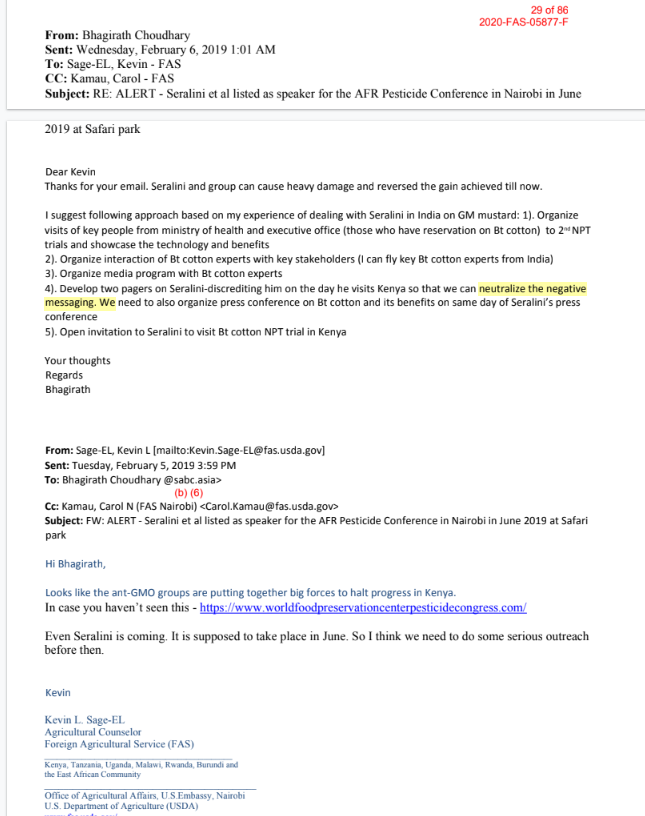
“Defend or be damned” – How a US company uses government funds to suppress pesticide opposition around the world by Carey Gillam, Margot Gibbs and Elena DeBre at TNL. In 2017, two UN experts called for a treaty to strictly regulate dangerous pesticides, which they said were a “global human rights concern,” citing scientific research showing pesticides can cause cancers, Parkinson’s disease, Alzheimer’s, and other health problems. Publicly, the industry’s lead trade association dubbed the recommendations “unfounded and sensational assertions”. In private, industry advocates have gone further. Derogatory profiles of the two experts, Hilal Elver and Baskut Tuncak, are hosted on an online private “social network” portal for pesticide company employees and a range of influential allies. Members of the network can access a wide range of personal information about hundreds of individuals from around the world deemed a threat to industry interests, including US food writers Michael Pollan and Mark Bittman, the Indian environmentalist Vandana Shiva, and the Nigerian activist Nnimmo Bassey. Many profiles include personal details such as the names of family members, phone numbers, home addresses and even house values. The profiling is part of a broad campaign – that was financed partly with US taxpayers dollars – to downplay pesticide dangers, discredit opponents, and undermine international policymaking harmful to the pesticide industry,
It’s Time for the MAHA Moms to Turn on RFK Jr. Too by Kate Aronoff at The New Republic. As some Republicans start to question Kennedy’s fitness for office, there’s also discord brewing among the MAHA stalwarts who have been his greatest boosters, not least for Kennedy’s many full-throated promises to reduce environmental toxins. Since RFK Jr. has been in office, he’s done little of substance to satisfy them. A draft of HHS’s report on children, leaked to the press in mid-August, declined to propose restrictions on ultra-processed foods or pesticides (to the great relief of agricultural interests). As Republicans try to rally MAHA to support them in the midterms, they face the tricky job of balancing that base’s wide-ranging concerns with those of the polluting corporations that have historically poured money into GOP campaigns. Perhaps no issue highlights the gulf between those two factions more than microplastics, the tiny particles showing up at alarming rates in our bodies.


The Oil & Gas Industry is Gaslighting the IEA on Methane Emissions by Lorne Stockman at Oil Change International. For eight years, the International Energy Agency (IEA) has presented research indicating that oil and gas companies can reduce their prolific methane emissions cost-effectively. For eight years, oil and gas companies have failed to do so, and their emissions have continued to grow, according to the IEA’s own data. Yet, in June, the IEA produced another report that made the same argument, this time specifically assessing the potential for emissions reductions in the liquified natural gas (LNG) supply chain. The report was released at an LNG conference in Tokyo, where Japanese government agencies promoted a misleading narrative about LNG and energy security. Japanese financial institutions are the leading investors in LNG worldwide. This report also ignores the fact that the world’s largest LNG exporter, the United States, whose oil and gas sector is responsible for more methane emissions than any other, has dismantled the regulatory system that would monitor and enforce its already insufficient methane regulations, while pressuring others to do the same. It is time for the IEA to acknowledge that it is being gaslit.
The Roadless Rule Is on the Chopping Block — and So Are Our Wildest Forests by Sarah McMillan at The Revelator. This widely popular regulation protects 58.5 million acres of national forests and 1,600 at-risk species. The Trump administration wants gut it. Healthy, intact landscapes — home to the natural systems that produce our clean water, clean air, and livable climate — provide humanity’s life support system. Only 3% of the world’s ecosystems remain intact, and we cannot afford to abuse what little remains. It’s common-sense ecology many of us understood in fifth grade: If we don’t treat Mother Earth with respect, she will stop providing and we will suffer. And now, of course, the Trump administration wants to trash one of our best tools for protecting relatively unspoiled public lands — the Roadless Rule — and replace protections with the heavy machinery of extraction.
Public Lands Are on the Line by Jeremy Miller at Sierra magazine. Bryant Baker has worked for ForestWatch since 2016, cutting his teeth during Trump’s first term as the president was trying to reduce the size of Bears Ears and Grand Staircase–Escalante National Monuments by as much as 80 percent. “Huge, huge reductions,” Baker said, “which we’d never really seen before.” To him, the administration’s rationale was clear. “They were looking at public lands as, ‘OK, well, what can we do with these? Can we drill? Can we log?’” Three years later, the Trump administration issued proposals for logging in Los Padres National Forest, including one for the Pine Mountain Project. ForestWatch and local coalition partners filed a lawsuit to block the proposal and lost. Now there’s another push for logging in the Los Padres—this time under the guise of wildfire risk management. ForestWatch and other environmental groups fought a 2022 Biden-era proposal to log and thin huge swaths of the Los Padres. The Trump administration took over the proposal, renaming it the Wildfire Risk Reduction Project. After extensive community resistance, the administration reduced the project’s scope from 235,000 acres to 90,000. But the fight isn’t over. These efforts, Baker said—to profit off public lands—are now coming fast and furious.
RELATED: Public Lands Were Made Free to All. Protecting wild places was once a radical idea. It still is. By Jonathan Hahn
Can the ICJ opinion bring climate justice for Indigenous peoples? By ClaIre Thomas at Climate Home News. A milestone in an existential battle — that’s how the recent advisory opinion on climate change from the International Court of Justice (ICJ) has been hailed. Does it signal climate justice for minorities and Indigenous peoples, groups among those most vulnerable to climate change, or is it just another piece of paper? The ICJ rejected arguments from the worst pollution offenders that only climate change treaties apply in this space, instead affirming the equal relevance of international human rights law in this context.
RELATED: The Evasion of Historical Responsibility? Colonialism, Temporality and Reparative Justice in the ICJ’s Climate Advisory Opinion By Julia Dehm.
OTHER GREEN STUFF
- Satellites confirm 1990s sea-level predictions were shockingly accurate
- Trump and Wright Are Turning America Into a Gas Station Masquerading as a Nation
- ”Pseudo-scientific”: Dems urge DOE to scrap climate report
- Soil runoff from logged forests releases more reactive carbon, undermining climate mitigation
- Mosquitos at the US southern border reveal a frightening reality about climate change
- The health risks from plastics almost nobody knows about
- GOP may finally succeed in unrelenting quest to kill two NASA climate satellites
- A Mercedes EQS with solid-state batteries drove 750 miles and still had range to spare
- CATL launches the world’s first LFP battery with 470+ miles range and 10-minute charging
- Republican legislators propose bill to prevent local ‘rights of nature’ ordinances
- Nobody wants this gas plant. Trump is forcing it to stay open
- Trump Says America’s Oil Industry Is Cleaner Than Other Countries’. New Data Shows Massive Emissions From Texas Wells.










Comments
We want Uncharted Blue to be a welcoming and progressive space.
Before commenting, make sure you've read our Community Guidelines.