
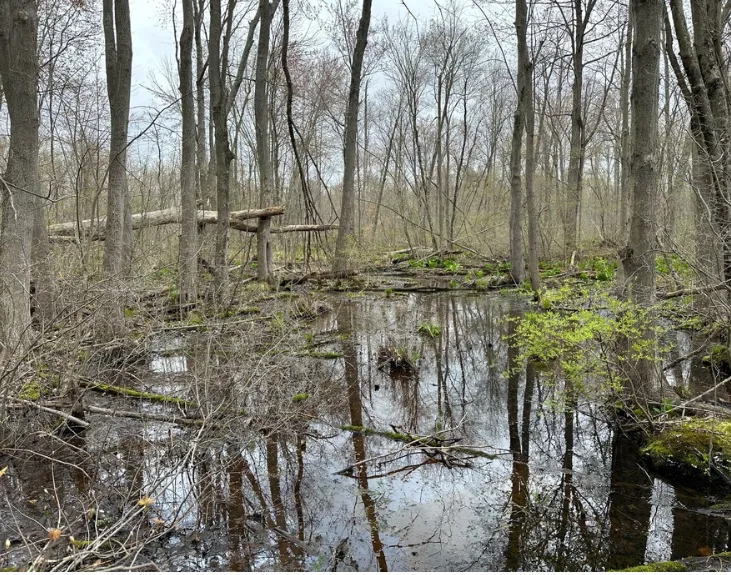
The Trump regime has escalated its assault on the environment with yet another potentially devastating move. Environmental Protection Agency Administrator Lee Zeldin unveiled a proposed rule Monday that would remove federal protections from the majority of U.S. wetlands and streams. Environmental advocates immediately condemned the plan as a “gift to developers and polluters at the expense of communities.” It’s been years in the making and is included as part of the Project 2025 wrecking ball.
For millions of Americans, the shift threatens clean drinking water, reduces natural flood buffers, and imperils habitats that sustain biodiversity, all to advance industrial and corporate interests.
The new rule leans heavily on the 2023 Supreme Court decision in Sackett v. EPA, which narrowed federal authority to wetlands with a “continuous surface connection” to larger, relatively permanent water bodies. Zeldin’s proposal goes beyond the court’s ruling, excluding ephemeral and seasonal wetlands from federal oversight. According to the Natural Resources Defense Council, only about 19% of mapped wetlands would remain protected under this definition. Tens of millions of acres of ecosystems that filter water, absorb floodwaters, and support wildlife now hang in regulatory limbo.
Ruth Milka at Nation of Change writes:
Tarah Heinzen, legal director for Food and Water Watch, said the rule “weakens the bedrock Clean Water Act, making it easier to fill, drain, and pollute sensitive waterways from coast to coast.” She said “Clean water is under attack in America, as polluting profiteers plunder our waters Trump’s EPA is openly aiding and abetting this destruction.” Heinzen warned that the rule “flies in the face of science and commonsense” and that removing protections for small streams and wetlands will result in “more pollution downstream in our drinking water, at our beaches, and in our rivers.” She also stressed that the “critical functions” of wetlands “will only become more important as worsening climate change makes extreme weather more frequent. EPA must reverse course.”
Wetlands are not just scenery. They are natural insurance. They purify water, absorb heavy rainfall, recharge aquifers, and provide critical habitat for countless species. In an era of increasingly severe storms, extended droughts, and erratic precipitation patterns, every wetland lost diminishes the nation’s climate resilience.


Betsy Southerland, former director at the EPA’s Office of Water, points out that the administration’s approach “ignores decades of science showing that wetlands and intermittent streams are essential to maintaining the health of our rivers, lakes, and drinking water supplies.”
“The Trump administration’s Polluted Water Rule is another blatant giveaway to big corporate polluters that will jeopardize the waters that our families and communities rely on for drinking, recreation, and fueling our local economies,” said Madeleine Foote, healthy communities program director at the League of Conservation Voters, in a written statement.
The beneficiaries of this policy are predictable: mining corporations, real estate developers, and industrial conglomerates. With federal oversight diminished, mines in Utah, Arizona, and Nevada can discharge waste into sensitive headwaters with little regulatory friction. Mark Ryan, a former EPA attorney, warned that “more mines will be freed from permitting requirements.” The public, however, bears the costs: contaminated streams, algal blooms, degraded drinking water, and rising water treatment expenses. The law, in practice, becomes a transfer of risk and wealth from communities to industry.
Examples offer a different path. In Illinois, farmer Jim Fulton has transformed part of his 690-acre property into wetlands designed to intercept fertilizer runoff, reduce flood damage, and provide habitat for pollinators. Working with the Wetlands Initiative and using U.S. agriculture department grants, Fulton created a self-sustaining ecosystem that filters nitrogen, attracts wildlife, and buffers his farmland from flooding. As he says, farmers “are contributing to the nutrient loss into the rivers, and I think we need to be part of the solution.” These initiatives demonstrate that ecological restoration can coexist with productive land use, but voluntary local projects cannot substitute for robust federal oversight across millions of acres.
The rollback also carries profound social justice implications. Communities dependent on small streams and wetlands for potable water — disproportionately rural, low-income, and Indigenous populations — will shoulder the heaviest burden.
Democrats on Capitol Hill have condemned the proposal, highlighting broad public support for the Clean Water Act. With MAGA Republicans controlling Congress, of course, the chances of legislative intervention are slim despite the bipartisan support the act and its predecessor have received for nearly eight decades. Legal action and activist political pressure are seen as the only defenses. Earthjustice, the NRDC, and other environmental organizations are preparing lawsuits challenging the narrow and ambiguous definitions of the Zeldin proposals, including the undefined “wet season” and the explicit exclusion of groundwater. Without judicial intervention, millions of acres of wetlands could be left exposed to destruction and pollution.
The regime’s approach illustrates a recurring theme. Environmental policy is increasingly dictated by industry interests rather than science or public welfare. From mining and real estate development to industrial agriculture, the beneficiaries of this rule are those with deep pockets and political connections. In arid Western states, where federal protection has historically compensated for weak local regulations, the consequences could be severe: streams, seasonal wetlands, and ephemeral waterways — critical for aquifer recharge and species survival — may vanish from the regulatory map, leaving communities exposed to pollution and increased flooding.
At the same time, voluntary restoration projects like Fulton’s show the promise and limitations of local solutions. While his wetland reduces nitrogen runoff, provides pollinator habitat, and protects his farmland from flooding, similar initiatives cannot replace systematic federal protections. Without a baseline of enforceable rules, ecological gains remain precarious, vulnerable to political whims and corporate pressures.
The legal and civic challenges ahead are steep. Courts will need to interpret the vague language around “wet season” and determine whether states can or will fill the regulatory gap left by the federal government. Public comments submitted during the 45-day consultation window could influence the final rule, but history suggests agencies often weigh industry perspectives more heavily than scientific evidence or community input. In this environment, coordinated advocacy, litigation, and public pressure are essential.
Ultimately, the regime’s wetlands rollback along with a growing list of Supreme Court rulings underscore the fragility of U.S. environmental protections. Half a century of legal safeguards, scientific research, and community stewardship are at risk of being undermined for short-term profit. The fight over wetlands is about climate resilience, social equity, biodiversity, and the principle that every American deserves access to clean, safe water. As with so much else in this era or rightwing revanchism, curbing environmental plunder is going to take battling with every tool we have.
—Meteor Blades
If you want to submit a public comment on the wetlands proposals, you must do so here by the Jan. 5. 2026, deadline. More information can be found here.
WEEKLY ECO-VIDEO

RESOURCES & ACTION
• Harvard Regulatory Tracker of the Environmental and Energy Law Program. The tracker explains the regulatory steps to rollback clean energy deployment and environmental protection, and provides an up-to-date and concise summary of both regulatory and litigation actions. There is also a list of trackers from other organizations.
•Climate Home News is providing daily bulletins from the COP30 climate summit.
•Reporting from Inside the Amazon from the Columbia Journalism Review: A new generation of journalists emerges is at work.
GREEN BRIEF
Beijing in Brazil: China makes bank as Trump spurns climate talks
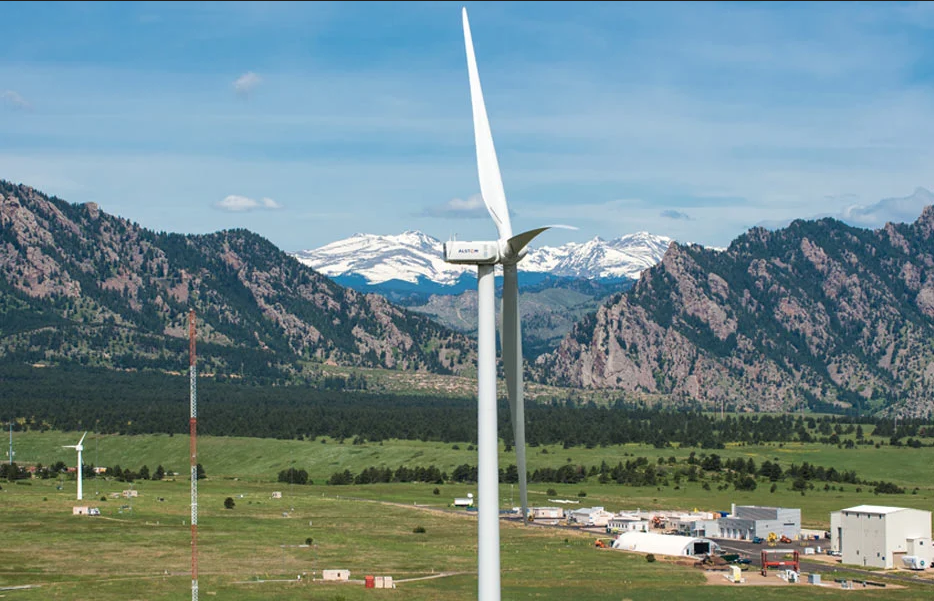
If you follow energy news, you’ve no doubt encountered more than a few stories about China’s incredible development of renewable sources of electricity. For instance, in 2024 the nation installed a record-breaking 357 gigawatts (GW) of solar and wind capacity. The United States also had a record-breaking 2024, installing 49.9 GW of solar capacity and 5.1 GW of wind.
With those installations China achieved its 2030 goal of having 1,200 GW of renewables installed six years ahead of time. The U.S., meanwhile, currently has about 1,400 GW of electricity-generating capacity from all sources renewable and otherwise, 389 GW of that being solar and wind at the end of 2024.
Zack Colman at ClimateWire says that China’s section of the COP30 climate summit’s main hall in Belém, Brazil, includes 5-foot-high poster boards touting battery and electrical projects throughout the world, many of them part of its Belt and Road Initiative. On the back wall is a list of corporate “partners” that includes CATL, the world’s largest maker of electric car batteries. BYD, which is neck-and-neck with Tesla on worldwide sales of battery-electric cars, is an official sponsor of the summit.
Of course, the United States is officially absent from the summit, Trump having labeled the climate crisis the “greatest con job ever perpetrated on the world,” and initiated the second withdrawal of the U.S. from the Paris Climate Agreement. Many critics, at home and abroad, have noted that the Trump regime’s war on renewables and its clearing the path for more fossil fuel production is short-sighted both on climate and economic impacts. It cedes the future to China, they say.
Said California Gov. Gavin Newsom during a press conference in Belém last week: “It’s not about electric power. This is about economic power,” and Trump “simply doesn’t understand how enthusiastic President Xi is today that the Trump administration is nowhere to be found at COP30.”
—MB
HALF A DOZEN OTHER THINGS TO READ (OR LISTEN TO)
Why Colorado River negotiations are so difficult by Caitlin Ochs at High Country News. Seven Western states have spent over two years struggling to reach a plan to cut water use and change rules governing major reservoirs. After 25 years of record heat and sustained severe drought, the depleted river has less to give, and it is 20% smaller on average than it was last century. With hotter, drier conditions expected to continue, the states are also grappling with limits of aging infrastructure made more urgent by low water levels and legal ambiguities. “There’s very little to no resiliency built into the river system right now, because the system is very depleted,” said J.B. Hamby, California’s representative in the negotiations. Current negotiations are being led by the U.S. Bureau of Reclamation, the federal agency responsible for managing a complex network of dams in 17 states. If the Colorado River Basin states cannot produce a joint plan, the federal government has indicated that it will take action. Regardless of who drafts the agreement, they will need to take into account deepening legal uncertainties, longstanding tribal water rights on the river, and aging infrastructure built with abundance—not scarcity in mind. The river’s legal system – how courts decide who gets water when — was not built for unrelenting drought.


Trump’s new radiation exposure limits could be ‘catastrophic’ for women and girls by Lesley M. M. Blume and Chloe Shrager at the Bulletin of the Atomic Scientists. In a May executive order, aimed at ushering in what he described as an “American nuclear renaissance,” Donald Trump declared moot the science underpinning decades-old radiation exposure standards set by the federal government. Executive Order 14300 directed the Nuclear Regulatory Commission to conduct a “wholesale revision” of half-a-century of guidance and regulations. In doing so, it considers throwing out the foundational model used by the government to determine exposure limits, and investigates the possibility of loosening the standard on what is considered a “safe” level of radiation exposure for the general public. In a statement to the Bulletin, NRC spokesperson Scott Burnell confirmed that the NRC is reconsidering the standards long relied upon to guide exposure limits. Now, some radiology and policy experts are sounding alarm bells, calling the directive a dangerous departure from a respected framework that has been followed and consistently reinforced by scientific review for generations.


Known for Its Oil, Texas Became a Renewable Energy Leader. Now It’s Being Unplugged by Elena Bruess at Capital & Main. Solar energy has been on the rise in Texas for decades, but a dramatic shift in renewable federal policy and funding has left the industry unstable and industry actors uncertain of the future. As a consequence, incentives that made solar energy installation and employment attractive, accessible and affordable have vaporized across the state—throwing a wrench in the growing market. Before Donald Trump took office a second time, the Biden administration increased the renewable energy tax credit from 20% to 30%, and created Solar for All—a $7 billion federal fund designed to expand solar energy access to disadvantaged communities across the country through the administration’s 2022 Inflation Reduction Act. However, the Trump administration is phasing out the tax credit by January 2026 and eliminating Solar for All—stripping recipients of any initially awarded funds. This includes nearly $250 million for California, $156 million for Pennsylvania and $400 million for Texas. Experts, officials and businesses across the country have sounded alarm bells over the impact these funding and policy changes will have on the solar industry. In Texas, Harris County Attorney Christian Menefee sued the Trump administration and Environmental Protection Agency in October, arguing that the administration’s decision to claw back the money is unlawful.
Related: Over 13 gigawatts, or half of planned Texas solar and energy storage, will fail to come online next year from PV Magazine.
Appropriated, but Unobligated: Impounding Climate Funds by Vincent Nolette and Olivia Guarna at Climate Law, a blog of the Sabin Center. The Trump administration has undertaken a comprehensive effort to prevent the distribution of mandatory federal funding, including billions for climate programs. Attempts to cancel already-obligated federal funding awards have been among its most notable actions and have been met with a slew of lawsuits by aggrieved grantees, states, and other parties harmed by the cancellations. Over the last few months, the Sabin Center has covered developments in the litigation related to the Environmental Protection Agency’s efforts to terminate nearly $27 billion in grants made through the Greenhouse Gas Reduction Fund. Plaintiffs have raised a variety of arguments but have faced headwinds in court, particularly with respect to an ongoing dispute over the proper federal court to hear the cases. Besides grant cancellations, agencies have also taken various actions to delay disbursement, change program requirements, or otherwise withhold funds that it is obligated by statute to make available. In these instances, there may be another avenue by which to challenge the federal government’s unlawful interference with funding: the Impoundment Control Act. Enacted in 1974, the ICA prohibits the executive branch from withholding congressional appropriations, except under certain limited circumstances. This blog post provides background on the ICA, summarizes three recent ICA decisions that pertain to climate programs, and discusses how the ICA might factor into the future resolution of the Trump administration’s withholding or rescission of climate funding.


We Can Now Track Individual Monarch Butterflies. It’s a Revelation by Dan Fagin at The New York Times. (Gift link). For the first time, scientists are tracking the migration of monarch butterflies across much of North America, actively monitoring individual insects on journeys from as far away as Ontario all the way to their overwintering colonies in central Mexico. This long-sought achievement could provide crucial insights into the poorly understood life cycles of hundreds of species of butterflies, bees and other flying insects at a time when many are in steep decline. The breakthrough is the result of a tiny solar-powered radio tag that weighs just 60 milligrams and sells for $200. Researchers have tagged more than 400 monarchs this year and are now following their journeys on a cellphone app created by the New Jersey-based company that makes the tags, Cellular Tracking Technologies.
Race a ‘Potent Predictor’ of Where Texas Petrochemical Plants Will Be Built, an analysis of the Ballard Center for Environmental & Climate Justice. A new report says proposed petrochemical plants in Texas will largely be built near communities of color, often in areas that are already heavily polluted. The analysis scrutinized 89 proposed petrochemical projects across the state and at communities within three miles of those sites. It found that 82 facilities are planned for areas with more poverty or proportionally more people of color than average in Texas. “For more than three decades, environmental scholars have documented how race and poverty predict where polluting industries place their facilities,” said lead author Robert Bullard, widely known as “the father of environmental justice.” The new petrochemical buildout, he said, “shows that we are not addressing this injustice.” Nearly half of the projects are proposed for areas that already rank among the worst areas nationally for toxic air releases, while nine in 10 would be built near other high-risk chemical plants. From 2021 to 2023, Texas led the nation in hazardous chemical incidents, such as fires, explosions, and toxic releases.
WEEKLY BLUESKY SKEET

ECOPINION
Why We Need More Confrontation at COP. In an interview at Drilled with Jessica F. Green on her book Existential Politics: Why Global Climate Institutions Are Failing and How to Fix Them, the University of Toronto political science professor and longtime observer of global climate negotiations and expert on carbon accounting argues that the COP embodies a “win-win” approach to a problem for which someone has to lose. The challenge, then, is to make sure the right people (and planet) do the winning, while the “fossil asset owners,” as Green describes them, do the losing. She explains how the consultant-driven cottage industry promising to help companies track and measure their emissions has emerged as an obstacle to real progress; why wealth taxes still contribute to climate justice even if the revenue they raise isn’t used for climate measures; and, of course, why head-on conflict with the fossil fuel industry—rather than feel-good cooperation—is a prerequisite for tackling the climate crisis.
Kumi Naidoo on U.S. Skipping COP30, Why Rich Nations Must Pay a Climate Debt, an interview with Amy Goodman at Democracy Now! Brief excerpt:
AMY GOODMAN: It seems that at these U.N. climate summits, that’s kind of the only time we get to talk right now or see each other in person. Can you talk about the significance of this moment when it comes to the climate catastrophe in the world?
KUMI NAIDOO: So, the reality is, the science told us in Paris that we need to be below 1.5 degrees. We are already pushing there. We are seeing that there is a big disconnect between the words that political and business leaders say and what actions happen on the ground.
So, for the last week, let’s just have a quick recap what’s happened. So, one, we see that there’s absolute corporate capture here again. There was 1,600 fossil fuel lobbyists. And even though it’s a struggle to get the F-word said here — by the “F-word,” we mean fossil fuels. It took 28 years before 86% of the primary cause of climate change would be even mentioned in a COP outcome document. That’s like Alcoholics Anonymous holding 28 years of conferences before they can get a backbone to mention alcohol, which is the problem. And so, that’s one challenge.
The comforting but dangerous fantasy of ‘normal’ climatic and political aberrations Benjamin Santer and David W.J. Thompson at the Bulletin of the Atomic Scientists. “Climate has varied naturally for many millions of years, before any humans were on the planet.” If you’re a climate scientist, you’ve heard such statements many times before. Natural climate changes over deep time are frequently invoked as “evidence” that human activity can’t possibly have caused global warming of 1.4 degrees Celsius since the Industrial Revolution. Following this fallacious logic, the existence of past natural changes in Earth’s climate means that current and future changes must also be natural. This interpretation of reality can be comforting, particularly in light of the large and accelerating climatic changes over recent decades. It is also convenient if your business and financial interests depend on the continued burning of fossil fuels. But “all climate change is natural” is a demonstrably false and dangerous illusion.
Hurricane Melissa a ‘real-time case study’ of colonialism’s legacies by Natricia Duncan at The Guardian. Speaking from COP30, Jamaican economist Mariama Williams said historical injustices must be confronted and addressed. “The research shows that wherever Afro descendants are located, they are most vulnerable to climate and environmental impact and have been suffering from historical environmental injustice and climate injustice,” she said. “Climate justice cannot be separated from reparatory justice. The same systems that enriched the north created today’s vulnerabilities.” The Global Afrodescendant Climate Justice Collaborative, where Williams is a senior adviser, is among hundreds of human rights groups and environmentalists that urged Cop30 to put reparations on the agenda. In their open letter they argue that “global warming began with the Industrial Revolutions that were made possible by the resources provided by imperialism, colonialism and enslavement, [and] that colonialism and enslavement skewed the global economy in favour of the material and financial interests in the global north”.
Let’s Rename the Day After Thanksgiving ‘Extinction Friday’ by John R. Platt at The Revelator. This piece from 2022 still resonates. Black Friday has become a testament to our society’s embrace of overconsumption — a blood-sport game of conquest and consumerism that’s as far as we can possibly get from a holiday supposedly devoted to giving thanks. So this year, let’s ditch Black Friday, Cyber Monday and whatever they’re going to try to get us to “celebrate” this coming Wednesday. Let’s pull back and remember those we’ve left behind. Let’s mark the post-Thanksgiving date as Extinction Friday: a moment to think about the peoples and species we’ve driven off the face of the Earth, and to promise to do our part to prevent others — or ourselves — from joining them.


Are we all living in Florida now? The rise of ‘don’t say climate’ politics by Kate Yoder at Grist. President Donald Trump’s second term has plunged the United States into “don’t say climate” politics. Even as horrific floods and fires unfolded around the country this year, Republicans in Congress reversed the country’s only climate plan. The administration has deleted “climate change” from hundreds of government webpages and dismissed facts about the warming planet as “brainless fear-mongering rhetoric.” Rather than pushing back, Democrats have been talking about climate change less since the 2024 election, emphasizing “cheap energy” instead. Even if talking about climate change is politically radioactive, adapting to its effects is no longer optional. Florida tops some lists for the state most at risk from climate change, facing a combination of heat, drought, fires, flooding, and hurricanes. Miami Beach and towns in the Florida Keys have been raising their roads as the sea begins to rise. DeSantis has committed more than $1 billion to Resilient Florida, a grant program that helps local governments address some of these problems.
RESEARCH & STUDIES
- Lead water pipes are a primary contributor to lead exposure in children concludes a study published in Environmental Science and Technology. A strong association was found between the presence of lead service lines and children’s elevated blood lead levels in Cincinnati, Ohio and Grand Rapids, Michigan.
- Scientists find a surprising link between lead and human evolution. Researchers at Southern Cross University found that ancient hominids—including early humans—were exposed to lead throughout childhood, leaving chemical traces in fossil teeth. Experiments suggest this exposure may have driven genetic changes that strengthened language-related brain functions in modern humans.
- Increasing risk of mass human heat mortality if historical weather patterns recur. Published at Nature Climate Change, the study suggests that while mitigating further global warming can reduce heat mortality, mass mortality events remain plausible at near-future temperatures despite current adaptations to heat.
- California farmland doused with 2.5 million pounds of PFAS pesticides each year, according to analysis of state regulatory data by the Environmental Working Group. The spraying potentially exposes millions of people to the chemicals through contaminated food, soil and drinking water, The findings show “how widely the potentially toxic PFAS pesticides are used on agricultural land,” Jared Hayes, a senior policy analyst at EWG and co-author of the report, said. “It doesn’t make sense when plenty of non-PFAS pesticides are readily available.”
- Ancient and colonial legacies continue to shape Amazon forest biodiversity today. Human influence across centuries continues to define biodiversity and carbon storage in the world's largest rainforest, according to a new international study published in the Proceedings of the National Academy of Sciences led by the University of Amsterdam and Florida Tech.The study shows that the Amazon rainforest — often described as one of Earth's last untouched wildernesses — in fact still bears deep ecological imprints of both pre-Columbian Indigenous communities and European colonists.
OTHER GREEN STUFF
- Scientists slam Canada-US proposal to lower trade protections for peregrine falcons
- Bill Gates Gave $3.5M to Think Tank Run by Climate Crisis Denier Bjorn Lomborg
- Growth of Wind and Solar Keeping Fossil Power in Check
- Cost-conscious utilities resist Trump’s push for nuclear revival
- Bluewashed: How the Beauty Industry Sold an Ocean-Friendly Illusion
- Chinese EV Maker Plans 620-Mile Solid-State Battery Cars In 2026
- Hurricane Melissa Is a Reminder of Our Dangerous New Reality as the Climate Crisis Accelerates
- America Is Taking the Train
- Trump officials give $1 billion loan to restart Three Mile Island











Comments
We want Uncharted Blue to be a welcoming and progressive space.
Before commenting, make sure you've read our Community Guidelines.